


Satinwood Inlay Side Table
A satinwood inlay side table brings bright timber and fine lines into a room, offering a functional surface shaped by Georgian, Regency and Edwardian hands.
Satinwood Inlay Side Table
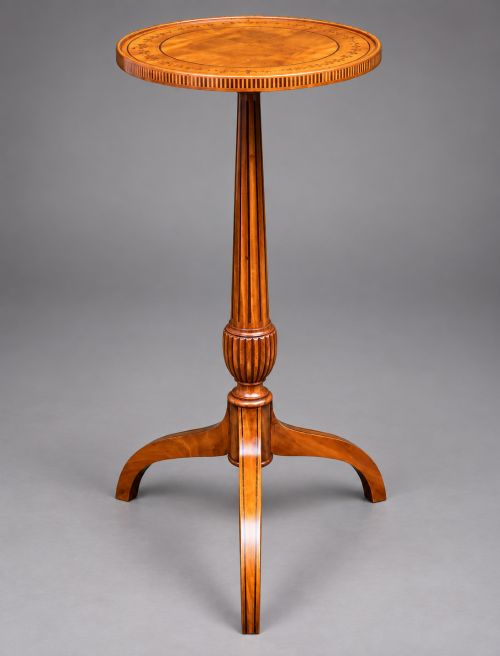
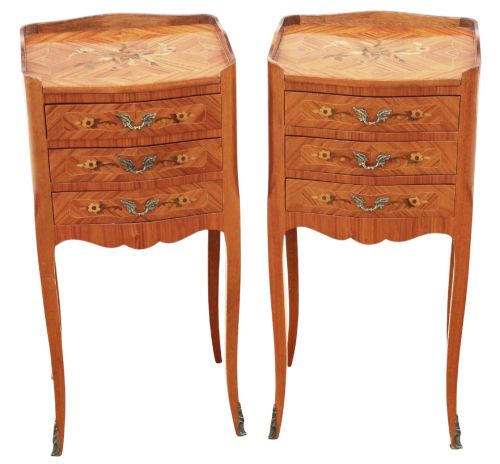
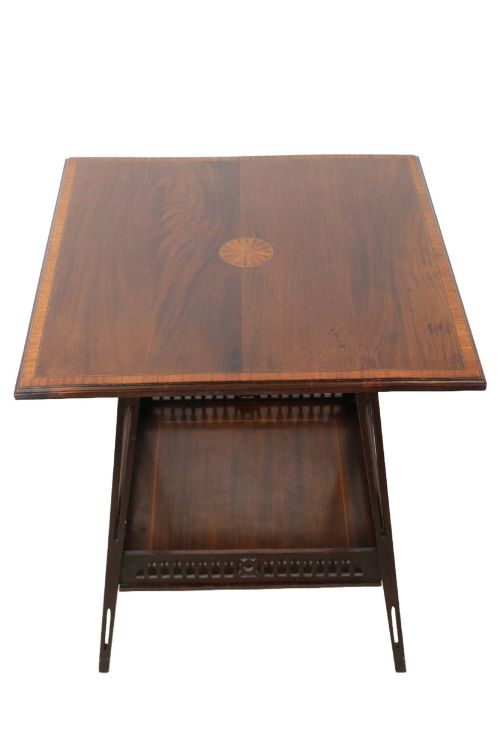
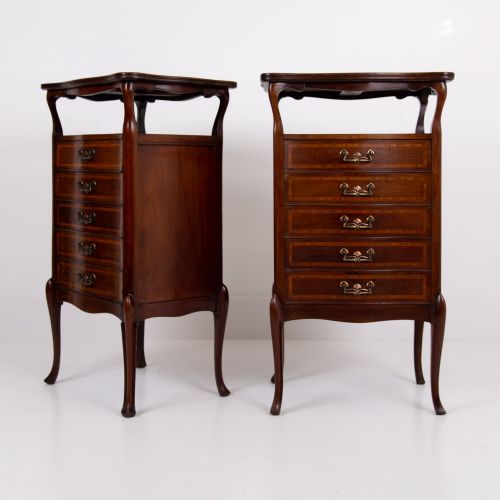
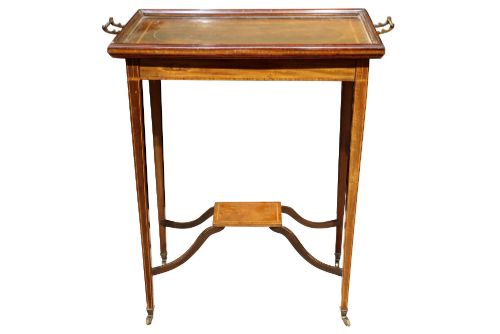
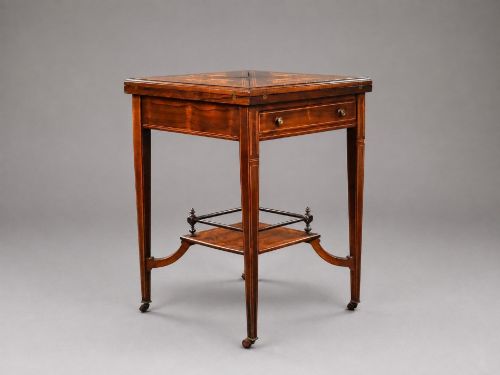
A satinwood inlay side table combines compact utility with decorative cabinet-making, appearing most frequently in Edwardian revivals and eighteenth-century forms. These pieces serve as lamp tables, occasional stands and pembroke tables, utilising contrasting veneers to catch the light.
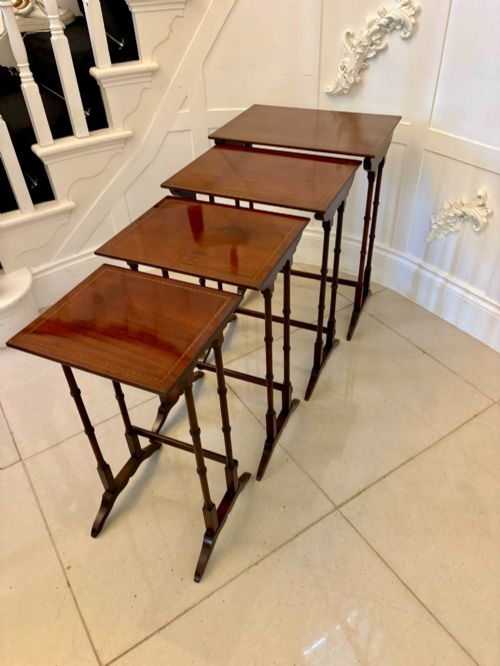
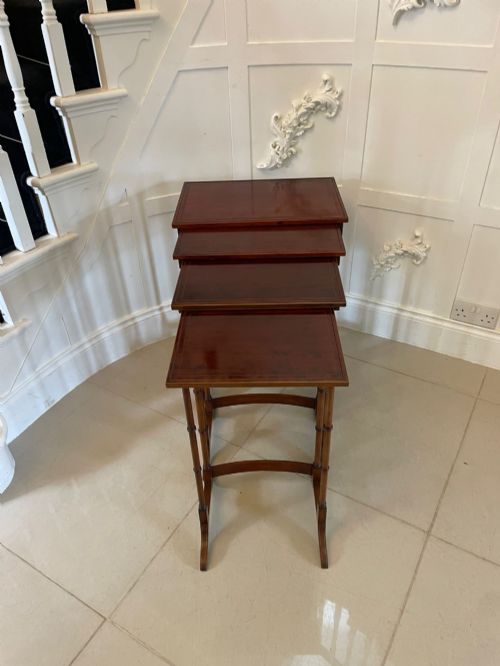
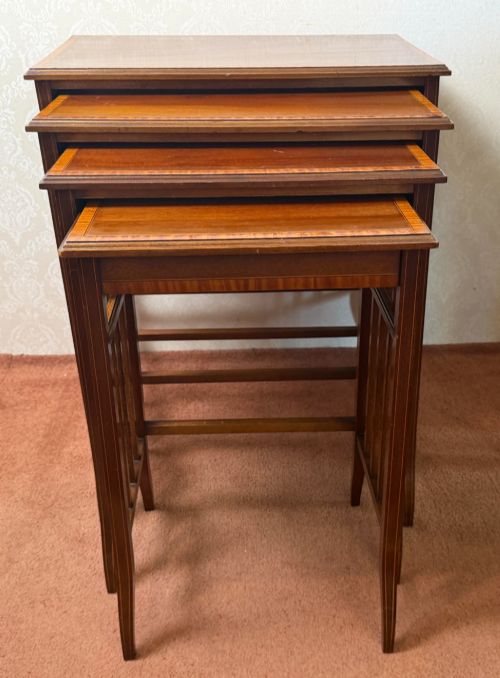
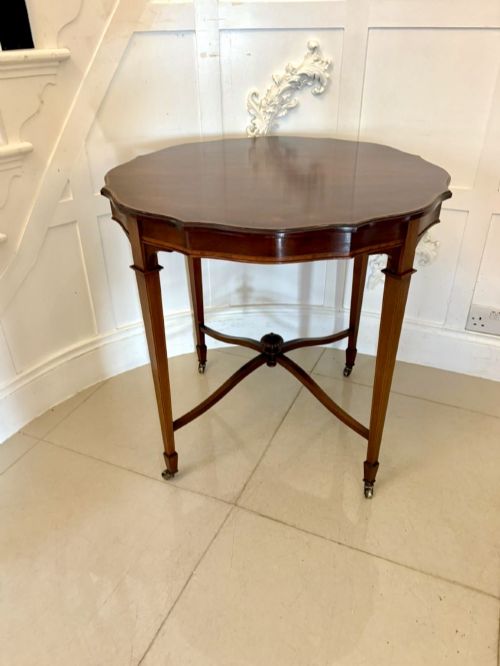
The selection on this page ranges from Georgian demi-lune consoles to Edwardian occasional tables and nests of four. Mahogany and rosewood carcases frequently provide the structural foundation for the bright satinwood surface decoration.
How they were made
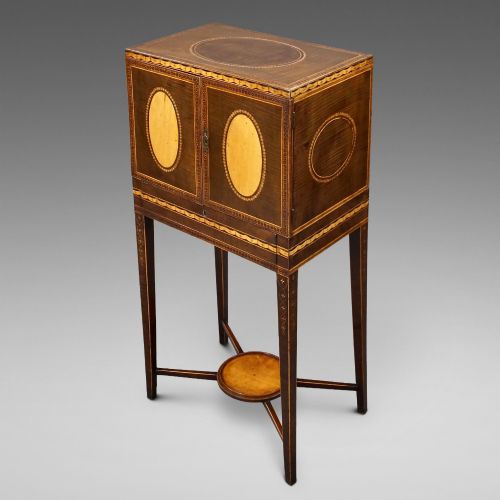
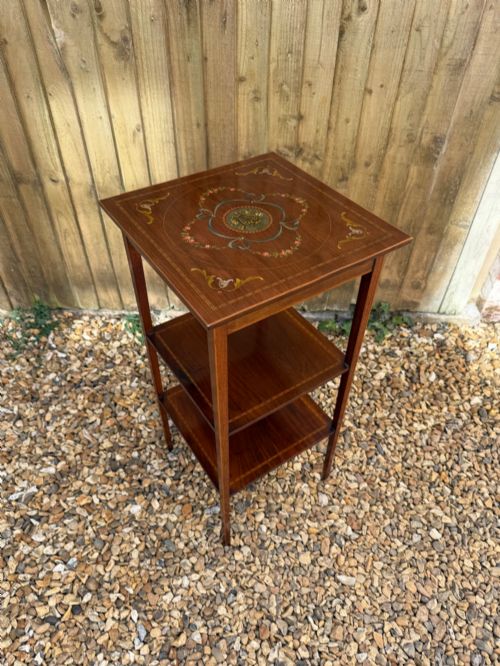
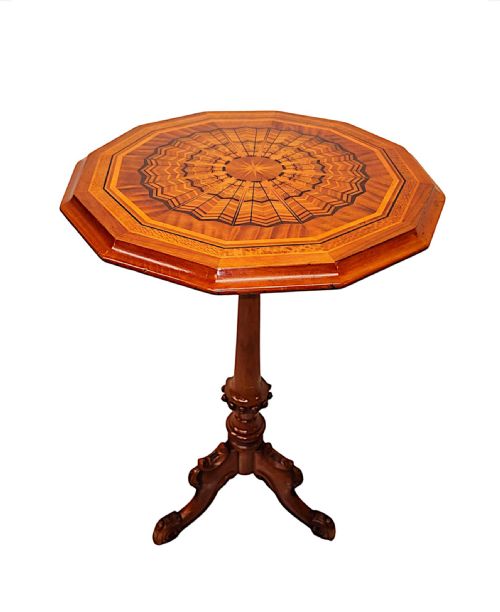
Cabinet-makers applied fine veneers of satinwood and harewood over solid mahogany or walnut carcases, utilising boxwood and ebony lines to create geometric borders. Crossbanding and marquetry panels required steady hand-cutting to fit each contrasting timber flush into the surface.
Makers incorporated brass galleries, drop handles and tapered legs to finish the construction, relying on traditional mortise and tenon joints. Polishing brought out the natural sheen of the golden satinwood without obscuring the grain.
Patience tables and bijouterie cases show that historical makers anticipated the Victorian desire for solitaire games and miniature displays.
What varies in quality
Quality rests in the crispness of the inlay and the selection of the timber figures, where tight satinwood grain meets precise boxwood stringing. Simpler Edwardian production displays competent standard joinery, whereas eighteenth-century examples show intricate marquetry and hand-selected veneers.
The integrity of the structural carcase dictates longevity, separating sturdy everyday furniture from purely decorative pieces. Well-executed crossbanding and tightly fitted joints preserve the original lines against seasonal wood movement.
Trevor Page & Co·Gillows
The Satinwood Inlay Side Table Glossary
- Satinwood
- A dense, light-coloured tropical timber prized for its lustrous, reflective grain that resembles satin. It is cut into thin veneers for decorative table tops and borders.
- Crossbanding
- A border of veneer laid perpendicular to the main grain of the table top, often framed by fine contrasting lines. This technique creates a distinct visual frame around the central panel.
- Marquetry
- The art of forming decorative patterns using small pieces of wood veneer arranged on a carcase. It differs from inlay by assembling the entire design before fixing it to the surface.
- Boxwood Inlay
- Narrow strips of pale boxwood set into grooves flush with the surrounding dark wood surface. It provides sharp linear contrast in neoclassical and Sheraton designs.
- Pembroke Table
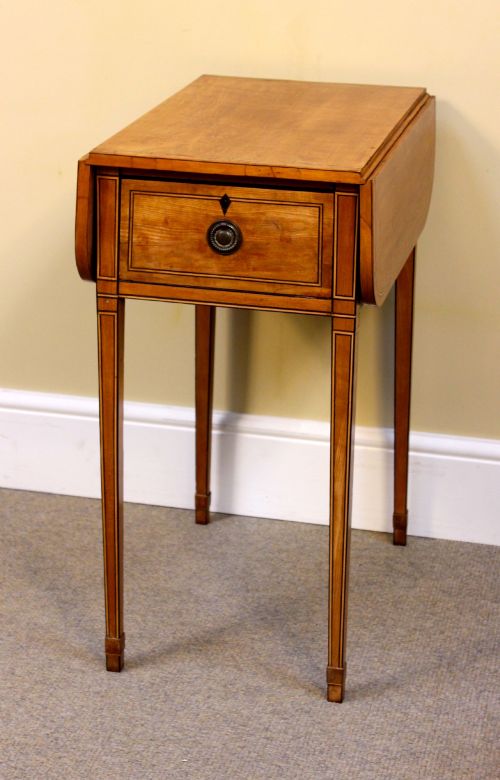
- A small drop-leaf table with hinged flaps on two opposite sides, introduced in the eighteenth century. It offers adaptable surface area supported by slender legs.
Satinwood Inlay Side Table: Frequently Asked Questions
How do I date a satinwood table?
Dating relies upon structural conventions, timber choices and the style of the inlay work. Eighteenth-century pieces exhibit hand-cut dovetails and natural wax patination, while Edwardian revivals utilise machine-sawn elements and lighter internal secondary woods.
Examining the underside and drawer linings reveals construction methods specific to each period. Georgian and Regency makers employed different framing techniques compared to late nineteenth and twentieth-century workshops.
Where should I place a side table?
These tables suit hallways, drawing rooms and bedside spaces where a compact surface is required. Their decorated tops benefit from placement near natural light to highlight the grain.
Avoid positioning them in direct sunlight or beside active heat sources, as extreme temperature shifts cause timber to dry and veneers to lift.
How do I clean satinwood veneer?
Dusting with a dry, soft cloth prevents particle buildup on the polished surface. Occasional applications of traditional beeswax nourish the timber without damaging the delicate inlay.
Water and chemical cleaning products must be avoided entirely, as moisture penetrates hairline cracks in the old polish and stains the light wood underneath.
What is Sheraton style inlay?
Sheraton design draws on neoclassical geometry, featuring symmetrical urns, bellflowers and fine stringing. Satinwood provides the bright background canvas for these restrained decorative motifs.
Original eighteenth-century examples and Edwardian revivals both utilise these motifs, though the underlying construction timber often points to the true age of the piece.