
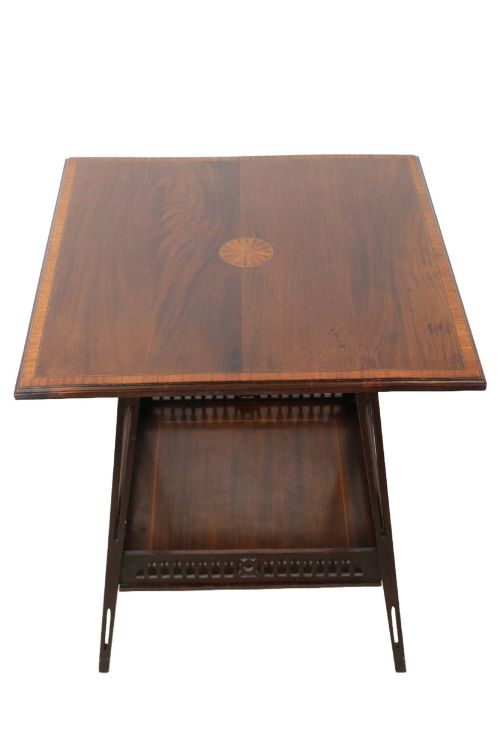

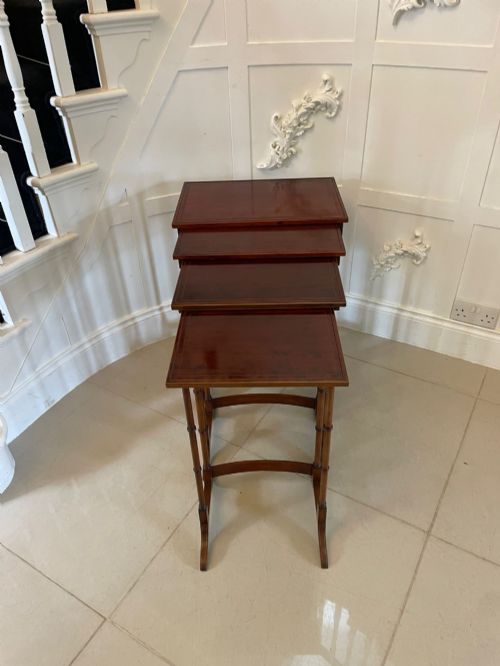
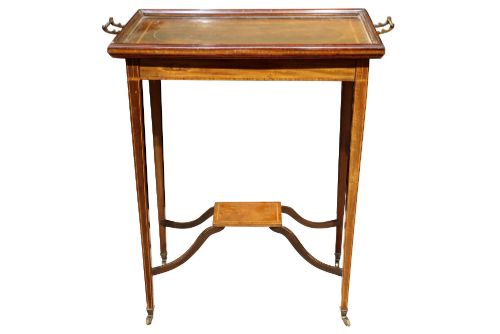
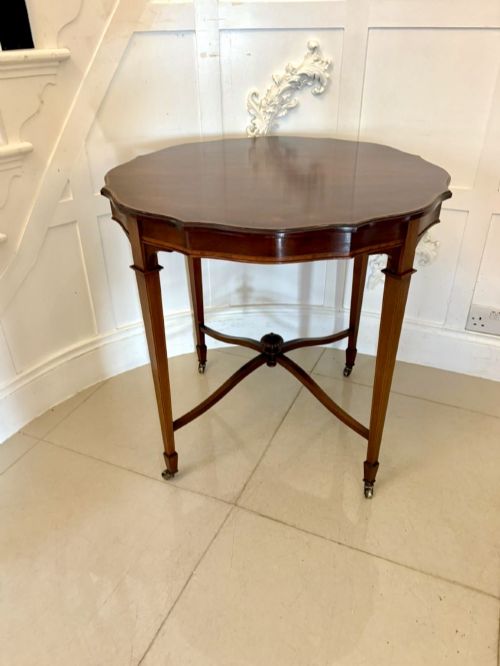
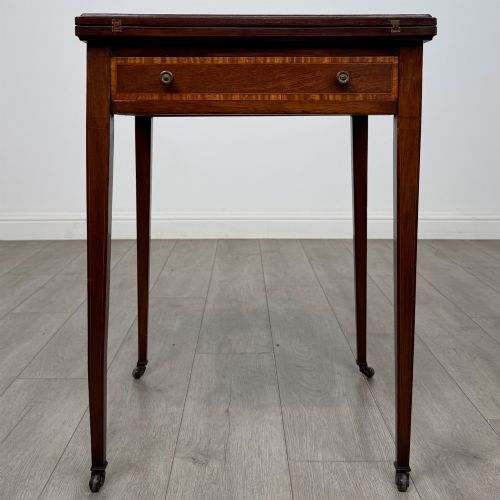
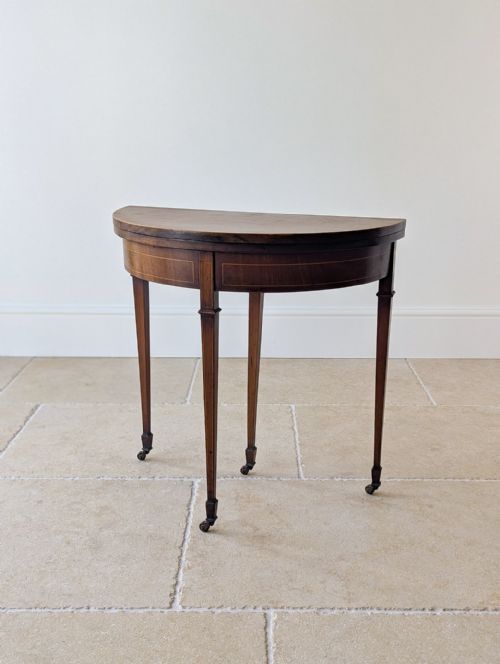
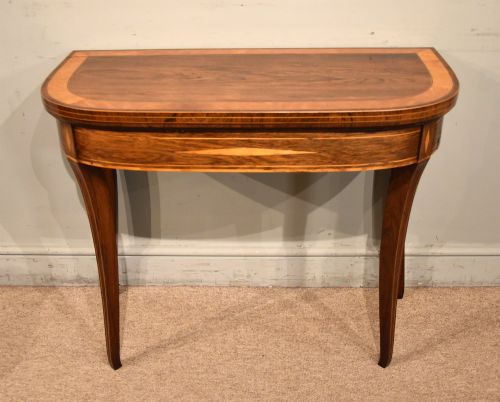

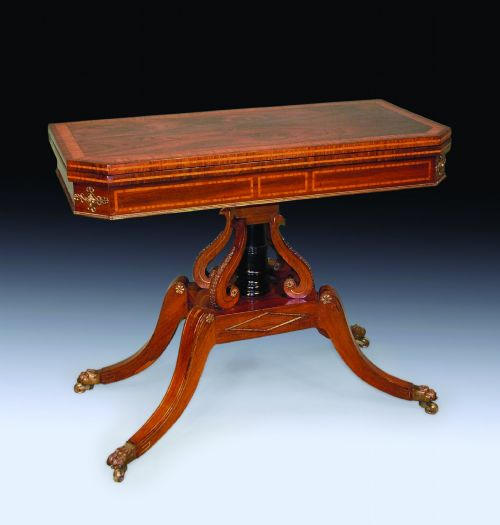
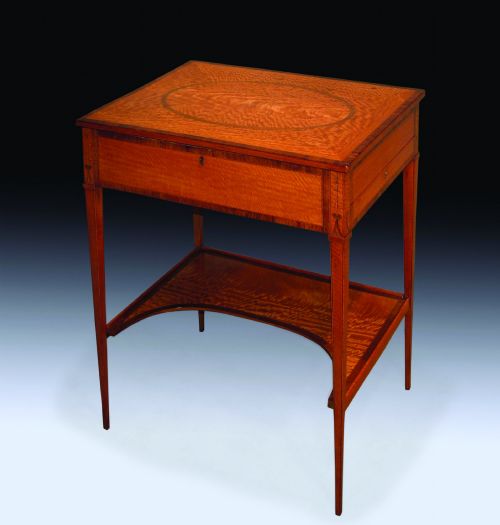
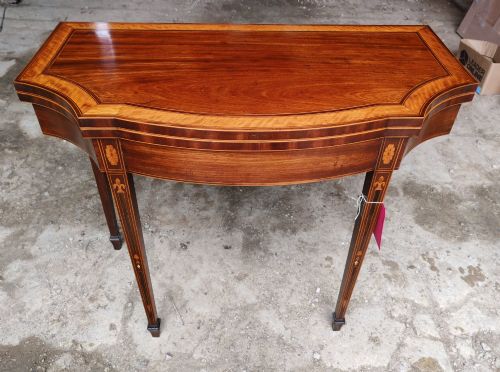
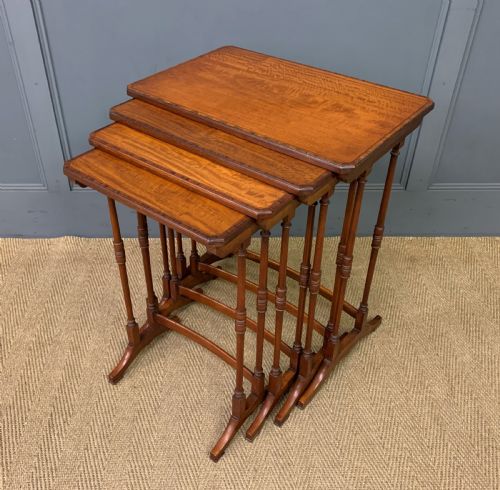
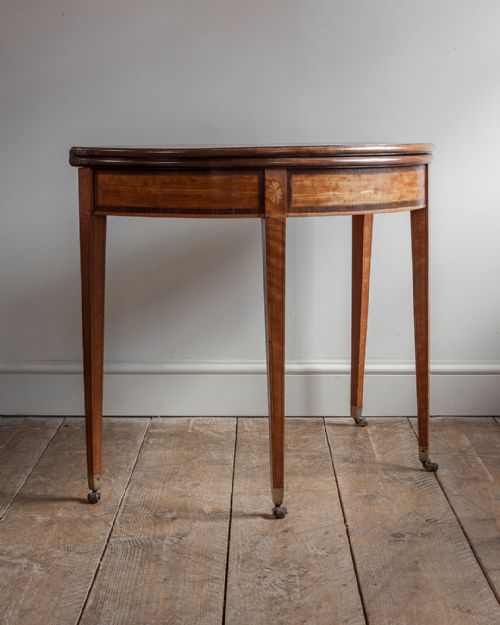
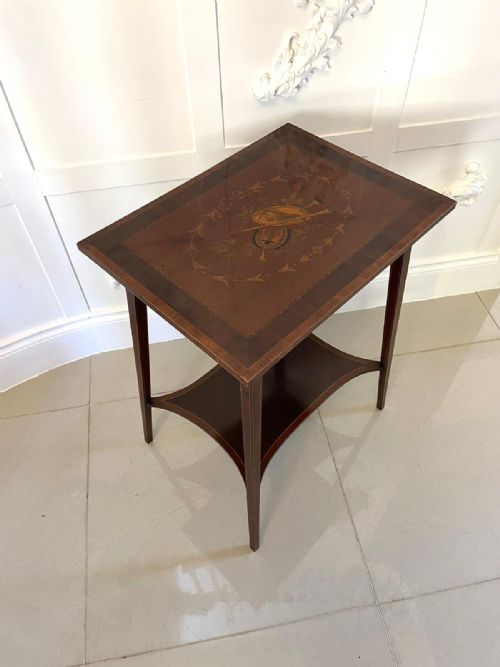
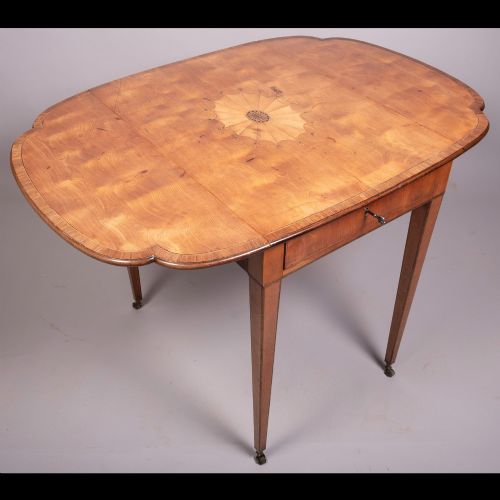
Satinwood Inlaid Tea Table
These satinwood inlaid tea table examples bring together figured timbers and precise contrast work, offering a surface designed for both display and hospitality.
Satinwood Inlaid Tea Table
A satinwood inlaid tea table combines the warmth of polished timber with intricate contrasting details, appearing most frequently in Edwardian interpretations and eighteenth-century Georgian pieces. You will encounter forms ranging from fold-over card and games configurations to Pembroke and drop-leaf designs intended for versatile placement within a room.
The materials span from genuine satinwood and mahogany to rosewood, boxwood, and satin walnut, often enriched with marquetry or boxwood inlay. These tables originate across periods including the Georgian era, the Regency period, and the later revival movements of the Edwardian and Victorian decades.
Materials and Technique
Cabinetmakers utilised primary timbers like satinwood and mahogany as the structural canvas, frequently pairing them with contrasting borders of rosewood, ebony, and boxwood. The decorative surfaces rely heavily on boxwood inlay and marquetry inlay, where fine veneers are meticulously cut and fitted into geometric or floral motifs.
Construction techniques reflect the demands of folding leaves and stable leg supports, employing precise joinery to allow operation in drop-leaf and envelope card configurations. Polishing finishes the wood grain to a smooth lustre, highlighting the natural shimmer of the satinwood.
Some card tables hide secret compartments beneath their folding tops, originally designed for stoking the stakes after dark.
Evaluating the Pieces
Quality rests upon the crispness of the inlay work and the selective choice of figured veneers, where tighter grain patterns and harmonious timber contrasts command attention. The integration of structural elements, such as how smoothly a fold-over top or drop leaf operates, dictates the standard of the piece.
Period execution also plays a defining role, as Georgian and Regency examples display hand-cut precision, while later Sheraton Revival and Edwardian pieces demonstrate refined interpretations of earlier classical motifs.
Trevor Page & Co·Bombay Furniture Company
The Satinwood Inlaid Tea Table Glossary
- Satinwood
- A light, lustrous timber native to the tropics, prized for its golden sheen and smooth finish. It serves as the primary or veneered surface on high-status tables.
- Marquetry Inlay
- The art of applying pieces of veneer to a structure to form decorative patterns. Craftsmen use varied woods to create pictorial or geometric designs.
- Demilune
- A half-moon shape commonly seen in the design of card and console tables. This silhouette allows the piece to sit flush against a wall when closed.
- Pembroke Table
- A small rectangular table featuring two hinged drop leaves on opposing sides. It often includes a single drawer and slender legs.
- Crossbanding
- A strip of veneer applied around the border of a tabletop with the grain running perpendicular to the centre. This frames the primary wood.
Satinwood Inlaid Tea Table: Frequently Asked Questions
How were these tables used originally?
These tables served primarily for the formal serving of tea in domestic sitting rooms, functioning as mobile surfaces that could be expanded when guests arrived.
Many variants also incorporated fold-over tops to double as card or games tables for evening entertainment.
How do I tell an 18th-century piece from an Edwardian revival?
Eighteenth-century examples display hand-cut dovetails, older timber shrinkage characteristics, and distinct patination acquired through centuries of use.
Edwardian revival pieces, produced around nineteen hundred, often employ machine assistance, standardised inlay patterns, and lighter interior secondary woods.
What is the difference between satinwood and satin walnut?
Satinwood is a dense, exotic hardwood known for its bright golden-yellow colour and natural chatoyancy. It forms the classic surface for high-end Georgian and Sheraton furniture.
Satin walnut is an alternative domestic timber selected for its similar warm tone and grain movement, frequently utilised in Edwardian occasional furniture.
Can I use a tea table for daily dining?
These tables are built with delicate drop leaves and folding mechanisms suited for light hospitality and display rather than heavy family meals.
Placing lamps, decorative ceramics, or occasional tea sets preserves the structural integrity of the antique joints and delicate inlaid borders.