


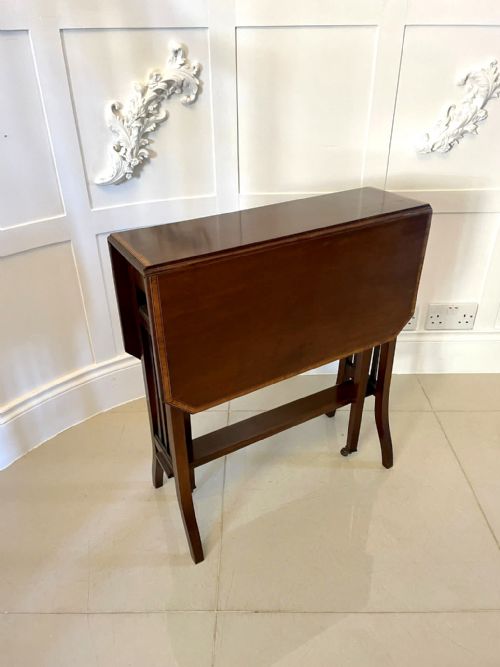


Edwardian Inlaid Sutherland Table
An Edwardian inlaid sutherland table is a narrow folding tea table that brings graceful versatility to a sitting room.
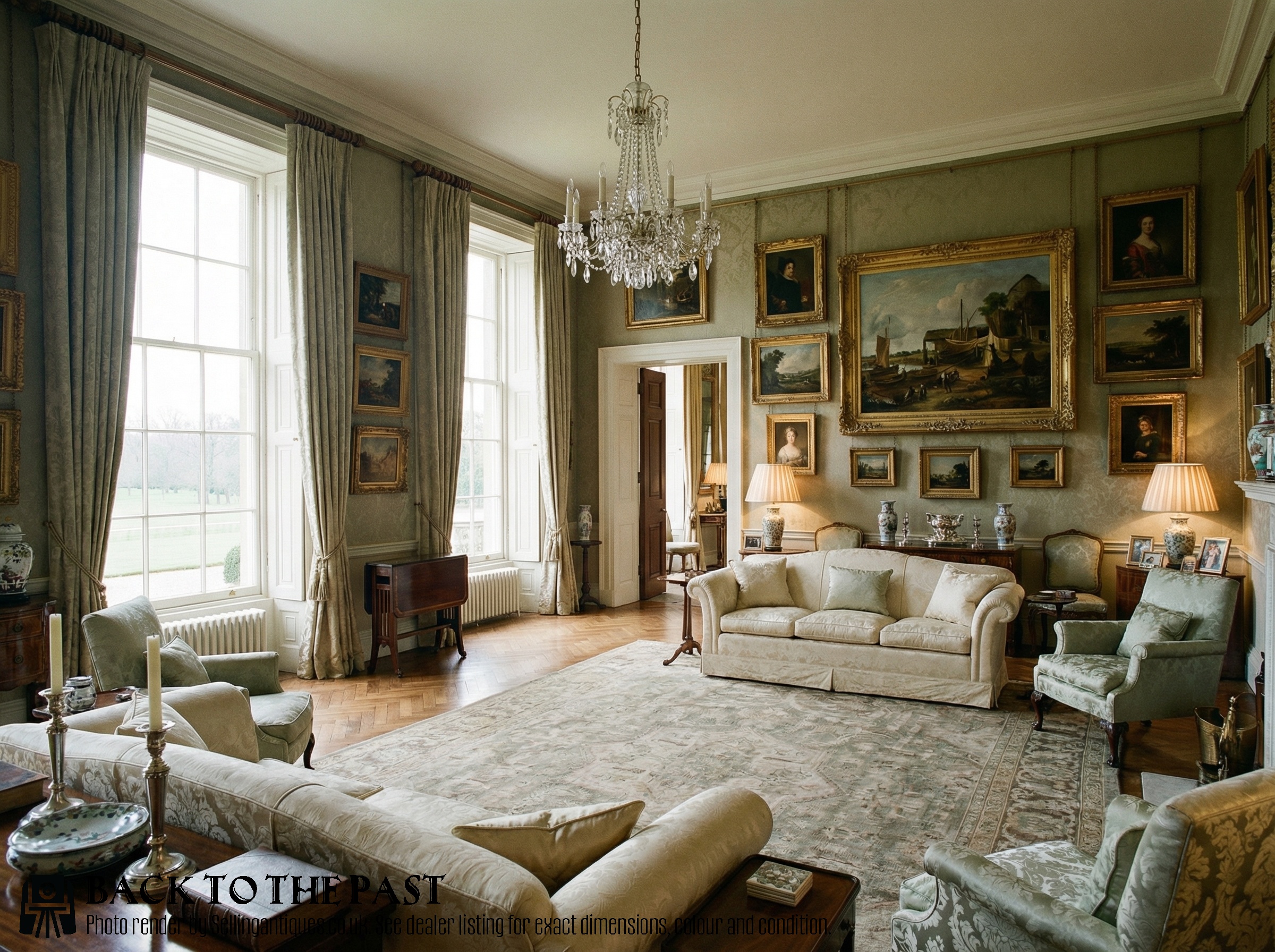
Edwardian Inlaid Sutherland Table
When you search for an edwardian inlaid sutherland table, you look for a slender drop-leaf occasional table designed to fold flat when not in use. These pieces belong predominantly to the Edwardian period and the year 1900, though Victorian examples also appear in walnut and mahogany.
The form relies on hinged flaps supported by pivoting gate legs, allowing the table to transform from a compact display surface into a tea table. Most examples seen here use mahogany as a primary wood, often enhanced with satinwood or boxwood inlay.
Beyond the standard mahogany designs, variations include rosewood and burr walnut, alongside smaller baby sutherland tables and oval coffee table formats. These tables function as flexible side tables that take up minimal floor space.
Materials and construction
Cabinet makers built these tables using solid and veneered timbers, primarily mahogany, rosewood and walnut, paired with delicate stringing and banding in satinwood and boxwood. The inlay work often incorporates contrasting light woods to trace geometric or floral borders along the table top.
The defining mechanical feature is the gate leg action, which swings out on wooden or brass hinges to support the drop leaves. Joinery relies on precise framing to ensure the narrow legs remain stable when the leaves are raised.
Edwardian Inlaid Sutherland Table Retail Price Guide 2026
Typical asking prices for edwardian inlaid sutherland table among the pieces listed under this phrase on Sellingantiques today, from the lower quarter to the upper quarter. They describe what is for sale here now, not the wider market.
Listings for this phrase feature mahogany, rosewood, walnut, and burr walnut, accented with satinwood and boxwood inlay across Edwardian and Victorian periods.
Judgments of quality
Quality rests on the crispness of the satinwood inlay and the selection of figured timber for the top. Pieces with rich grain patterns and clean contrast in the banding stand apart from simpler iterations.
The smoothness of the drop-leaf action and the rigidity of the gate legs when extended indicate the care taken in original assembly. Tables retaining their original brass hardware and deep polish show superior preservation.
The Edwardian Inlaid Sutherland Table Glossary
- Sutherland table
- A narrow drop-leaf table with hinged flaps supported by swinging gate legs. This form allows the table to stand flat against a wall when folded.
- Gate leg
- A pivoting leg that swings outward from the frame to support a drop leaf. It provides stability to the extended flaps.
- Satinwood inlay
- A contrasting yellow-gold timber set into the primary wood surface to create decorative borders. It frequently appears in Edwardian Sheraton Revival designs.
- Drop leaf
- A hinged section of a table top that can be raised or lowered. It enables the furniture to adjust in size according to domestic needs.
Edwardian Inlaid Sutherland Table: Frequently Asked Questions
How do I use a sutherland table today?
These tables function well as flexible side tables or lamp tables in a sitting room. With the leaves dropped down, they occupy very little space against a wall.
When guests arrive, the leaves lift easily to provide extra surface area for cups or books. The folding action makes them practical for smaller rooms where permanent large tables do not fit.
How do I tell Edwardian from Victorian tables?
Edwardian examples tend to display lighter timber choices, finer satinwood banding and a generally more delicate silhouette. Victorian versions often use heavier walnut or mahogany frames with simpler turning on the legs.
Reviewing the specific period markers helps identify whether a piece dates closer to 1900 or stems from mid-nineteenth century production. Both eras maintain the characteristic drop-leaf gate leg mechanism.
What is a baby sutherland table?
A baby sutherland table is simply a smaller scale version of the standard drop-leaf design. These compact pieces maintain the same gate leg mechanism and inlaid details in a reduced footprint.
They work particularly well as occasional tables beside low armchairs or in restricted spaces. The proportions scale down while retaining the functional qualities of larger tables.
How should I care for the wood surface?
Maintaining the finish involves dusting with a soft cloth and avoiding excessive moisture on the veneered surfaces. Natural waxes help protect the polish and preserve the depth of the mahogany or rosewood grain.
Keeping the table away from direct heat sources prevents the wood from drying out and protects the delicate satinwood inlay from fading over time.