
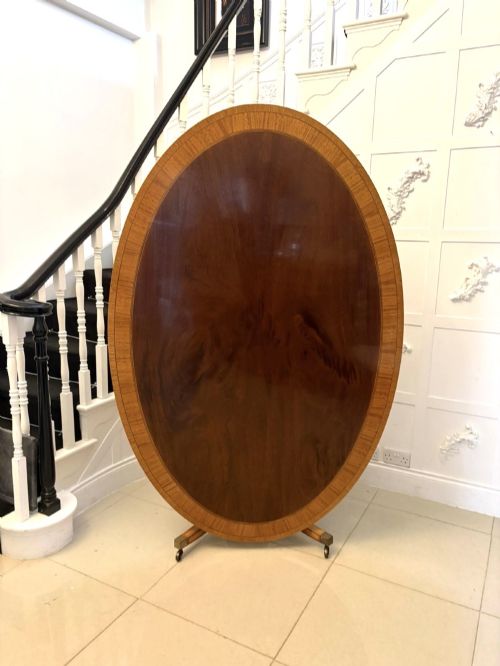
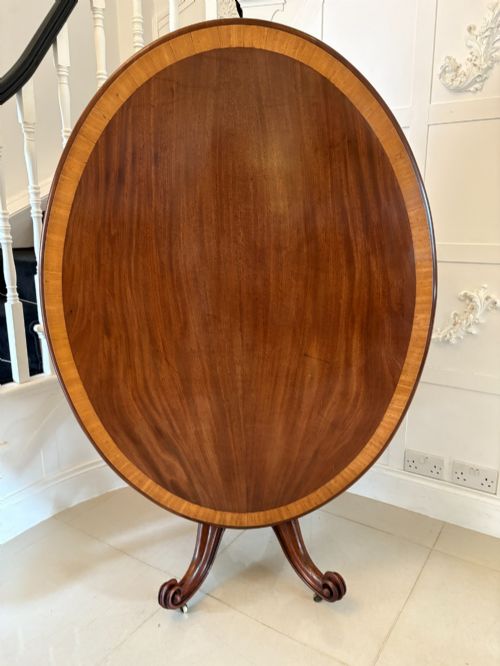
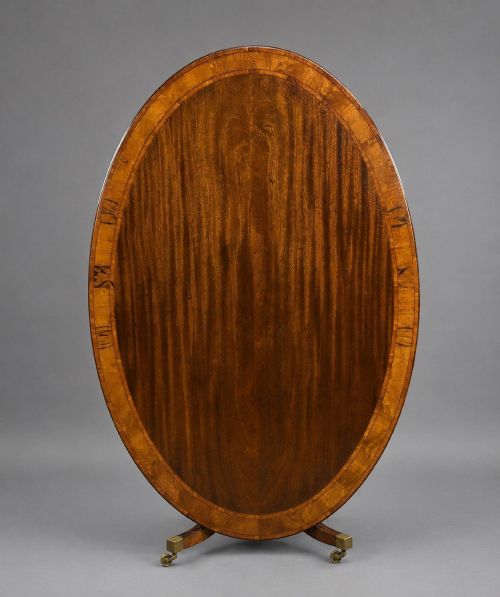
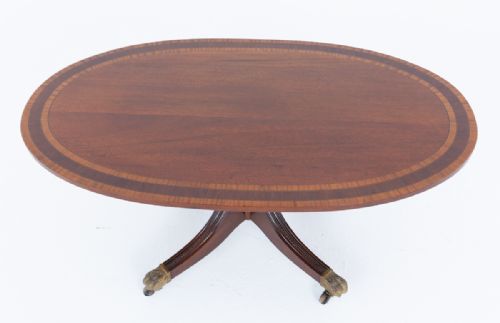


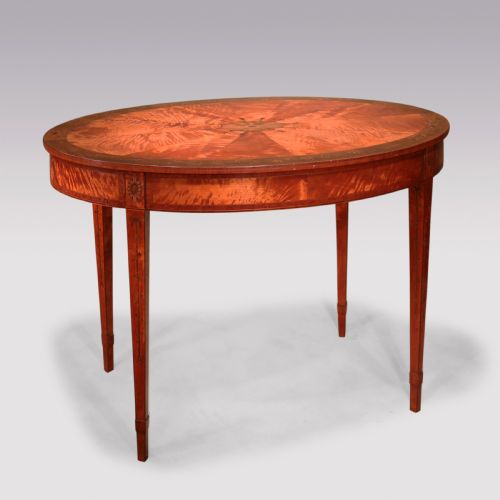


Satinwood Crossbanded Oval Table
A satinwood crossbanded oval table brings unmistakable warmth and crisp geometric border work into a room.
Satinwood Crossbanded Oval Table
A satinwood crossbanded oval table stands as a refined centrepiece, combining curved perimeters with pale timbers. The selection spans periods from Georgian origins through to Edwardian and later revivals, offering forms such as Pembroke tables, breakfast tables, and occasional pieces.
Most examples pair a dark primary wood with lighter contrasting borders, creating the characteristic linear framing that defines the style. Buyers encounter everything from drop-leaf drop flap designs to coffee and dining formats across this page.
Origins stretch from the late eighteenth century into the twentieth century, capturing both original Georgian craftsmanship and subsequent Sheraton revival interpretations. Each iteration uses the distinctive oval outline to soften interior layouts while displaying timber grain.
How they were made
Cabinet makers constructed these tables using solid mahogany or framed carcasses overlaid with finely cut veneers. Satinwood provides the primary light surface or border, frequently accented by dark boxwood and rosewood stringing.
Inlay techniques require precise hand-cutting to embed contrasting timbers into recesses along the edge of the top. Craftsmen applied timber inlay and brass details to enhance structural joints and perimeters.
Drop-leaf mechanisms and Pembroke flaps rely on brass hinges let flush into the timber leaves. Finishing involved careful polishing to bring out the natural chatoyancy of figured mahogany and exotic satinwood.
The listings here span from the eighteenth century through to the nineteen-twenties, incorporating mahogany, satinwood, and kingwood.
What varies in quality
Quality rests on the crispness of the border banding and the choice of figured timber. Superior examples display tightly matched grain patterns across the main oval surface with unbroken stringing.
The Satinwood Crossbanded Oval Table Glossary
- Crossbanding
- A border of veneer laid perpendicular to the grain of the main surface. This technique frames the top and provides visual contrast.
- Satinwood
- A lustrous, hard timber native to Ceylon and the West Indies. Its pale yellow colour and chatoyant grain make it ideal for high-end decorative banding.
- Stringing
- Thin lines of contrasting wood inlaid into channels in the furniture surface. It creates delicate geometric outlines around panels and edges.
- Kingwood
- A rich, heavy South American timber marked by dark violet-brown streaks. Makers use it alongside satinwood for striking colour contrast.
Satinwood Crossbanded Oval Table: Frequently Asked Questions
How do I care for satinwood?
Keep the timber away from direct sunlight and excessive heat sources to prevent the polished surface from drying out or fading. Dust regularly with a soft, dry cloth and apply occasional high-grade wax to nourish the grain.
Avoid using modern liquid polishes or silicone sprays, as these build up and dull the fine finish over time. Gentle handling ensures the delicate crossbanding remains secure along the edges.
Where should I place an oval table?
An oval shape works well in rooms where harsh rectangular lines need softening, such as the middle of a sitting room or study. The curved perimeter improves traffic flow around the furniture compared to sharp-cornered designs.
Smaller occasional and Pembroke variants fit neatly beside seating or against walls when the leaves are dropped. Larger dining and breakfast formats anchor open spaces effectively.
How do I date a Georgian piece?
Examine the construction methods underneath, including the drawer linings, hand-cut dovetails, and timber selection. Eighteenth-century furniture often employs secondary woods like oak or pine inside the structure.
Stylistic cues such as tapered legs, restrained stringing, and genuine period patination distinguish authentic Georgian work from later revival interpretations.
What is the difference between revival and original?
Original pieces date from the eighteenth or early nineteenth centuries and show the tool marks and ageing consistent with daily use over generations. They reflect the exact design philosophies of the period.
Revival pieces, such as those from the Edwardian era or the nineteen-twenties, emulate earlier styles using mechanised precision and slightly different secondary timbers. Both categories offer distinct aesthetic merits.