
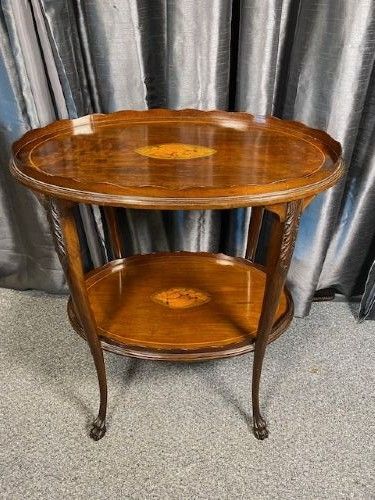
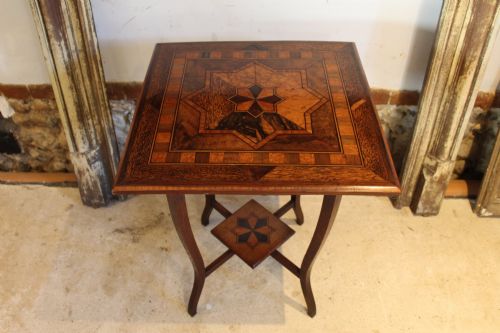
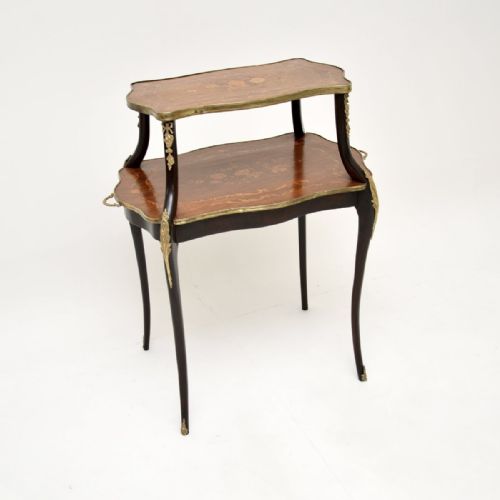


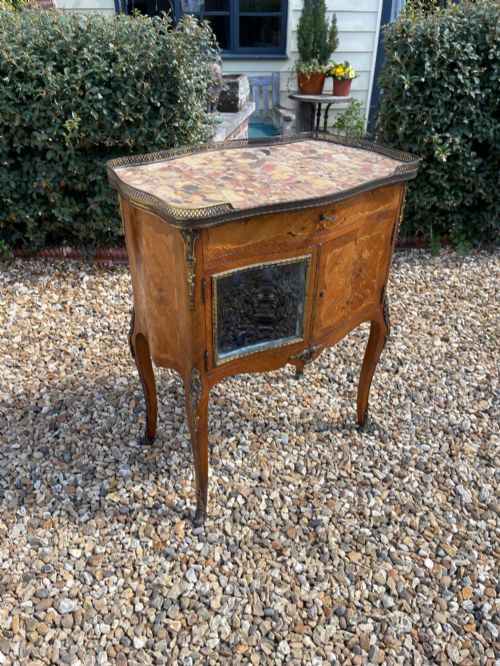


Marquetry Inlaid Display Table
A marquetry inlaid display table brings together precise woodcraft and glass to showcase cherished objects.
Marquetry Inlaid Display Table
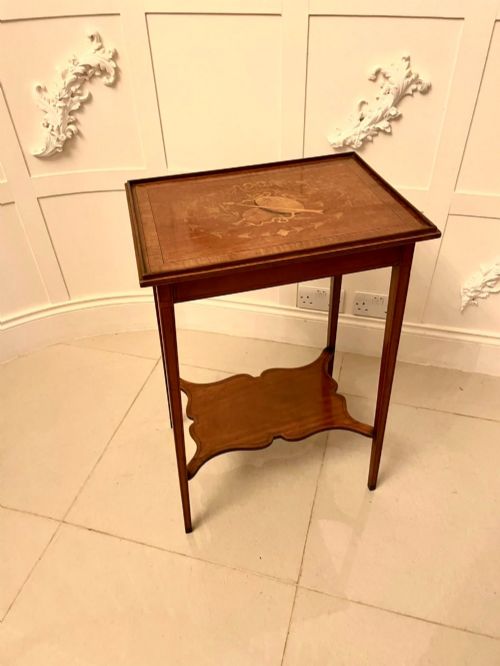
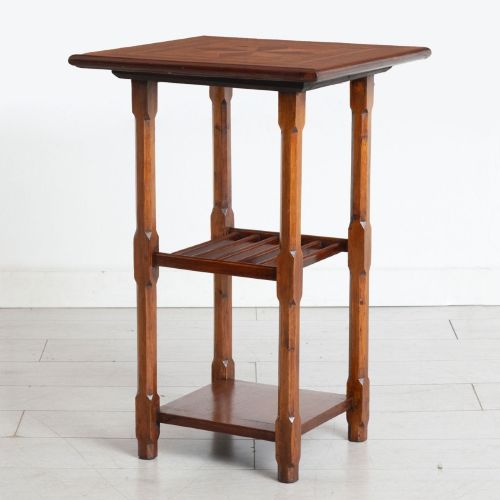
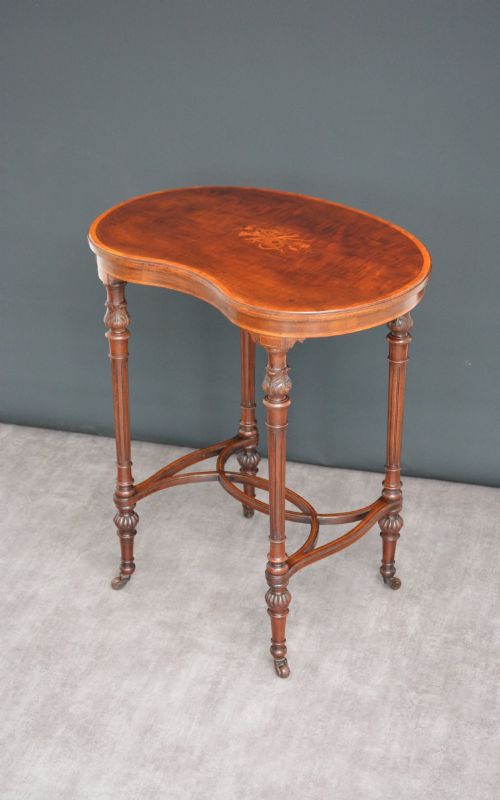
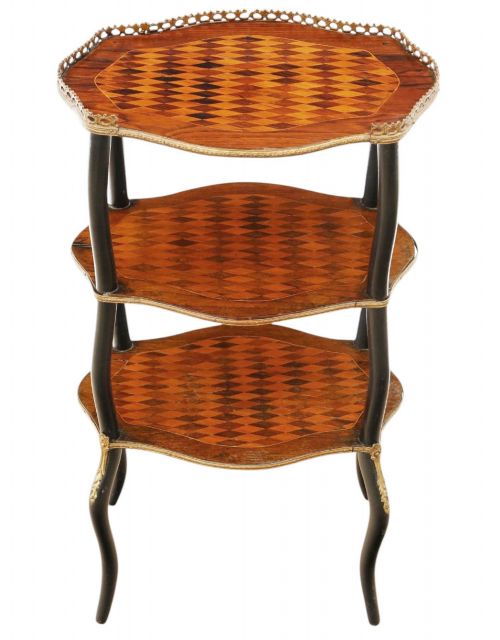
A marquetry inlaid display table combines decorative wood veneers with glazed compartments designed to hold small treasures. These items appear across Victorian, Edwardian and late nineteenth century periods, taking forms such as etageres, bijouterie tables and occasional tables. Makers built these surfaces to showcase items in a drawing room while adding pattern through inlaid floral or geometric motifs.
How they were made
Cabinetmakers constructed these frames using solid hardwoods like mahogany and walnut, applying fine veneers of satinwood, rosewood and boxwood across the surfaces. Marquetry involves cutting contrasting thin veneers by hand and assembling them into pictorial or geometric panels before gluing them to the carcase.
Detailed work relied on precise sawing and shading of wood pieces in hot sand to achieve depth. Workshops then added glass panels, brass edging, ormolu mounts and delicate stringing to complete the display structure.
Tiny glass-topped compartments were once kept locked so guests could admire visiting cards and miniature portraits without touching them.
What varies in quality
The standard of execution in the veneer work separates simpler examples from finer productions. Sharply defined marquetry details with varied timber tones indicate skilled cutting, whereas repetitive stamped patterns suggest lower workshop ambition.
Selection of timbers also dictates standing, with rich grains of satinwood, harewood or burr walnut marking out ambitious commissions. Structural grace, such as balanced serpentine forms and finely cast brass mounts, elevates individual pieces above standard domestic furniture.
Edwards and Roberts·Shoolbred of London
The Marquetry Inlaid Display Table Glossary
- Marquetry
- Decorative veneer work arranged in pictorial or geometric patterns using various coloured woods. This technique requires cutting thin slices of timber to fit together within a background panel.
- Etagere
- A set of open shelves for displaying small objects and ornaments. These pieces typically feature multiple tiers supported by slender columns.
- Bijouterie table
- A glass-topped table specifically designed for exhibiting jewellery and small curiosities. The glazed compartment allows items to be viewed from above.
- Satinwood
- A lustrous tropical timber with a golden yellow colour used extensively for fine cabinet veneers. This wood takes a high polish and forms a bright contrast against darker mahogany.
- Stringing
- Thin lines of contrasting wood inlay used to outline panels, drawers and tabletops. This linear detail defines the geometry of Edwardian and Sheraton revival furniture.
Marquetry Inlaid Display Table: Frequently Asked Questions
How were etageres used originally?
Etageres served as multi-tiered display furniture for holding porcelain, books, small sculptures and decorative objects. They stood in reception rooms where homeowners gathered to display their refined tastes to visitors.
The open shelving structure allowed light to reach the displayed items, creating a focal point within the interior arrangement of the room.
How do I distinguish Edwardian from Victorian tables?
Edwardian tables generally exhibit lighter timbers like satinwood, slender proportions and brighter Sheraton revival influences. Victorian pieces tend toward heavier mahogany or walnut structures with darker finishes and denser carved details.
French revival and Rococo influences appear across both eras, but Edwardian marquetry often feels lighter and more restrained in its decorative composition.
How do I care for antique satinwood furniture?
Protect antique satinwood from direct sunlight to prevent the golden tones from fading or darkening unevenly over time. Maintain a stable indoor climate to keep the delicate veneers from lifting or cracking.
Apply high quality furniture wax sparingly and buff gently with a soft cloth to preserve the natural lustre of the timber without building up heavy residues.