
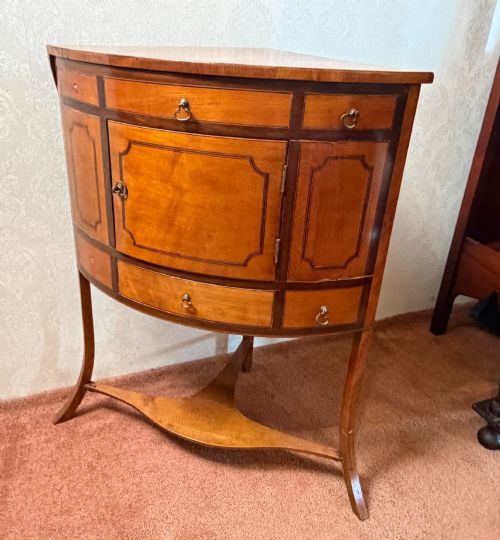
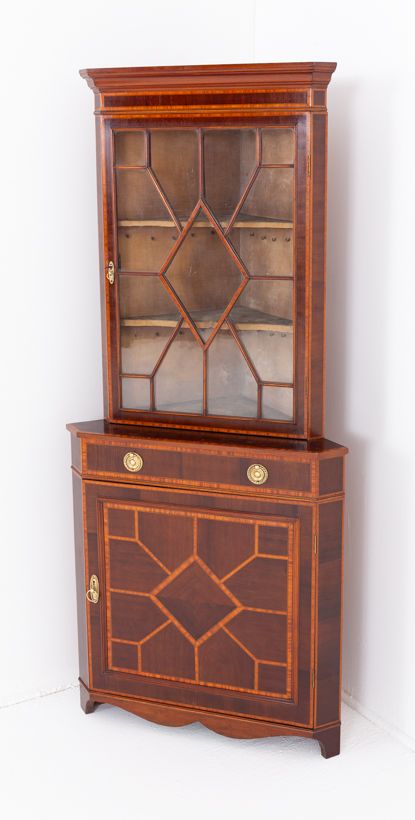
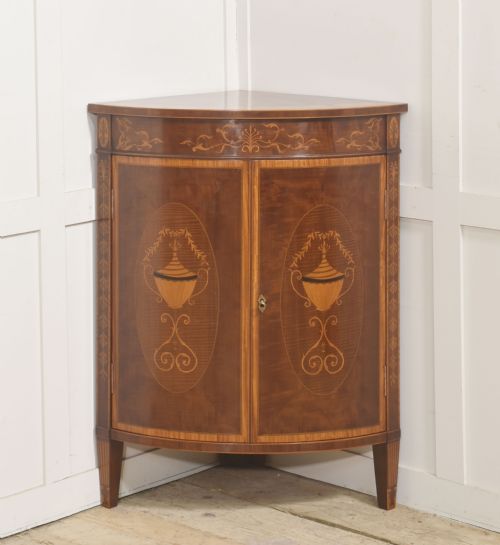

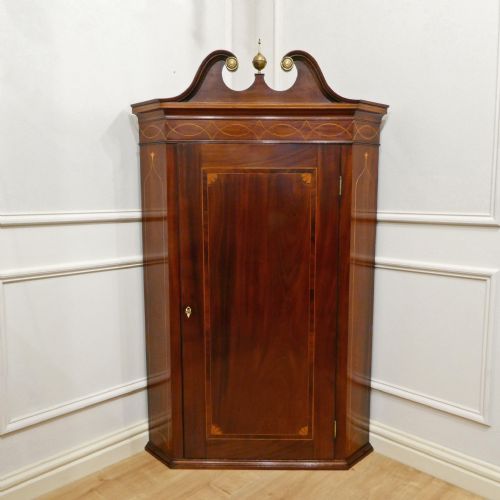


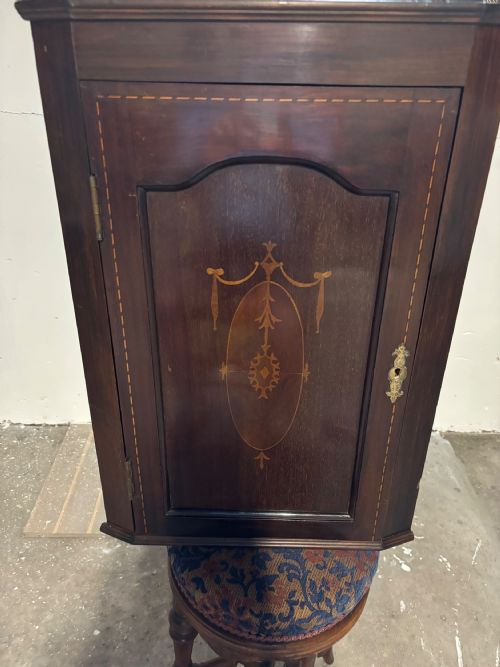


Satinwood Corner Cupboard
A satinwood corner cupboard fits neatly into a dead angle while bringing pale, figured timber and fine detail into a room.
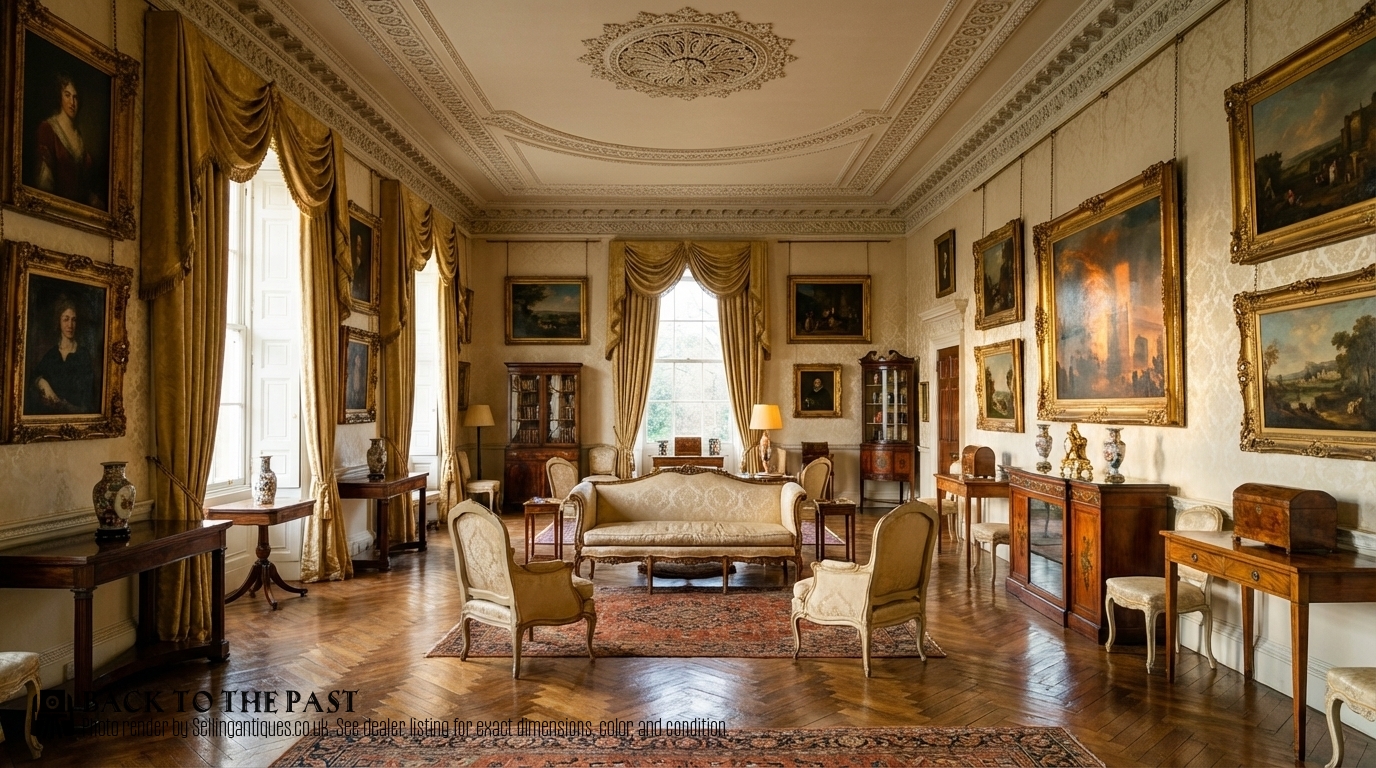
Satinwood Corner Cupboard
A satinwood corner cupboard uses triangular framing to occupy room junctions efficiently, appearing in various forms from wall-hanging units to tall standing double-height display pieces. The pieces available span several eras, predominantly featuring Edwardian, Georgian, and Victorian periods alongside Sheraton Revival interpretations.
The primary forms recorded include corner cabinets, display cases with glass doors, and even a folding corner washstand. Many examples combine a mahogany carcase with satinwood inlay, while others present full satinwood surfaces or painted polychrome decoration.
Materials and construction
Makers built these cabinets using sturdy timbers like mahogany for the main structure, applying satinwood veneers and stringing for pale contrast. Inlay work frequently incorporates boxwood alongside satinwood to create decorative banding and classical motifs.
Glazed doors utilise wooden astrigals to hold the glass panes, while standing models often separate into two modular vertical sections. Brass hardware secures the doors and corners, and some pieces incorporate internal mirrors or fabric linings.
Materials range from solid mahogany and satinwood to intricate marquetry, boxwood inlay, glass, and painted polychrome decoration.
Distinctions in quality
Quality rests upon the selection of timber veneers and the precision of the marquetry or stringing. Crisp, intricate inlay work and well-figured satinwood indicate higher workshop standards than simpler painted or plain surfaces.
Structural integrity also separates standard utility pieces from finer examples, seen in the joinery of the cornice, the alignment of astrigal glazing, and the retention of original brass fittings.
The Satinwood Corner Cupboard Glossary
- Satinwood
- A dense, lustrous tropical timber with a natural golden sheen used for veneers and fine cabinetwork.
- Astrigal
- A narrow wooden moulding dividing glass panes within a cabinet door.
- Marquetry
- Decorative patterns formed by fitting pieces of veneer into a wood foundation.
- Stringing
- Thin lines of contrasting wood inlay used to outline panels and drawers.
- Sheraton Revival
- A late nineteenth and early twentieth-century style copying the light, classical furniture designs of the eighteenth century.
Satinwood Corner Cupboard: Frequently Asked Questions
How do I hang a wall-hanging corner cupboard?
Wall-hanging models require secure fixings into solid masonry or substantial internal wall studs to bear the weight of the timber and contents.
Because these cabinets are heavy, professional installation ensures the carcass stays square and plumb against intersecting walls.
Where should I place a corner cupboard?
These units transform unused room junctions into focal points, working well in dining rooms, hallways, and drawing rooms.
Standing versions require adequate floor space, while hanging models release surface area underneath for tables or small chests.
How do I tell Georgian from Edwardian pieces?
Georgian examples date from the eighteenth and early nineteenth centuries, showing period timber patination and hand-cut joinery.
Edwardian pieces and Sheraton Revival reproductions date around nineteen hundred, often utilising machine-cut veneers and lighter internal fittings.
Can I store heavy items inside?
Shelves within these cabinets suit porcelain, glassware, and decorative objects rather than heavy volumes or dense loads.
Older fixed or adjustable wooden shelves rest on simple supports designed for display items rather than utilitarian storage.