




Satinwood Cabinet on Legs
Satinwood cabinet on legs pieces are refined storage items combining light timbers and elevated stands, offering a graceful focal point for any room.
Satinwood Cabinet on Legs
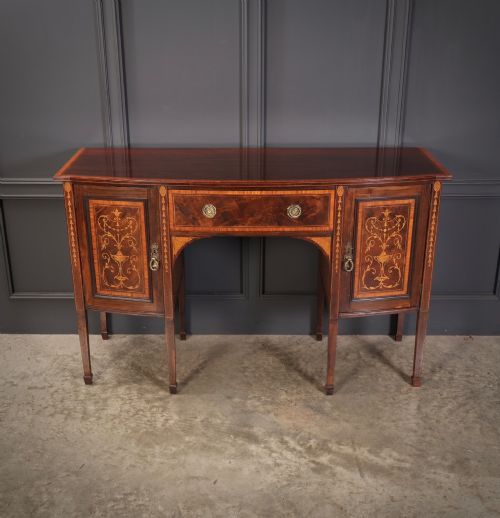
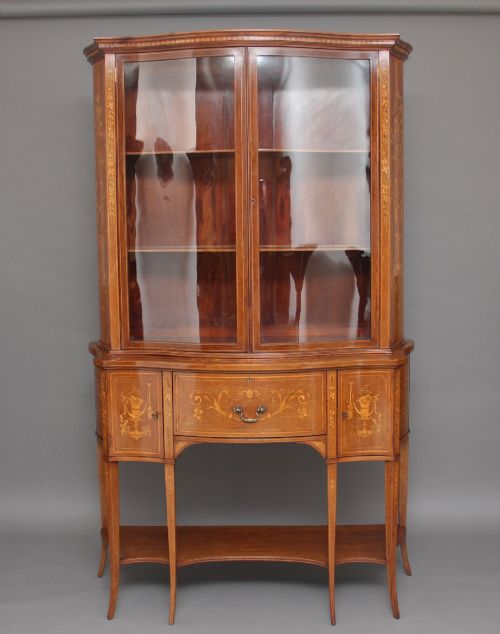
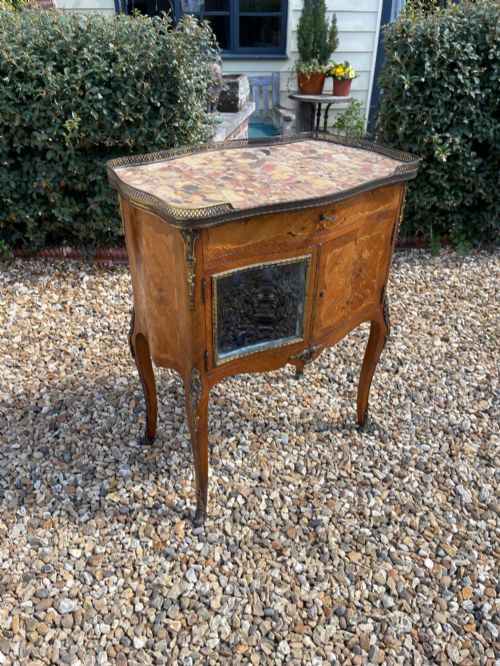
A satinwood cabinet on legs brings together light timber surfaces and elevated stands, spanning forms from bedside cupboards and display cabinets to sideboards and small desks. Buyers searching for a satinwood cabinet on legs will frequently encounter Edwardian and Sheraton Revival examples, alongside pieces dating from the nineteenth century and the Georgian period.
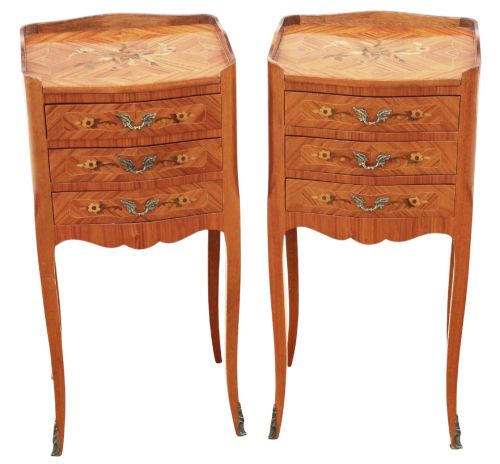
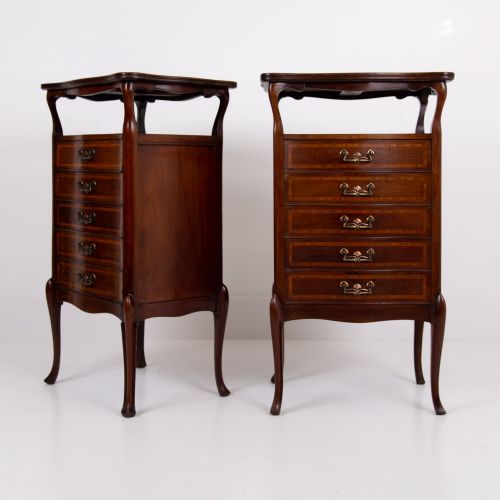
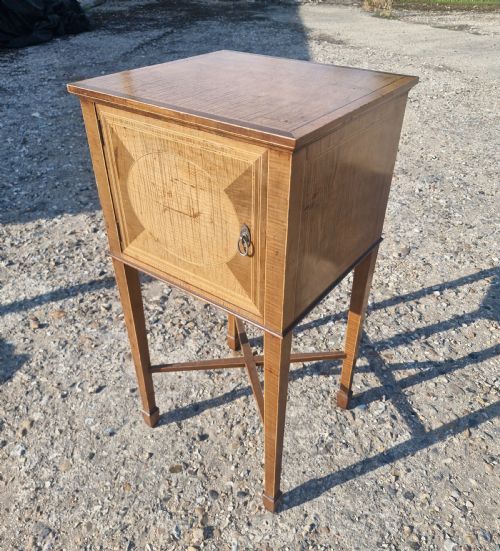
The selection here encompasses bedside tables, side cabinets, and writing desks, demonstrating how cabinetmakers applied pale timbers to various functional forms. While grander items such as breakfront sideboards and display cabinets appear, compact bedside units and lamp tables remain typical variations within these listings.
What varies in quality
Quality rests upon the precision of the timber matching and the crispness of the inlay work, distinguishing master cabinet work from simpler production. The choice of figured satinwood veneers and the subtlety of the contrasting mahogany or rosewood banding dictate the visual depth of the piece.
Structural integrity reveals itself in the joinery of the legs and the smooth operation of drawers and doors. Stamped signatures from recognised firms or workshops add documented provenance that elevates the standing of an individual piece.
Listings feature Edwardian, nineteenth-century, and Georgian periods, utilising satinwood, mahogany, brass, and glass.
Morant and Co·Waring and Gillow
The Satinwood Cabinet on Legs Glossary
- Satinwood
- A hard, durable timber with a natural golden sheen and smooth texture, widely used for fine veneers and stringing. It forms the primary visual identity of these cabinets.
- Crossbanding
- A decorative border of veneer laid around the perimeter of a panel or drawer front with the grain running perpendicular to the centre. This technique frames the satinwood surface.
- Parquetry
- Geometric mosaic woodwork formed by small pieces of wood fitted together to create patterns on table tops and cabinet doors. It adds texture alongside plain satinwood.
- Bonheur du jour
- A small, light lady's writing desk featuring a cabinet or drawers mounted on the top surface above slender legs. These elegant pieces often incorporate satinwood inlay.
- Marquetry
- The art of applying small pieces of veneer to form pictorial or decorative designs, frequently depicting floral motifs on eighteenth and nineteenth-century furniture.
Satinwood Cabinet on Legs: Frequently Asked Questions
How do I date a satinwood cabinet?
Dating relies on examining the construction methods, secondary timbers used inside drawers, and stylistic markers such as Sheraton Revival neoclassical motifs or Edwardian proportions. Comparing the specific veneer work and handle styles against known period examples helps narrow down the decade of manufacture.
Makers' stamps and paper labels provide definitive dates when present. Regional differences between English and French workshop traditions also guide the identification of the production era.
Where should I place a bedside cabinet?
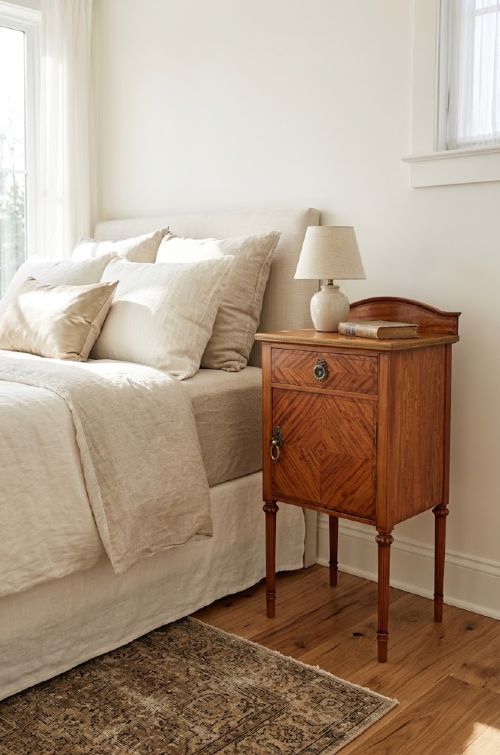
These compact cupboards suit bedroom settings as bedside nightstands, holding lamps, books, and small personal items while adding a decorative element to the room. Their elevated leg design creates an open, airy feel beside a bed.
They also function effectively as lamp tables or small side tables in living rooms and hallways. Their versatile storage capacity makes them practical in tighter spaces.
How do I care for satinwood surfaces?
Maintain satinwood furniture by dusting regularly with a soft, dry cloth and avoiding placement in direct sunlight or near heat sources that might dry out the timber. Gentle waxing preserves the golden lustre of the veneer without building up heavy residues.
Keep moisture away from the polished surfaces by using coasters under drinks or vases. Professional conservation advice should be sought for antique finishes showing signs of wear or lifting veneer.
What is the difference between Sheraton Revival and Georgian pieces?
Georgian furniture dates from the eighteenth century, featuring authentic period construction, proportions, and hand-cut joinery typical of the era. Sheraton Revival pieces date from the late nineteenth or early twentieth century and replicate those earlier neoclassical designs using later manufacturing techniques.
Both styles utilise satinwood and mahogany extensively, but interior construction details and secondary woods generally reveal the true age of the piece.