
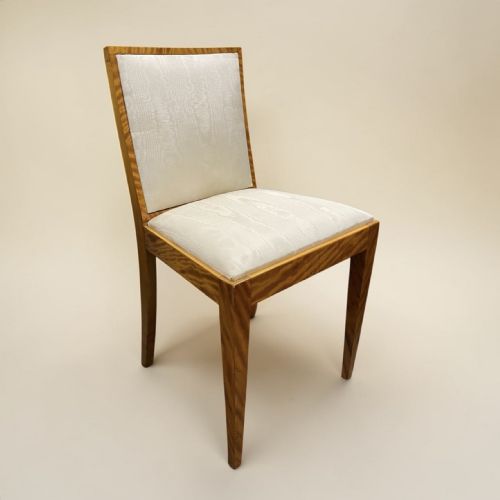



Satin Birch Desk
Satin birch desks combine pale golden timber with architectural form, offering a refined writing surface that brings understated light into a study.
Satin Birch Desk
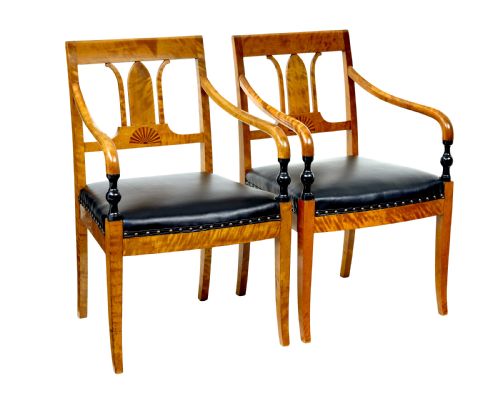
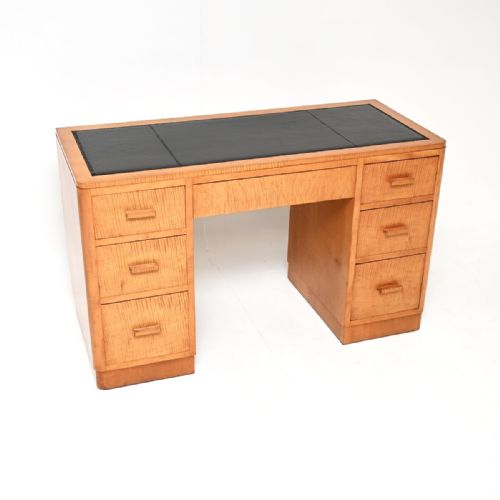
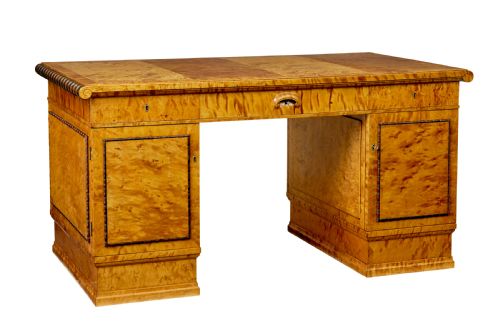
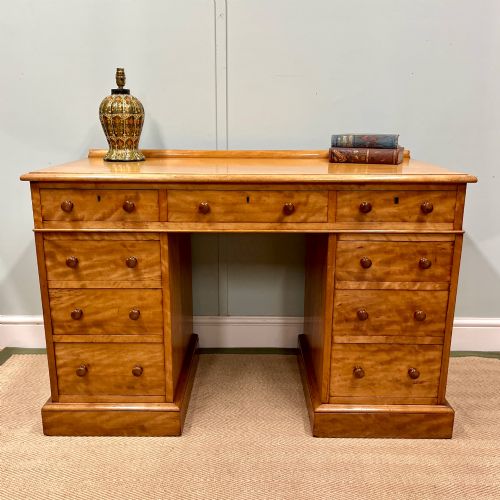
A satin birch desk is a workspace constructed from or veneered in the pale, shimmering timber of the birch tree, often set with contrasting wood details or leather writing inserts. When you search for a satin birch desk, you encounter substantial pedestal forms alongside compact writing tables from the nineteenth century and the Art Deco era.
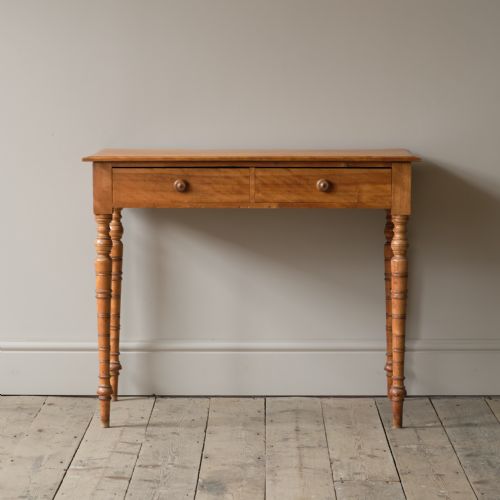
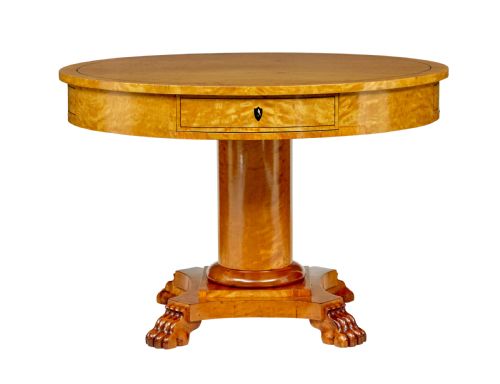
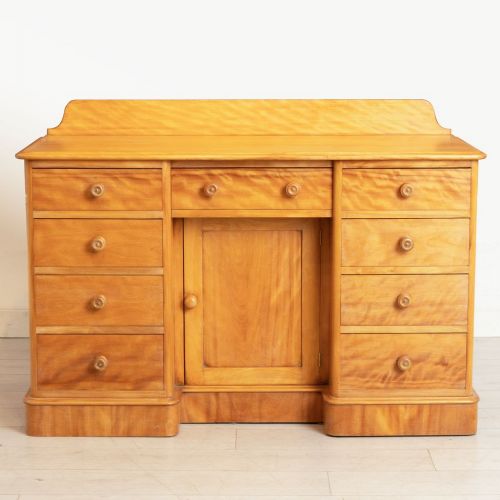
The nineteenth-century examples appear most frequently, spanning Victorian kneehole desks and writing tables alongside Swedish Biedermeier variations. Makers built these pieces to serve as functional library and study furniture, utilising the distinctive grain pattern to catch the light in domestic interiors.
How they were made
Cabinet makers selected carefully figured veneers, including flame birch and standard satin birch, applying them over pine or secondary wood carcases to create striking surface patterns. These timber faces were frequently paired with brass hardware and fitted with inset leather writing surfaces.
Construction techniques relied on traditional dovetail joints for drawer boxes and sturdy internal framing to support the dense weight of pedestal writing furniture.
Listings span the nineteenth century through the 1930s, featuring Victorian, Art Deco, and Biedermeier styles built in satin birch, leather, and brass.
What varies in quality
The tier of a piece depends heavily on the selection and matching of the veneer figures across the drawer fronts and primary panels, where superior examples display symmetrical flame patterns. Finer desks maintain their original brass handles, leather inserts, and internal drawer configurations without later alterations.
The crispness of the secondary timber joinery and the subtlety of ebonised or contrasting wood details distinguish workshop standards among both English Victorian and Swedish pieces.
Heal and Son·J Shoolbred·Howard and Sons·Gillows·Bath Cabinet Makers
The Satin Birch Desk Glossary
- Satin birch
- A pale, highly figured hardwood timber derived from birch trees, prized for its shimmering chatoyant grain. It was utilised extensively by nineteenth-century cabinet makers for luxury bedroom and study furniture.
- Pedestal desk
- A freestanding office or study table supported by two vertical banks of drawers rather than simple legs. This form provides substantial storage capacity while maintaining a finished appearance on all sides.
- Kneehole desk
- A writing table featuring a central recess for the user's legs, flanked by smaller drawers or cupboards. It represents a compact alternative to the larger partners desk format.
- Flame birch
- A decorative wood veneer showing a undulating, flame-like grain pattern caused by wavy growth rings. Craftsmen reserved this material for prominent exterior surfaces.
- Biedermeier
- A Central European style dating from the first half of the nineteenth century, known for clean architectural lines and rich wood veneers. Pieces from this tradition favour unadorned surfaces that highlight natural grain.
Satin Birch Desk: Frequently Asked Questions
How do I care for a satin birch desk?
Keep the timber away from direct heat sources and strong sunlight to prevent the pale surface from darkening unevenly or drying out over time. Apply a microcrystalline wax periodically to nourish the wood and protect the original polished finish.
Avoid using harsh chemical cleaning products or excess water on both the timber and any inset leather writing surfaces. A soft, dry cloth is sufficient for routine dusting.
What is the difference between a writing table and a pedestal desk?
A writing table typically stands on four legs with one or more shallow drawers beneath the top, offering a lighter silhouette. A pedestal desk incorporates two banks of drawers reaching down to the floor, providing significantly more storage.
Pedestal forms generally suit heavier study environments, whereas writing tables function well in reception rooms or bedrooms.
Are these desks strictly English or from elsewhere?
The selection includes significant numbers of pieces from both English workshops and Scandinavian makers, particularly from Sweden. Swedish examples often display distinct Biedermeier or Art Deco characteristics. Nations developed different approaches to proportion and veneer selection, though both traditions valued the pale luminance of birch timber.
How can I distinguish a Victorian desk from a later piece?
Victorian examples generally exhibit traditional hand-cut dovetails, solid secondary timbers like pine or oak, and hand-rubbed polish finishes. Later twentieth-century pieces often reflect Art Deco or Scandinavian Classicism geometry with different construction signatures. Examining the interior drawer linings and the nature of the brass hardware helps clarify the period of manufacture.