


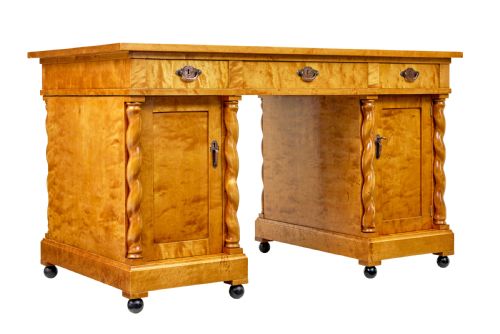


Swedish Writing Table
A swedish writing table brings pale painted surfaces and warm birch grains together for an elegant workspace.
Swedish Writing Table
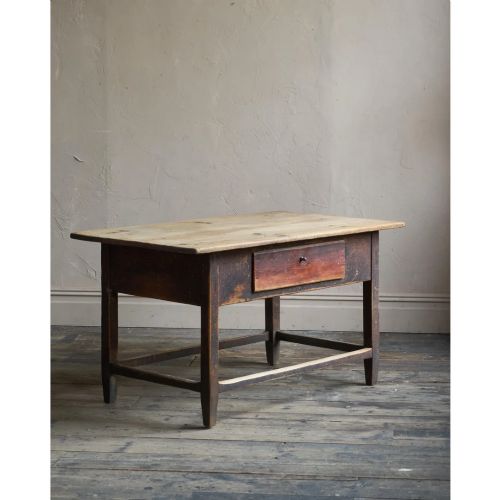
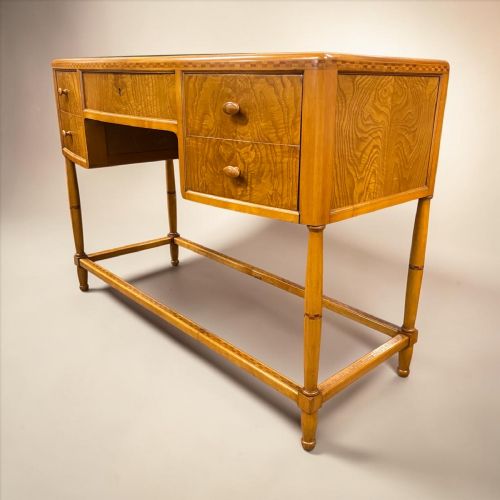
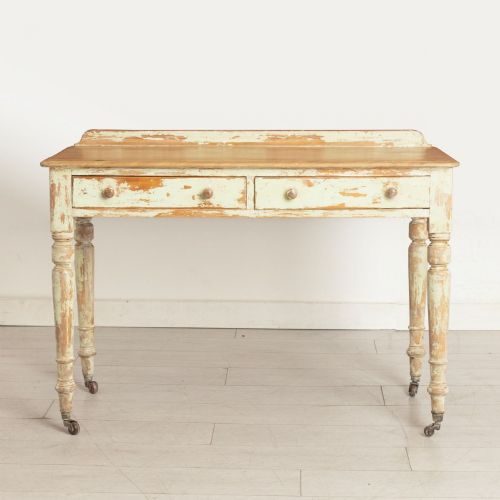
A swedish writing table encompasses diverse forms from simple painted pine writing desks to grander pedestals and pedestal desks. These pieces range across the nineteenth century and into early twentieth century revivals.
Makers utilised various forms such as console tables, drum tables, and writing slopes alongside traditional desks. Each variation offers specific proportions suited to domestic workspaces.
What varies in quality
Quality rests upon the preservation of original painted surfaces versus later repainting. Intact decorative schemes and undisturbed patination elevate a piece considerably.
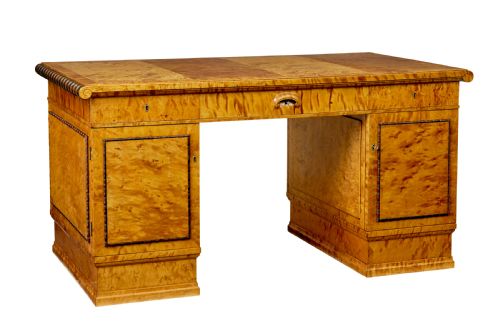
The selection of timber grain, particularly figured flame birch veneers, dictates visual depth. Subtlety of carving and proportion across revival styles further separates standard examples from finer works.
Barley twist legs sneak into walnut and mahogany, proving even serious Swedish writing desks enjoy a playful spiral.
The Swedish Writing Table Glossary
- Biedermeier
- A central European and Scandinavian style characterised by utility, clean lines, and warm polished wood veneers without excessive ornamentation.
- Flame birch
- A striking wood veneer displaying a wavy, flickering grain pattern. It was favoured by Scandinavian cabinet makers for prominent surfaces.
- Box stretcher
- A framework of horizontal rails connecting the lower legs of a table for added stability. They often double as footrests.
- Pedestal desk
- A heavy writing desk supported by two pedestals of drawers or cupboards. Examples in the evidence date to the early twentieth century.
Swedish Writing Table: Frequently Asked Questions
How do I clean a painted swedish writing table?
Dust surfaces regularly with a soft, dry cloth to prevent dirt accumulation.
Avoid chemical cleaning agents that might damage original nineteenth century paintwork.
Can I use a swedish writing table daily?
These tables function well as modern desks for laptops and paperwork.
Leather tops provide a durable writing surface whilst wooden tops require careful management of moisture.
What is the difference between Gustavian and Biedermeier styles?
Gustavian pieces typically display lighter painted finishes and neoclassical details.
Biedermeier furniture focuses on exposed wood grains and smooth, unadorned surfaces.
How do I identify original paint?
Original decorative paintwork shows natural wear, craquelure, and layered patination built up over decades.
Modern repainting often appears uniform and lacks the subtle depth found on nineteenth century surfaces.