


Sarcophagus Shaped Box
A sarcophagus shaped box brings classical architectural proportion to a room, offering heavy timber forms designed to hold tea, wine or valuables.
Sarcophagus Shaped Box
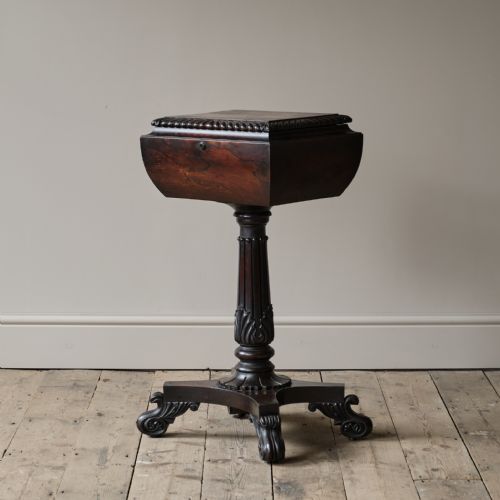
A sarcophagus shaped box draws its distinctive tapered profile and often domed lid from classical antiquity, adapted by cabinet makers during the Georgian, Regency and Victorian eras. These containers serve various domestic purposes, appearing frequently as tea caddies, cellarettes, wine coolers, jewellery caskets and sewing boxes.
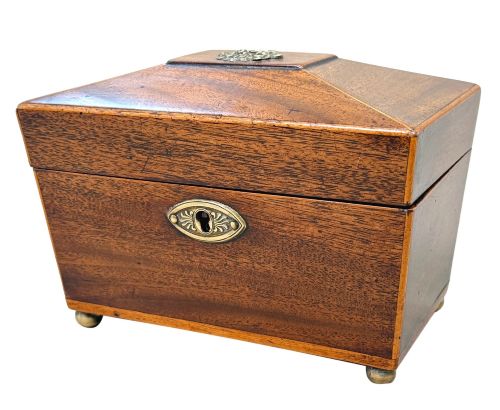
The version most commonly met on this page is the early 19th century mahogany or rosewood tea caddy or wine cooler, often raised on bracket, paw or claw and ball feet. Such pieces reflect the prevailing architectural tastes of the Regency and William IV periods, employing substantial timbers to create miniature classical monuments for the tabletop or floor.
How they were made
Cabinet makers constructed these vessels primarily from dense hardwoods like mahogany, rosewood and walnut, frequently selecting flame mahogany veneers to accentuate the sloping, curved surfaces of the form. Structural integrity relied on precise joinery, allowing the box to accommodate heavy contents such as bottled wine or lead-lined tea canisters.
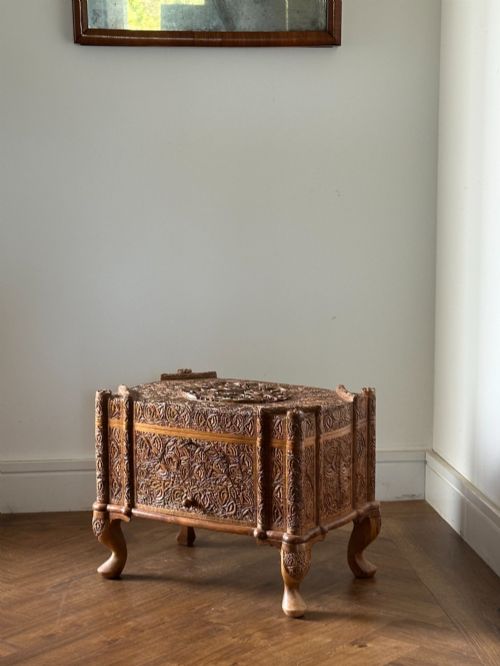
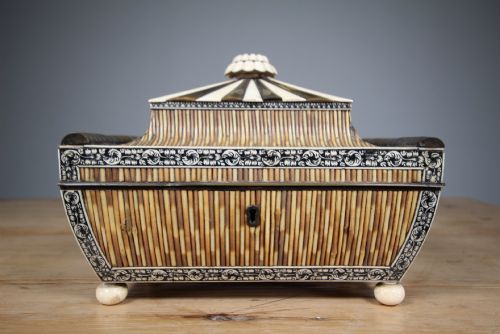
Surface ornamentation involved cast brass mounts, paw feet, inlaid stringing and occasional penwork or carved sandalwood, particularly in Anglo-Indian examples from later decades. Interiors were often fitted with silk linings, compartments, bone or ivory handles, and fitted trays tailored to the specific domestic function of the box.
One box includes a dedicated pin cushion alongside compartments for sewing threads and needles.
What varies in quality
Quality rests heavily on the choice of timber and the dexterity with which veneers are matched across the compound curves of the sarcophagus shape. Superior examples display continuous grain patterns that wrap fluidly around the angles of the lid and body.
The refinement of internal fittings and the weight of cast brass hardware distinguish finer pieces from standard production. Original feet, sound hinges and intact interior compartments elevate a piece above those with replaced components or heavily restored surfaces.
Gillows
The Sarcophagus Shaped Box Glossary
- Cellarette
- A large freestanding box or cooler designed to hold bottles of wine, usually positioned beneath a sideboard during the dining room procedures of the Georgian and Regency periods. These often feature lead linings and robust paw feet to support the heavy weight of glass and liquid.
- Teapoy
- A small table with a container top designed for storing tea, standing on a central pillar or multiple legs. The upper compartment frequently takes the sarcophagus form to secure expensive imported tea leaves.
- Penwork
- A decorative technique using fine ink lines on a light wood ground to simulate elaborate inlay or engraving. It appears on portable games and stationery boxes from the Regency era.
- Paw foot
- A carved or cast foot shaped like an animal paw, commonly used to elevate heavy cellarettes and tea caddies during the Regency and William IV periods. This detail lends visual weight and classical stability to the container.
Sarcophagus Shaped Box: Frequently Asked Questions
What were sarcophagus shaped boxes used for?
These boxes served specialised storage roles in the domestic interior, holding dry tea leaves, bottled wine, sewing implements, stationery and personal jewellery.
Larger versions rested on the floor as wine coolers or cellarettes, while smaller iterations sat on tables to dispense tea or secure valuables.
How do I date a sarcophagus shaped box?
Dating relies on timber selection, hardware style and construction methods, with mahogany dominating the Georgian and early Regency periods and rosewood becoming prominent by the William IV and Victorian eras.
Architectural details such as brass paw feet, ring handles and interior silk linings align closely with stylistic shifts between 1790 and 1880.
Where should I place one in my home?
Smaller boxes function well on sideboards, desks or occasional tables where their figured wood grains can be viewed closely.
Larger cellarettes make effective freestanding side table elements in living spaces or dining rooms, continuing their original functional display.
Are interior fittings usually original?
Many boxes retain their compartmentalised trays, mixing bowls or velvet linings, though delicate silk and paper elements often show signs of careful repair or replacement over time.
Examining the fit and wear within the internal compartments helps determine whether the fittings match the age of the outer case.