




Sarcophagus Liquor Chest
A sarcophagus liquor chest is a stately storage piece designed for bottled wine and spirits, offering grand architectural presence alongside practical dining room storage.
Sarcophagus Liquor Chest
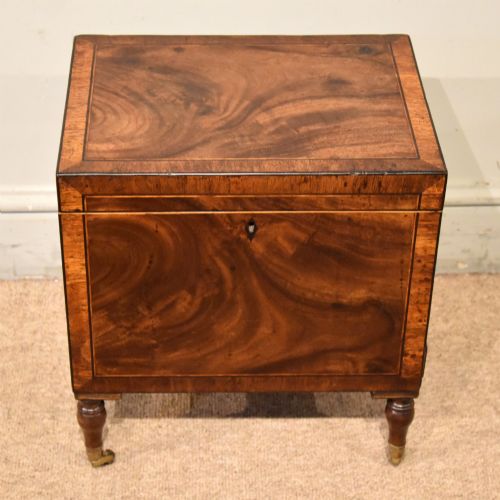
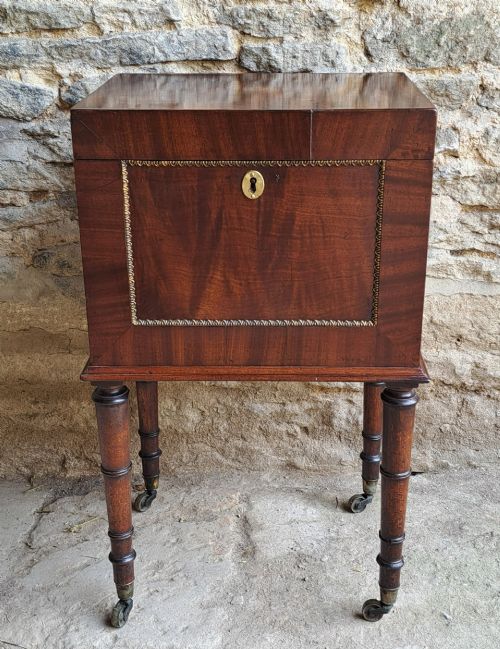
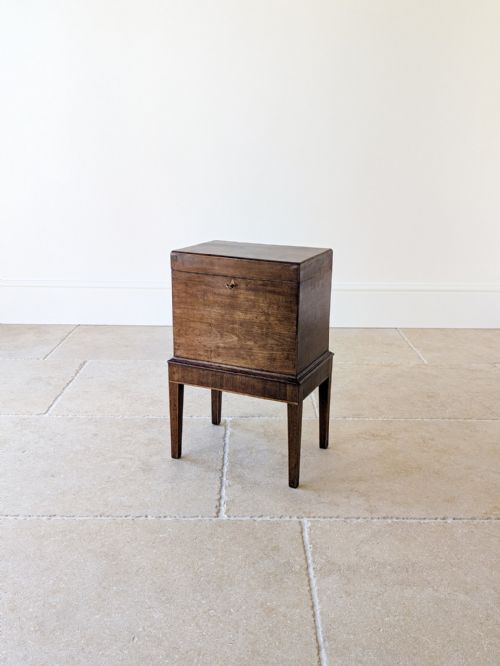
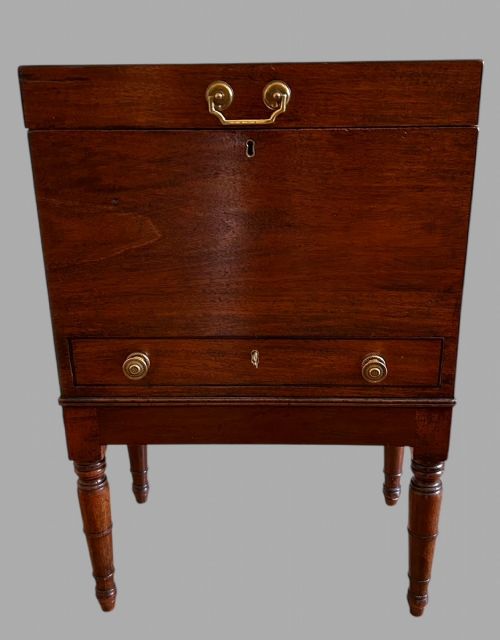
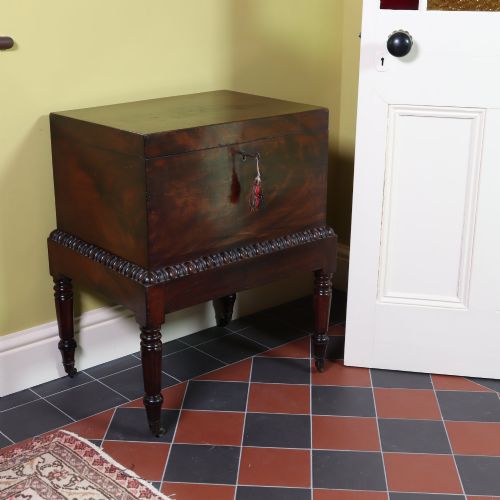
A sarcophagus liquor chest takes its name from its distinctive tomb-like shape, featuring a heavy, tapering body and a hinged lid that often rests upon a plinth base. These pieces functioned as portable or stationary cellarettes and wine coolers in grand dining rooms during the Georgian, Regency, and Victorian eras.
Most examples encountered on this page date from the late eighteenth century through the nineteenth century, reflecting the Regency and Georgian periods. Mahogany dominates the surviving pieces, frequently enhanced by figured veneers, boxwood inlay, or rich ormolu mounts.
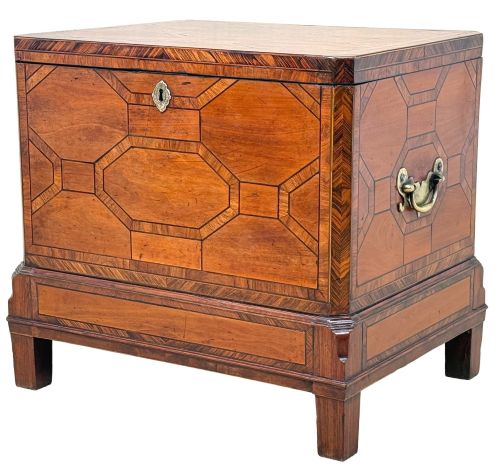
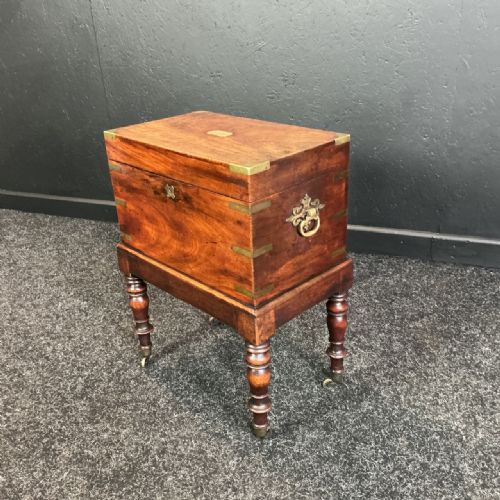
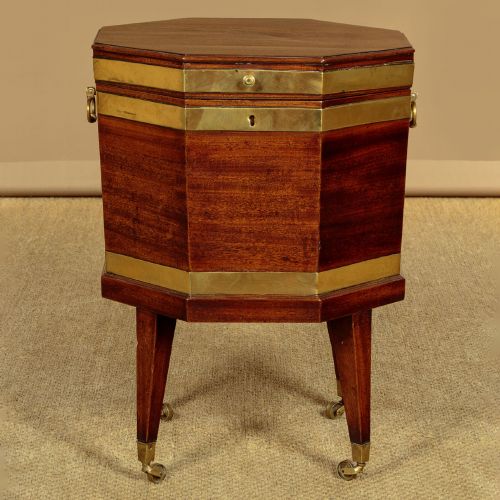
The interiors typically contain fitted compartments designed to hold individual bottles securely upright or on their sides. Buyers will find variations ranging from simple octagonal boxes to elaborate sarcophagus forms with brass carrying handles and robust lion paw feet.
Materials and construction
Cabinetmakers utilised dense timbers such as solid mahogany, flame mahogany, and pollard oak to build these robust storage chests. These woods provided both the necessary structural strength for holding heavy glass bottles and a handsome surface for finishing.
Decorative detailing relied on precision craftsmanship, incorporating contrasting boxwood inlay, satinwood banding, and kingwood veneers. Metalwork played an essential structural and aesthetic role, with cast brass bands, lion mask ring handles, and ormolu mounts securing the timber joints and adding formal weight.
Sarcophagus Liquor Chest Retail Price Guide 2026
Typical asking prices for sarcophagus liquor chest among the pieces listed under this phrase on Sellingantiques today, from the lower quarter to the upper quarter. They describe what is for sale here now, not the wider market.
Form variations include octagonal boxes, sarcophagus bodies, and wine coolers on plinth bases.
Distinctions in quality
Internal architecture marks the division between ordinary boxes and superior pieces. Finer examples retain their original internal dividers, lead linings, and drainage plugs, whilst simpler variants have often lost these fittings through centuries of domestic adaptation.
Gillows·Robert Strahan And Co·Freemans of Norwich
The Sarcophagus Liquor Chest Glossary
- Cellarette
- A lockable container used for storing wine and spirits in the dining room before bottles were placed directly on the table. They frequently sat beneath the sideboard or on dedicated stands.
- Flame mahogany
- A veneer cut from the fork of the mahogany tree where the branch meets the trunk, producing a rippling, flame-like pattern. Cabinetmakers reserved this striking timber for the most prominent exterior surfaces.
- Ormolu
- Gilt bronze ornamentation applied to furniture to provide a rich metallic contrast against dark timber. This technique required precise casting and mercury gilding.
- Pollard oak
- Timber taken from trees that have been pollarded, resulting in a dense, gnarled grain full of small knots. This decorative wood was favoured during the Regency period for its turbulent visual texture.
Sarcophagus Liquor Chest: Frequently Asked Questions
What is a sarcophagus liquor chest?
A sarcophagus liquor chest is a specialised wooden container shaped like a classical tomb, built to hold and cool wine bottles during formal dining. These pieces stood in the dining room to keep spirits secure and close at hand.
Craftsmen constructed them from heavy hardwoods like mahogany and fitted them with internal partitions. They represent a pinnacle of nineteenth-century dining room furniture design.
How were these chests used?
Servants filled the internal compartments with ice or cold water to chill wine before it was served to guests at the dining table. The lockable lids ensured expensive imported wines and spirits remained secure.
As dining habits changed, many of these chests lost their original metal linings and were repurposed for general storage. Today, they function as striking side tables or decorative storage boxes in domestic interiors.
How do I date a liquor chest?
Dating relies on observing the prevailing architectural styles, timber choices, and hardware mounts used in the construction. Georgian pieces often display simpler classical lines, while Regency and William IV examples embrace heavier, more sculptural forms with brass paw feet.
Secondary woods inside the chest and the style of the brass handles offer further clues to the manufacturing decade. Cabinetmakers updated their decorative vocabulary continuously across the eighteenth and nineteenth centuries.
How do I care for mahogany furniture?
Mahogany requires stable room temperatures away from direct sunlight and heat sources to prevent the timber and veneers from drying out. Applying a traditional beeswax polish helps maintain the natural lustre of the polished surface.
Avoid placing damp items directly onto the antique wood, as moisture can damage the historic polish. Gentle dusting with a soft cloth is sufficient for routine maintenance.