



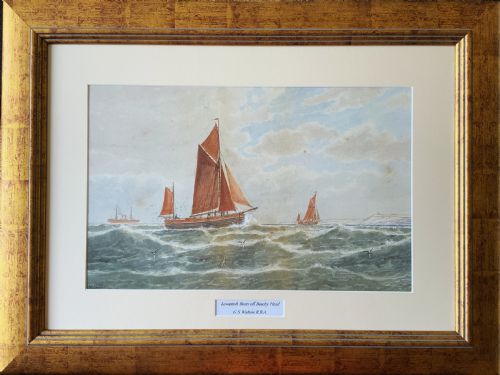
Sailing Boat Marine Painting
A sailing boat marine painting captures the movement of wind and water across timber, canvas, and paper.
Sailing Boat Marine Painting
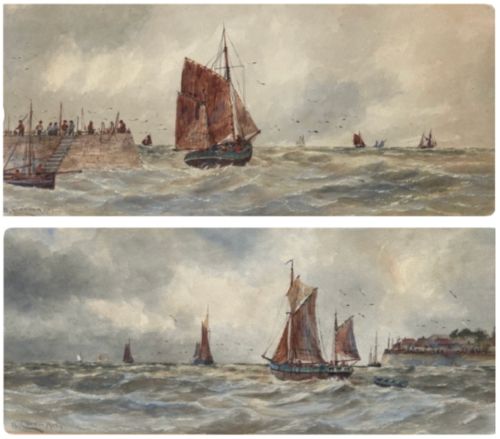
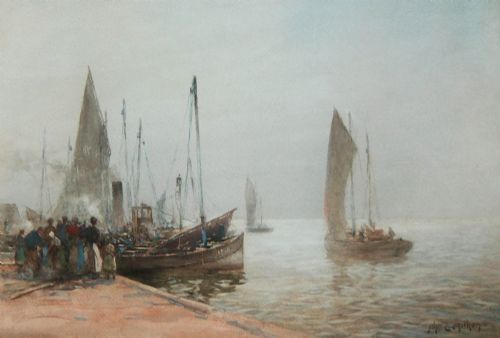
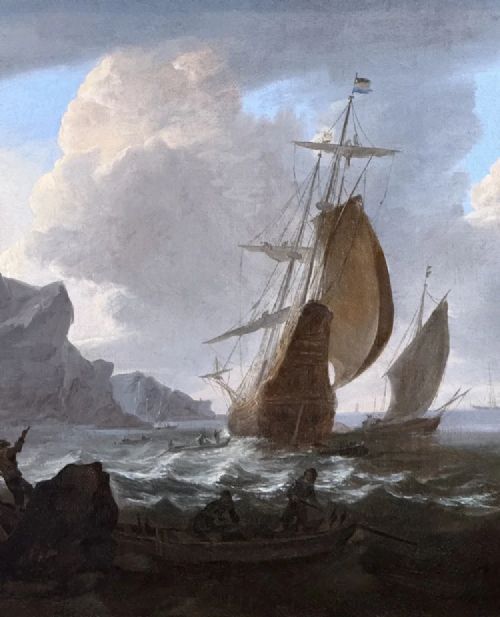
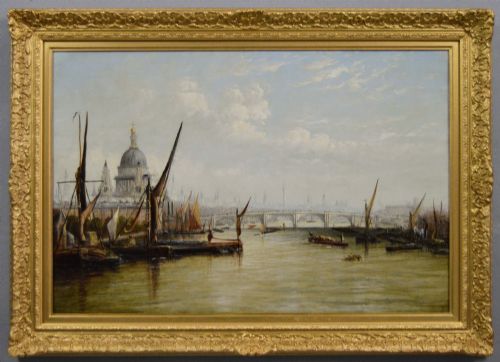
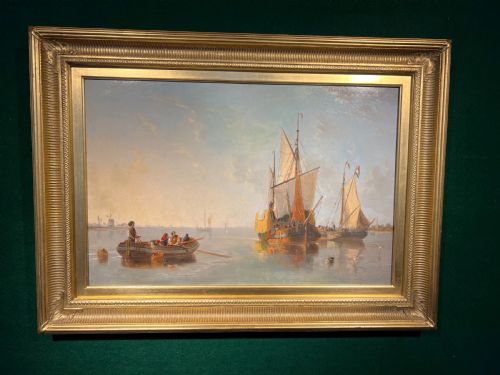
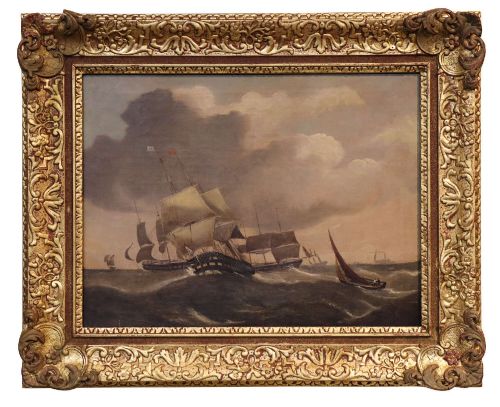
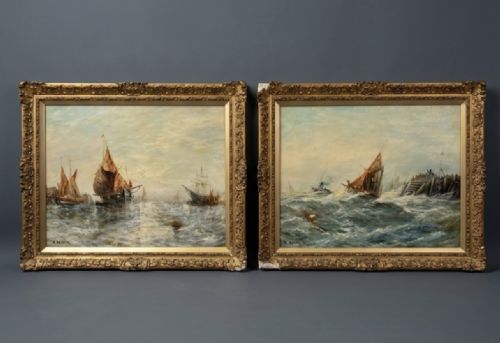
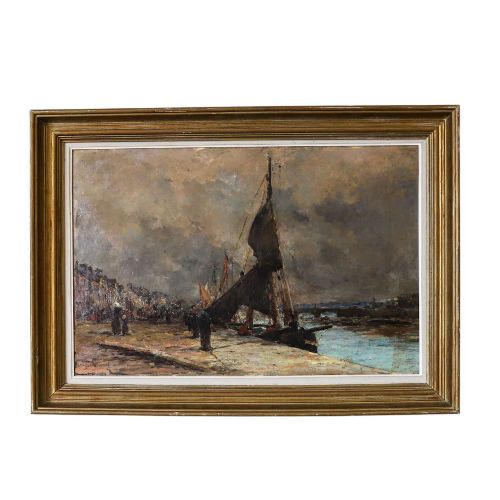
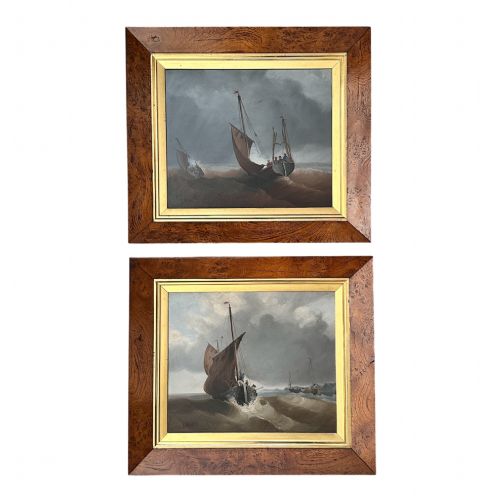
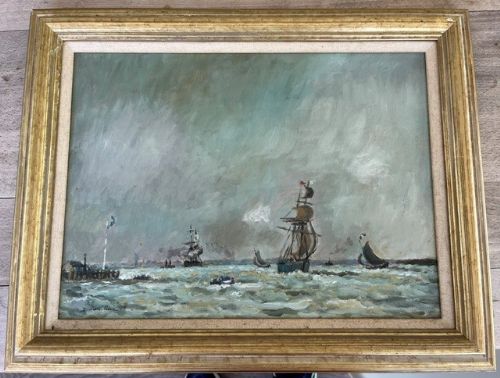
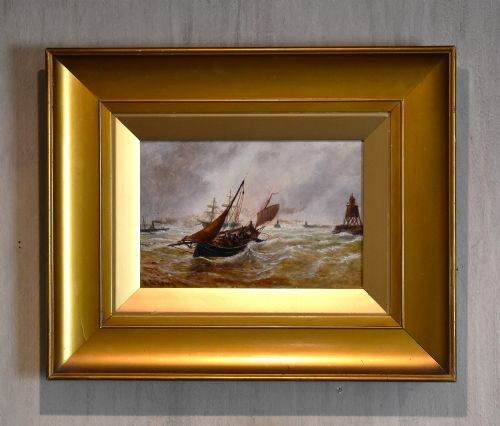
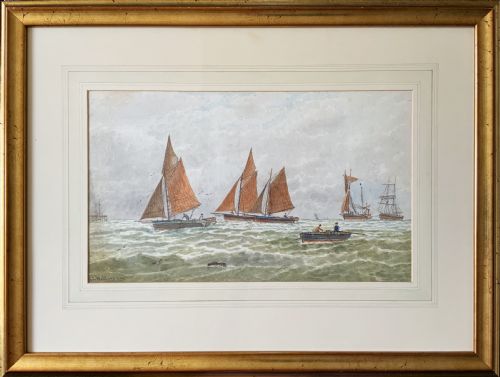
A sailing boat marine painting depicts vessels upon coastal waters, rivers, and open seas, rendered in oil or watercolour. These works range from small studies on board to large canvases set within gilt wood frames.
The most common examples on this page date from the nineteenth century and the Edwardian era, capturing British and continental ports, fishing craft, and merchant shipping. Victorian maritime art forms the core of the selection, accompanied by later twentieth-century interpretations.
Subjects vary from calm harbour scenes with Thames barges and Dutch fishing boats to dramatic depictions of shipping in heavy gales and stormy seas. Each piece records a specific coastal topography or maritime trade of its period.
Materials and Methods
Painters utilised oil on canvas, board, and card to build rich textures, often applying thick impasto for churning waves and billowing sails. Watercolours on paper offer a lighter, translucent quality suited to coastal light and hazy horizons.
Supports were frequently housed in elaborate gilt wood frames that protected the edges of the canvas or paper while complementing the domestic interiors of the period.
Listings feature works spanning from the seventeenth century to the mid-twentieth century, executed in oil and watercolour.
Assessing Artistic Merit
Quality rests upon the artist's command of maritime rigging, hull perspective, and the shifting weight of water. The strongest hands convey the true mechanics of a vessel under sail rather than a generic outline.
Atmospheric depth separates ordinary topographical records from superior works, with accomplished painters capturing salt spray, shifting light, and open air through confident brushwork.
Bonaventura Peeters·Francis Moltino·John Wilson Carmichael·John Moore of Ipswich·Bernard Benedict Hemy·George Stanfield Walters·Walter Goodin·Abraham Hulk I·Elisabeth Bardon·Charles Napier Hemy·Thomas Bush Hardy·Adrian Van Porten·Edward Henry Eugene Fletcher·Fred Waugh·George Shaw·Edward Seago·Stephen J Renard·Frank H Mason·Clara Montalba·Ernest F Hill
The Sailing Boat Marine Painting Glossary
- Impasto
- Paint applied thickly to a canvas, standing out from the surface to create tactile texture. This technique is frequently used to render churning sea foam and heavy clouds.
- Seascape
- A work of art depicting the sea, coastlines, and marine vessels. These compositions focus primarily on water and atmospheric conditions rather than land.
- Gilt wood
- Timber frames coated in a thin layer of gold leaf or gilt finish. They provide traditional framing for nineteenth-century oil paintings.
- Topographical
- Representing specific real-world locations accurately rather than inventing an imaginary landscape. Many harbour paintings double as historical records of coastal towns.
- Provenance
- The documented history of a painting's ownership and origin. A traced lineage adds contextual weight to listed works.
Sailing Boat Marine Painting: Frequently Asked Questions
What periods do these paintings cover?
The selections span several centuries, beginning with seventeenth-century Dutch works and moving through eighteenth-century naval scenes. The majority originate from the nineteenth century and the early twentieth century.
Later pieces extend into the mid-twentieth century, showing how marine art evolved while retaining its core subjects of coastal life and sailing vessels.
Are watercolours as durable as oils?
Watercolour paintings on paper require careful framing behind glass to protect them from moisture and ultraviolet light. They offer a delicate transparency that differs from the heavier weight of oil on canvas.
Oil paintings on canvas or board are more robust but still benefit from stable indoor environments away from direct heat sources.
How do I identify a coastal scene's location?
Artists often inscribed titles directly onto the reverse of the canvas, the frame, or within the lower margins of watercolour paper. Architectural landmarks, specific types of local fishing boats, and harbour walls also offer clues to the port depicted.
Researching the artist's known sketching grounds often confirms whether a scene represents Whitby, St Ives, or the Dutch coast.
How should I hang a marine painting?
Marine art suits rooms with neutral walls where the gilt frames and deep blue or grey tones of the sea can stand out. Ensure the picture wire and wall fixings match the weight of the heavier oil canvases.
Keep framed works away from damp exterior walls and direct sunlight to preserve both the canvas and the gilt wood moulding.