




Saddle Seat Chair
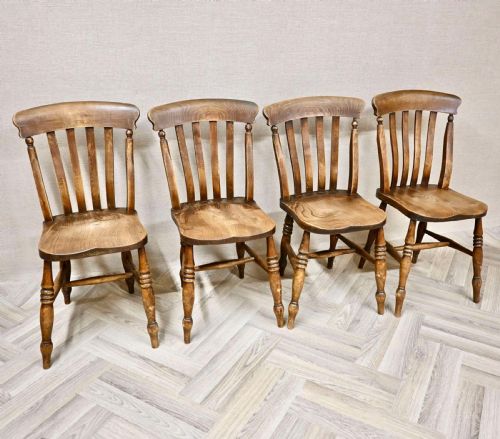
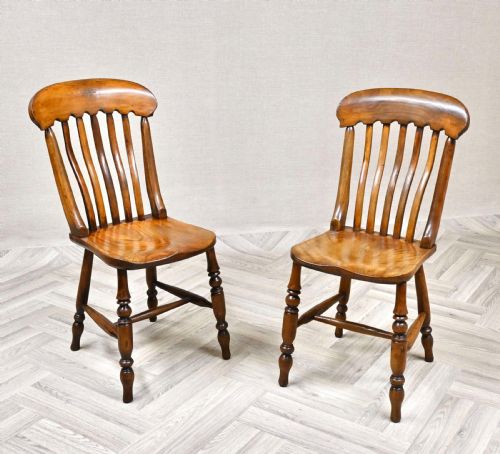
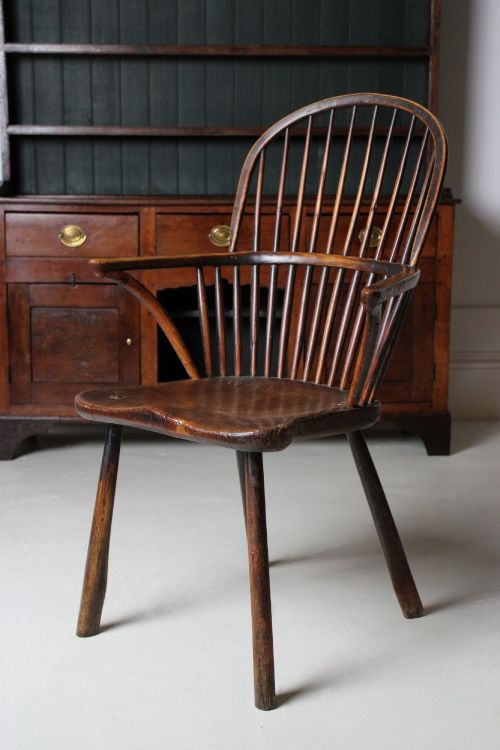
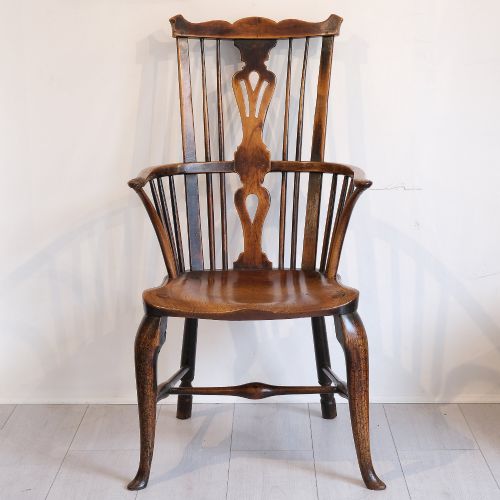
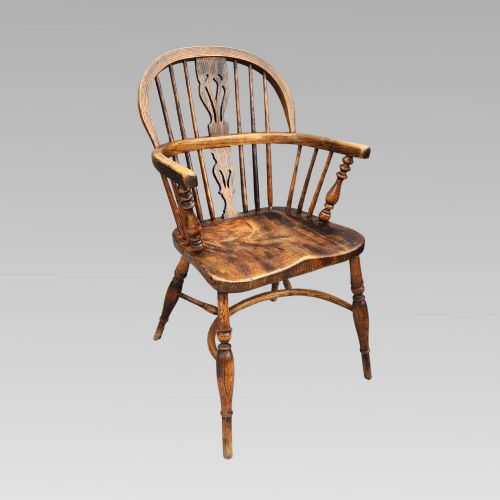
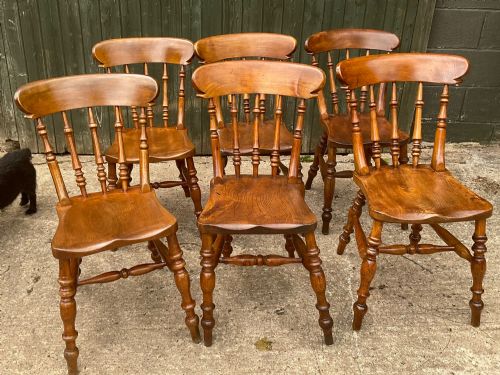
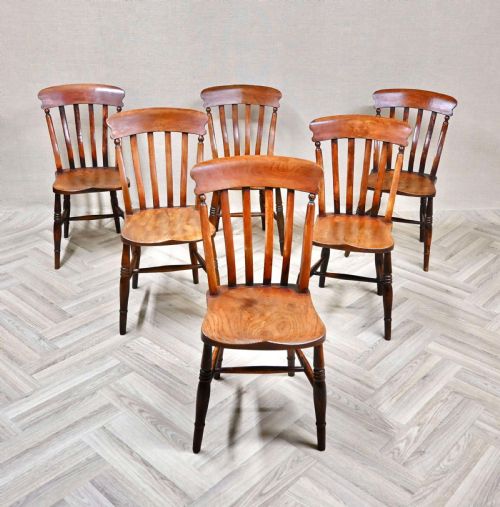
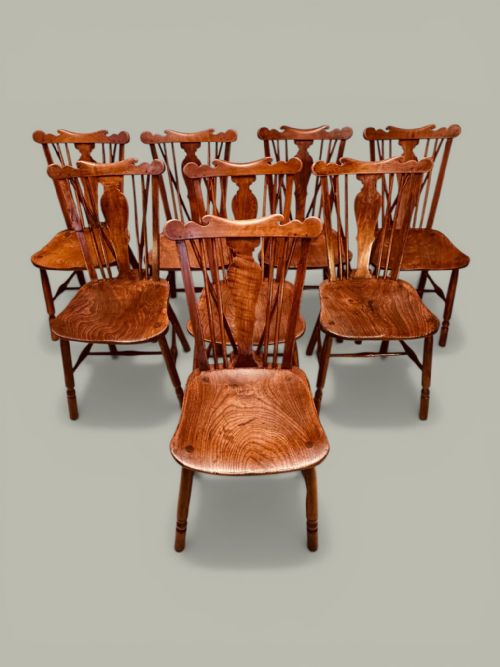
These saddle seat chair examples combine vernacular timber work with ergonomic seats carved straight from the solid block.
Saddle Seat Chair
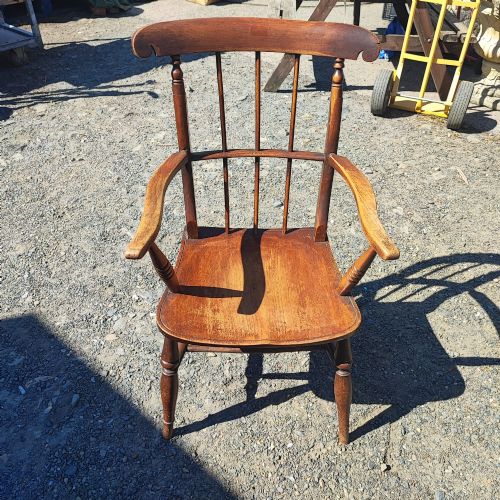
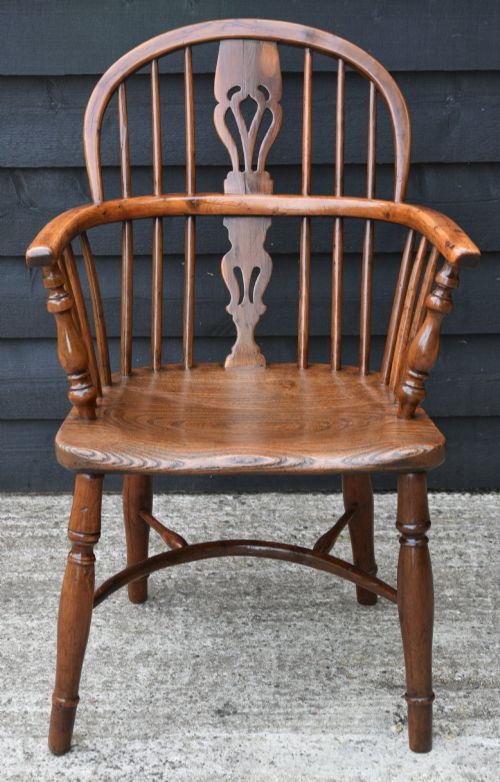
A saddle seat chair takes its name from the deeply dished, sculpted wooden seat base designed to mirror the contours of a saddle for hours of seated comfort. These pieces appear principally as Windsor armchairs, smoker's bows, and office desk chairs spanning the eighteenth, nineteenth, and early twentieth centuries.
The domestic and farmhouse forms recorded here stem mainly from English country traditions, utilising regional vernacular designs such as comb backs, lath backs, and low hoops. Buyers also encounter sets of kitchen dining chairs and revolving desk chairs built around the same sculpted seat principle.
Makers ranged from rural village joiners to larger cabinet makers working in ash, elm, yew, and fruitwood. The most prevalent versions on this page pair an elm seat base with contrasting ash spindles or yew wood framework.
How they were made
Construction relies on a heavy solid wood seat slab bored through to receive turned legs from below and spindle backs from above. Master turners shaped ash, beech, and fruitwood components on lathes before wedging them firmly into place.
Elm provided the primary material for the carved saddle seats because its interlocking grain resisted splitting under the intense pressure of adzes, scorps, and travisers. Subsidiary timbers like yew, oak, and mahogany completed arms, hoops, and legs according to regional availability and workshop custom.
Some nineteenth-century office chairs incorporated revolving mechanisms so clerks could swing between desk drawers without scraping their saddle seats.
What varies in quality
Depth and boldness of the saddle sculpting dictate visual distinction, with superior examples showing pronounced hollows carved by hand rather than shallow mechanical depressions. Grain selection also marks the hierarchy, where richly figured yew wood or well-matched elm boards elevate a vernacular form into a masterwork of country furniture.
Structural integrity depends on the tightness of original joints and the retention of matching turned components across sets of dining or kitchen chairs. Retained surface patination and deep wax finishes accumulated over generations separate honest unrestored pieces from heavily stripped or overly sanded alternatives.
James Shoolbred
The Saddle Seat Chair Glossary
- Saddle seat
- A wooden chair base sculpted with deep ergonomic hollows resembling a horse saddle. This shaping provides both comfort and structural strength to domestic seating.
- Windsor
- A traditional chair type featuring a solid wooden seat into which the legs and back spindles are independently tenoned. These chairs developed regional variations including comb backs and hoop backs.
- Smoker's bow
- A low-backed armchair with a continuous curved arm rail supported by turned spindles, often used in offices or parlours. They share the solid carved seat construction of larger Windsor chairs.
- Vernacular
- Objects built by local craftsmen following regional traditions rather than formal academic design patterns. Country furniture makers utilised locally available timbers like elm, ash, and fruitwood.
- Scorp
- A traditional hand-held drawing tool with a curved blade used by chair makers to scoop out the hollow of a wooden seat base. This tool creates the distinct contours found on saddle seats.
Saddle Seat Chair: Frequently Asked Questions
How do I care for a wooden saddle seat?
Feed the dry timber periodically with a quality beeswax polish, applying it sparingly and buffing it with a soft cloth to maintain the protective patina. Keep the chair away from direct heat sources and drastic temperature shifts to prevent timber shrinkage and splitting.
Check the leg and spindle wedges beneath the seat from time to time to ensure they remain secure. Routine dusting with a dry lint-free cloth is all the daily maintenance an antique hardwood chair requires.
Were these chairs used at desks?
Many sturdy examples, particularly smoker's bows and revolving office armchairs, served administrative roles in libraries and counting houses. Their robust construction and supportive scooped seats made them ideal for long hours of writing.
Country versions also functioned as everyday seating around farmhouse kitchen tables and in halls. The versatility of the saddle seat design meant makers adapted the underframes for dining, working, and relaxing.
How can I tell the age of a chair?
Examine the tool marks inside the seat hollow and the wear patterns on the footrests to gauge the physical history of the piece. Hand-carved adze marks and pegged tenon joints generally point to earlier eighteenth or nineteenth-century vernacular production.
Timber choice also provides clues, as mature yew wood and wide single-piece elm seats grew scarcer in later manufacturing periods. Comparing the turning style of the legs against documented regional patterns helps narrow down the decade.
What is the difference between an ash and elm chair?
Ash provided strong, flexible timber utilised primarily for turned spindles, back bows, and legs that required bending without snapping. Elm possessed an irregular, interlocking grain that made it exceptionally tough and resistant to splitting when carved into a saddle seat.
Most traditional country armchairs combined these two woods deliberately, using each where its specific botanical properties worked best. Recognising these timber combinations helps identify genuine regional construction methods.