
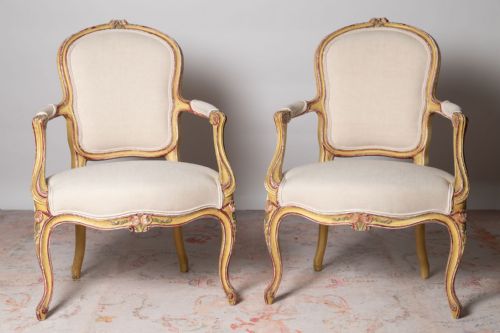
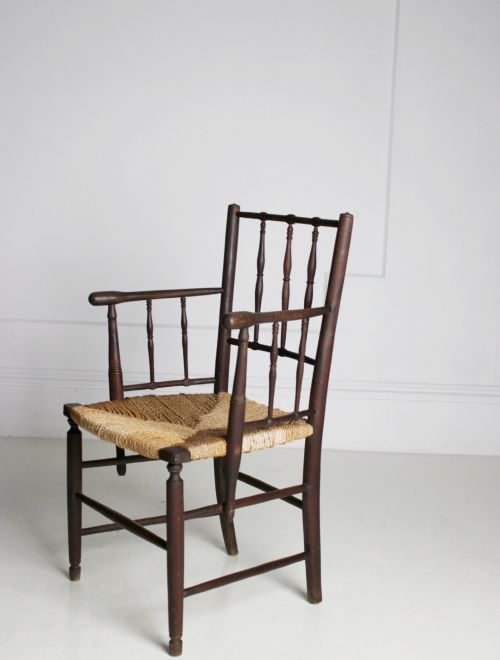
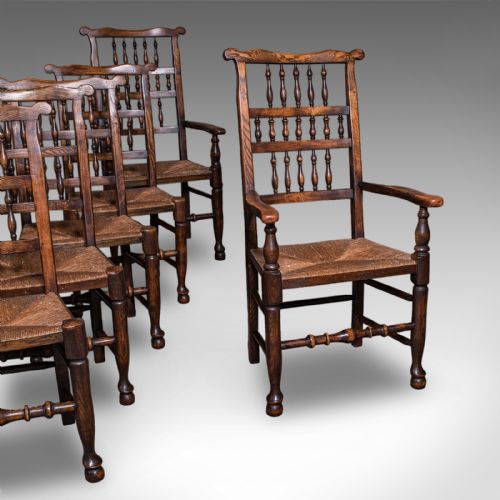
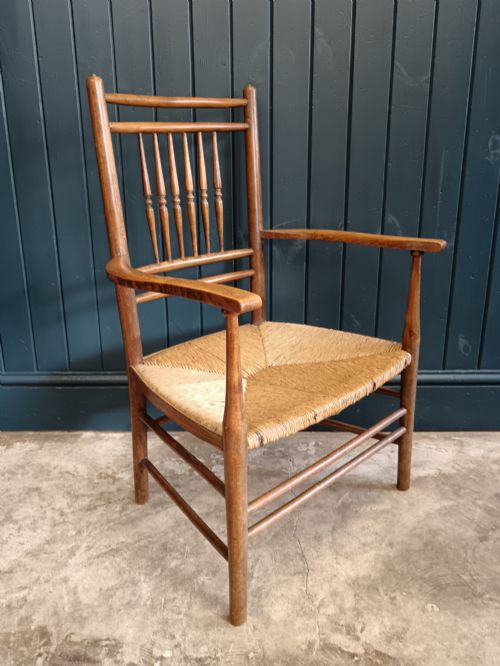


Beech Country Armchair
A beech country armchair brings honest nineteenth-century utilitarian craft and robust vernacular seating directly into modern domestic interiors.
Beech Country Armchair
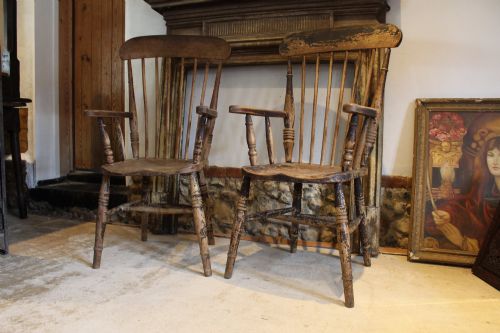
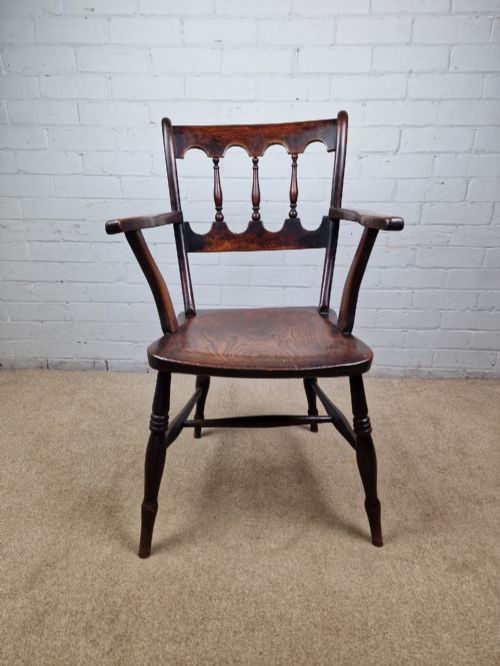
A beech country armchair encompasses sturdy domestic seating designed primarily for daily utility in farmhouses, cottages and rural homes during the nineteenth and early twentieth centuries. These pieces typically display traditional regional construction methods, prioritising comfort and durability above formal academic styling.
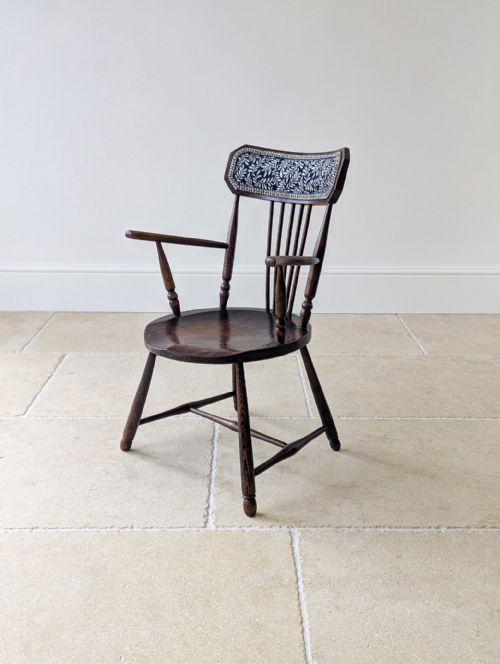
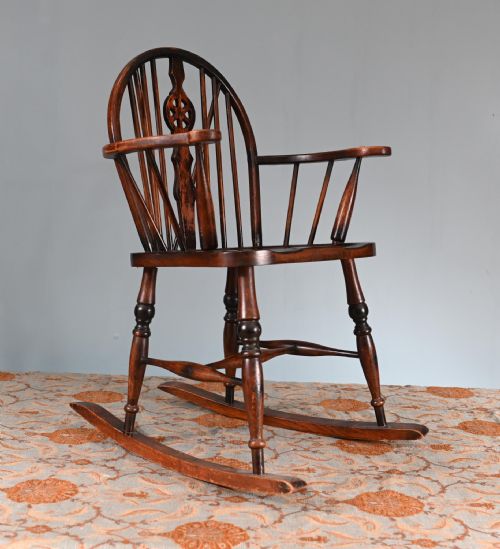
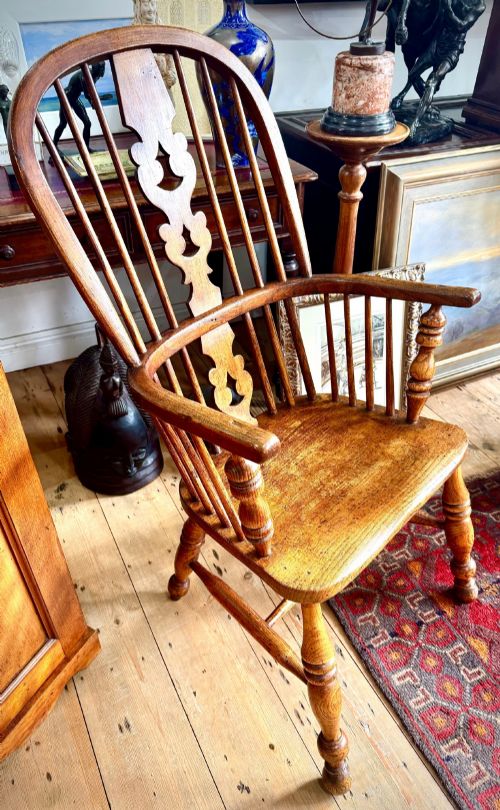
The versions most frequently encountered on this page combine a turned beech framework with a contrasting timber seat, most commonly elm or ash, often featuring high spindle backs or low bow arms. Examples span vernacular Windsor formats, smoker's bows and nineteenth-century rush-seated ladderbacks.
Regional variations extend from high-back kitchen fireside chairs to compact captain's chairs and rocking variants dated from the Victorian era through the Edwardian period and into the nineteen-thirties.
Materials and construction
Makers utilised dense native hardwoods, turning beech for the slender spindles, legs and structural framing because the timber accepts lathe work cleanly without splintering. Elm and ash supplied the shaped solid seats and bending elements, offering high resistance to splitting under heavy use.
Traditional joinery relied heavily on wedged through-tenons and pegning, allowing unyielding frame connections that survived decades of movement in domestic spaces. Natural rush, sea grass or woven textiles provided durable drop-in and fixed seating surfaces on specific Arts and Crafts and regional models.
Listings feature Victorian, Edwardian and early twentieth-century examples constructed from beech, elm, ash and rush.
Distinctions in craftsmanship
Quality rests in the crispness of the wood-turning on the spindles and legs, alongside the depth of the sculpted saddle seat, which indicates the carver's anatomical consideration. Superior examples maintain balanced proportions and tight original joints without excessive replacement timber.
Purity of regional design and the retention of original surface patination, whether bare rubbed timber or historic stained finishes, separate standard utilitarian seating from finer vernacular workshop productions.
The Beech Country Armchair Glossary
- Windsor chair
- A timber chair constructed with a solid wooden seat into which the legs and back spindles are separately bored and wedged. This technique creates a remarkably sturdy framework typical of British country furniture.
- Smoker's bow
- A low-backed armchair featuring a continuous curved wooden rail supported by turned spindles above a deep saddle seat. These pieces often served as comfortable desk or smoking chairs in nineteenth-century interiors.
- Rush seat
- A seating surface woven from dried marsh rushes twisted into cords and patterned tightly across a wooden frame. Such seats appear frequently on Arts and Crafts and traditional Lancashire country chairs.
- Spindle back
- A chair back composed of numerous slender turned vertical wooden rods secured between horizontal rails. This method provides flexible support while keeping the overall frame lightweight.
- Saddle seat
- A thick wooden chair seat carved with hollows and contours to fit the human body. Master craftsmen shaped these surfaces using adzes and scorps.
Beech Country Armchair: Frequently Asked Questions
What is a beech country armchair?
A beech country armchair is a traditional vernacular seat built from solid hardwoods during the nineteenth and early twentieth centuries for domestic utility. These chairs rely on turned beech frames combined with elm or ash elements for everyday household endurance.
They appear in various regional forms, including stick-backs, Windsor formats and low-armed smoker's bows designed for kitchen or fireside use.
How do I date a country armchair?
Dating relies on observing construction characteristics, tool marks and timber choices that evolved from the early nineteenth century through the Edwardian era. Earlier pieces often display hand-turned components and adzed elm seats, whereas later examples incorporate factory-assisted lathe turning.
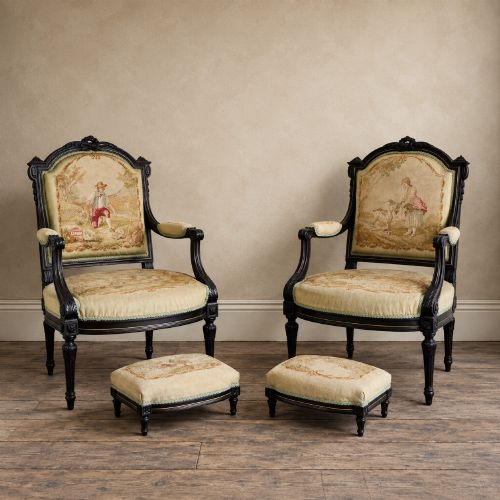
Associated styles such as Arts and Crafts or Louis Revival influences also help narrow the production window alongside recorded period markers.
Are these chairs comfortable for daily use?
Most country armchairs were specifically engineered for practical domestic work and relaxation, featuring ergonomically shaped wooden saddle seats. The inclusion of steam-bent arm bows and supportive spindle backs provides natural posture alignment.
Adding a loose cushion can further adapt these historic seats for contemporary living rooms, studies or dining spaces.
What woods were used in these chairs?
Makers selected native British timbers based on their specific mechanical properties, pairing turned beech for legs and spindles with tough elm for solid seats. Ash and alder also appear frequently within structural underframes and curved back rails.
Selected models incorporate woven rush or sea grass for the seating platform instead of solid timber.