

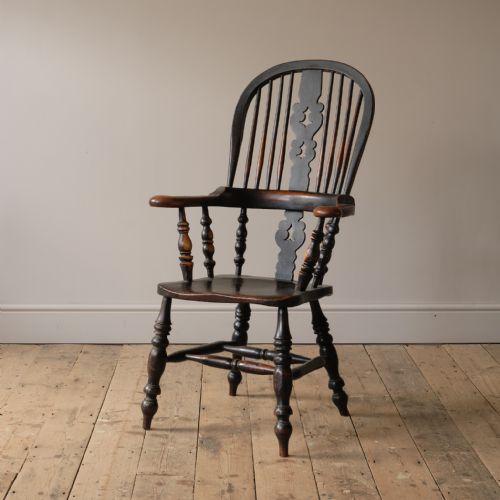
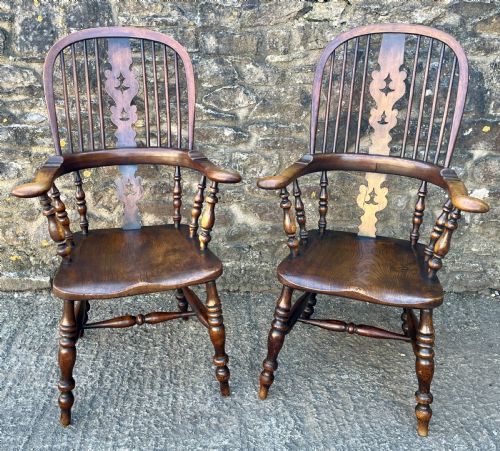


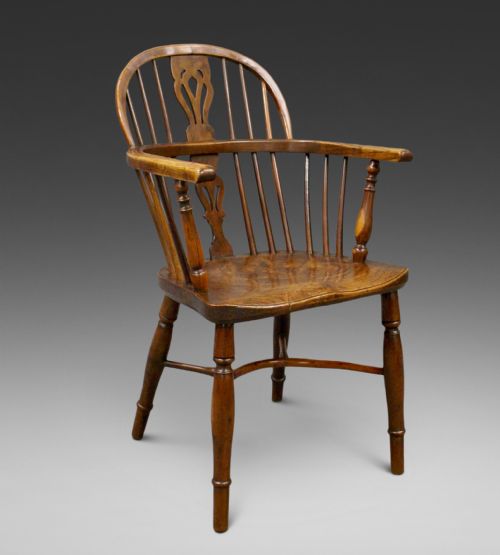


Broad Elm Country Chair
A broad elm country chair is a sturdy vernacular seat with a generous wooden arm, prized for its honest craft and rich grain.
Broad Elm Country Chair
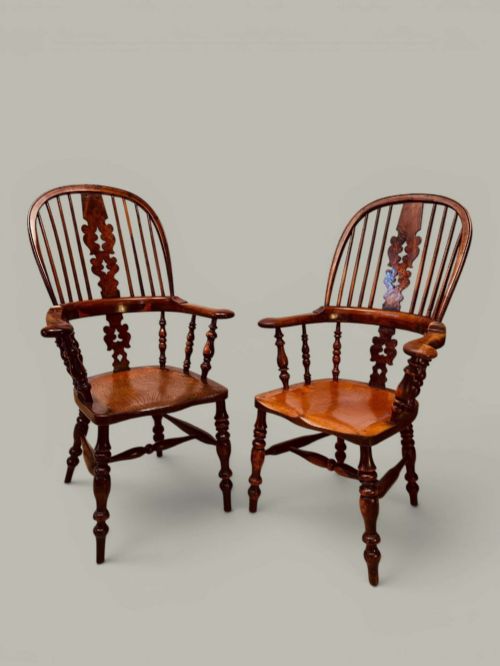
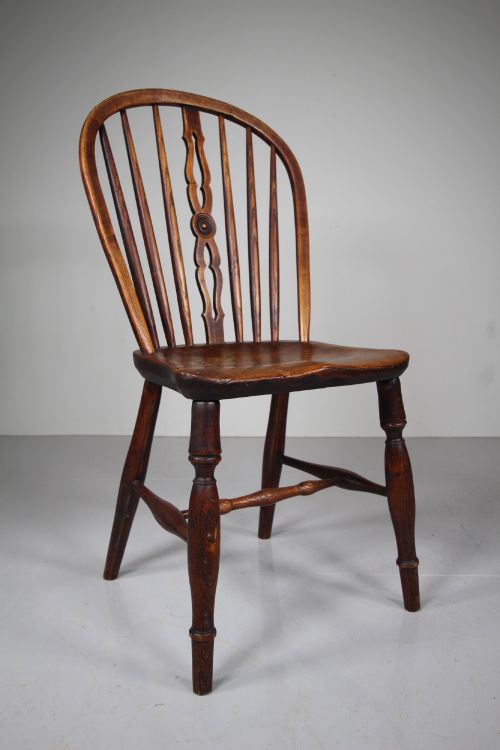
A broad elm country chair is a traditional Windsor seating form built for rural domestic life during the nineteenth century. These sturdy armchairs and side chairs originate from English country workshops and feature robust timber construction designed for daily use.
You are most likely to encounter Victorian and early nineteenth-century examples on this page, often dating around eighteen hundred to eighteen fifty. Regional pieces like the Yorkshire type appear alongside standard vernacular forms.
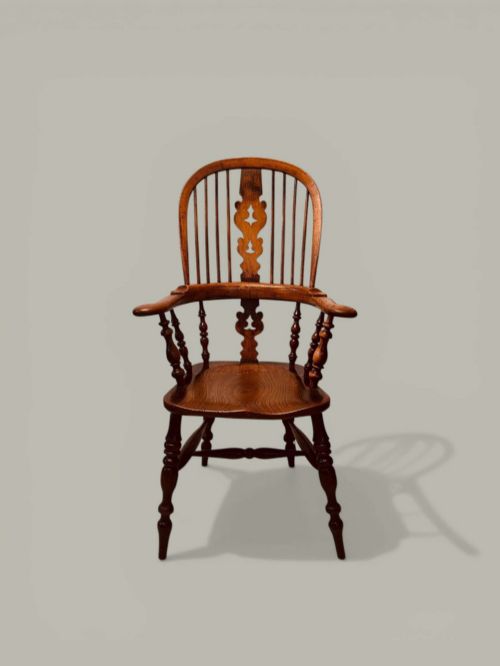
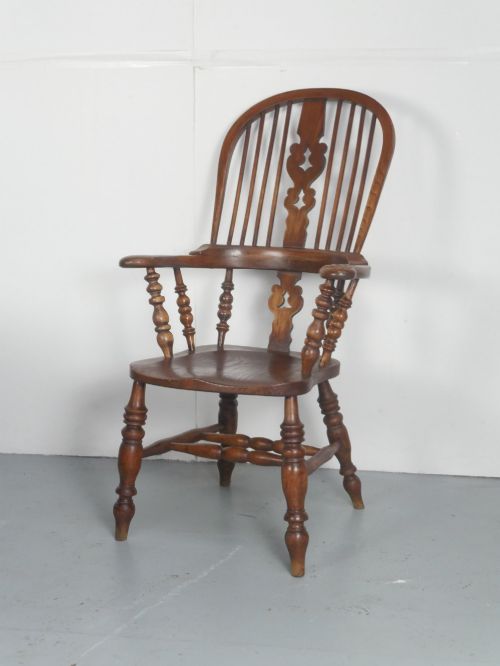
The defining characteristic across these listings is the broad wooden arm, combined with a hooped back and a solid timber seat. Makers utilised native woods to build comfortable, hard-wearing seats for farmhouse interiors.
How they were made
Makers built a broad elm country chair by combining different native timbers to suit the structural needs of the seat. Elm provided a tough, interlocking grain for the solid seat that resisted splitting, while ash and yew formed the bent parts, spindles and arms.
The construction relies on stick-built techniques where turned legs and spindles are wedged directly into the thick wooden seat. Steam-bending shaped the characteristic hooped backs and broad armrests from seasoned ash or yew wood.
Broad Elm Country Chair Retail Price Guide 2026
Typical asking prices for broad elm country chair among the pieces listed under this phrase on Sellingantiques today, from the lower quarter to the upper quarter. They describe what is for sale here now, not the wider market.
Many broad arms double as miniature writing desks, proving country carpenters anticipated the need to multitask centuries ago.
What varies in quality
The quality of a broad elm country chair rests on the depth of the timber's figuring and the balance of its proportions. Pieces featuring richly grained yew wood or deeply dished elm seats display a higher grade of rural craftsmanship.
Construction details such as the thickness of the armrests, the turning of the spindles, and the retention of original surface patination separate standard workshop output from exceptional examples.
The Broad Elm Country Chair Glossary
- Windsor chair
- A chair built with stick-construction where the legs and back spindles are tenoned directly into a solid wooden seat. This method creates a sturdy, lightweight frame.
- Broad arm
- An expansive wooden armrest integrated into the chair design, often paddle-shaped to provide a writing surface or extra comfort. It is a defining feature of these regional seating forms.
- Hoop back
- A continuous curved backrest formed from a single steam-bent piece of timber that forms the top rail and outer frame. It holds the vertical spindles securely in place.
- Vernacular furniture
- Objects made by local craftsmen using traditional regional methods and native materials, rather than following metropolitan London fashions. These pieces reflect local rural traditions.
- Saddle seat
- A thick wooden seat base sculpted with hollows and contours for comfort. Elm was frequently chosen for this part due to its resistance to splitting.
Broad Elm Country Chair: Frequently Asked Questions
What is a broad elm country chair?
A broad elm country chair is a traditional nineteenth-century wooden seat featuring a solid sculpted seat and a wide wooden armrest. These pieces were made by rural craftsmen using native timbers.
They combine stick-built construction with hooped backs and robust spindles designed for everyday farmhouse use.
How do I date a country Windsor chair?
Dating these chairs involves examining the timber species, tool marks, and overall wear patterns on the seat. Nineteenth-century examples often display deep patination and hand-turned spindles.
Regional variations and construction methods also help place an armchair within the Victorian or Georgian country periods.
Where were these chairs made?
These seating pieces originated in rural English workshops and regional centres like Yorkshire. Local artisans utilised readily available native woods from their surrounding areas.
Each region developed slight variations in the shape of the hoop back, armrests, and leg turnings.
How should I care for antique elm wood?
Caring for antique elm involves keeping the timber away from direct heat sources and sudden humidity changes. Regular dusting with a dry cloth maintains the surface.
Applying occasional natural wax helps nourish the dry grain and preserves the historic patination of the wood.