
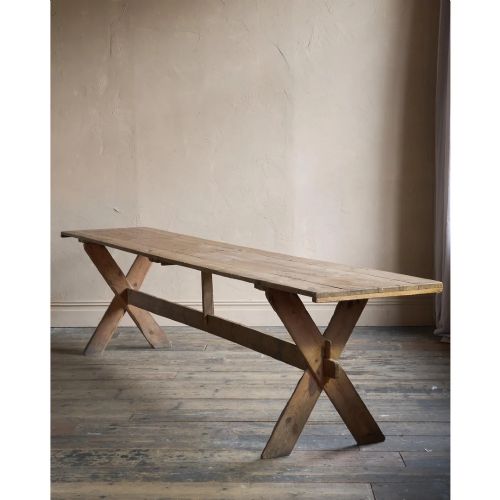
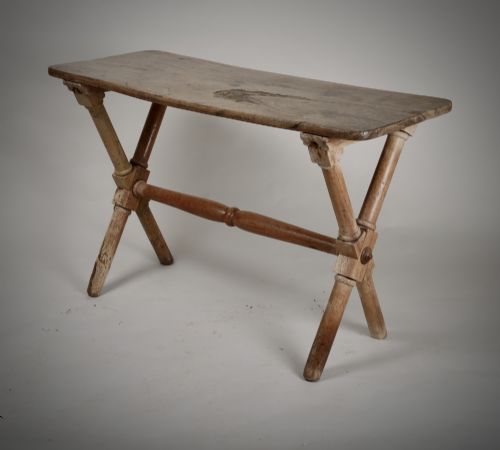
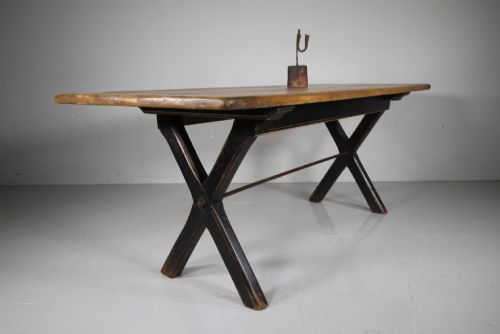
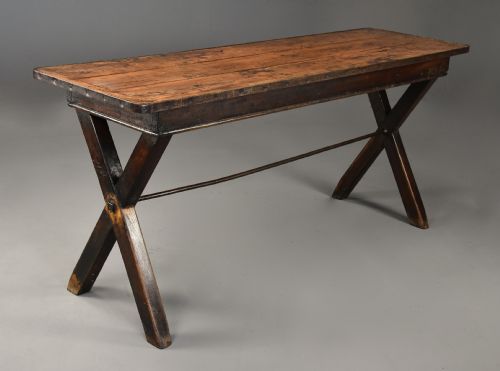



Rustic X Frame Table
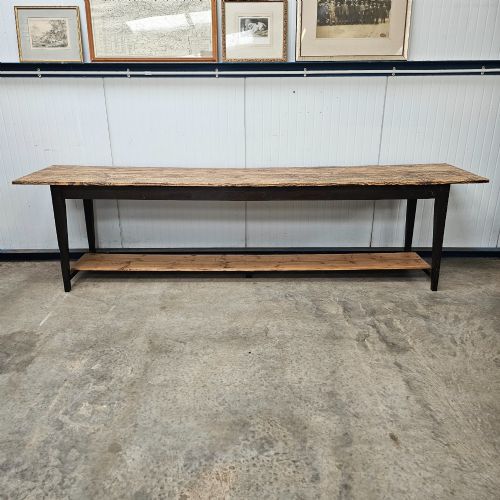
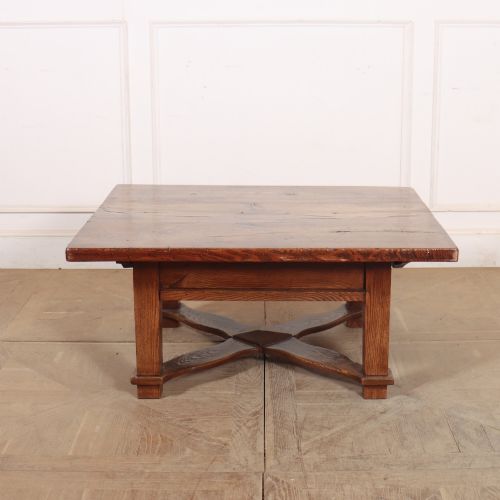
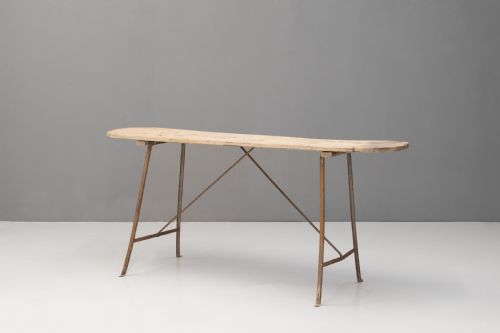
A rustic x frame table brings robust character to a room, offering sturdy construction and enduring utility.
Rustic X Frame Table
A rustic x frame table combines sturdy timber tops with crossed stretcher supports, creating a practical surface suited to daily use. These pieces appear frequently in pine and oak, reflecting vernacular country traditions from various European regions.
Buyers encounter examples spanning the eighteenth and nineteenth centuries, alongside mid-twentieth-century interpretations. The form serves primarily as a dining, kitchen, or tavern table, designed to withstand heavy domestic demands.
Origins range across English, Welsh, French, and Scandinavian workshops, each lending distinct proportions to the frame. Variations include scrubbed tops, cleated ends, and remnants of original painted surfaces.
Materials and construction
Construction relies on solid timbers such as pine, oak, elm, and sycamore, joined to support heavy use. Carpenters utilised traditional methods, fastening plank tops to crossed legs using wooden pegs and sturdy framing.
Metal components like iron and brass occasionally appear in braces or structural hardware, adding stability to the base. Painted finishes, including original red paint, survive on several timber frames alongside natural waxed surfaces.
Listings feature timbers such as pine, oak, elm, and sycamore across eighteenth and nineteenth-century examples.
Assessing quality
Quality rests in the integrity of the timber and the depth of the patina accumulated over centuries of use. Tables retain distinction through honest wear, balanced proportions, and the survival of original painted or scrubbed finishes.
Superior examples demonstrate thoughtful joinery in the trestle base, ensuring the heavy top remains steady without excessive wobble. The choice of dense woods like oak or elm elevates the structural presence compared to softer pine alternatives.
The Rustic X Frame Table Glossary
- X frame
- A structural base formed by two intersecting diagonal timbers that support the tabletop. This design distributes weight evenly while allowing legroom.
- Trestle table
- A table comprising a horizontal beam supported by two pairs of sloping legs. This form provides robust stability for large dining and kitchen surfaces.
- Patina
- The surface sheen and colour developed on wood through age, handling, and regular polishing. It indicates genuine historical use.
- Cleated ends
- Wooden battens fixed across the short edges of a plank tabletop to prevent warping. They keep the timber flat over decades of environmental changes.
- Vernacular country
- Domestic furniture built by local craftsmen using regional materials for everyday utility rather than formal court styles. These pieces prioritise function and local availability.
Rustic X Frame Table: Frequently Asked Questions
How do I care for a rustic x frame table?
Clean timber surfaces using a damp cloth, avoiding harsh chemical cleaners that strip the finish. Apply occasional natural wax to maintain the moisture and sheen of the wood.
Protect the tabletop from excessive heat and moisture by using coasters and mats. Position the table away from direct sunlight and radiators to prevent timber splitting.
Where were these tables typically used?
These tables served primarily in domestic kitchens, farmhouses, and public taverns for dining and food preparation. Their robust construction suited environments requiring dependable everyday surfaces.
Over time, they transitioned into general living spaces as dining and occasional furniture. Their utilitarian origins now complement modern residential interiors.
What woods are most common?
Pine and oak appear most frequently in these listings, offering durable surfaces for heavy daily tasks. Elm and sycamore also feature in regional country pieces.
Selected examples incorporate secondary metals like brass and iron within the structural framing. Painted pine surfaces also occur across nineteenth-century variants.
How do I identify the period?
Examination of tool marks, joinery methods, and timber shrinkage helps indicate the approximate age of a table. Hand-sawn boards and pegged joints generally point towards eighteenth or nineteenth-century craftsmanship.
Stylistic cues, such as Victorian Gothic detailing or Arts and Craft cross bases, provide further chronological context. Original paint pigments also align with specific nineteenth-century palettes.