


X Frame Pub Table
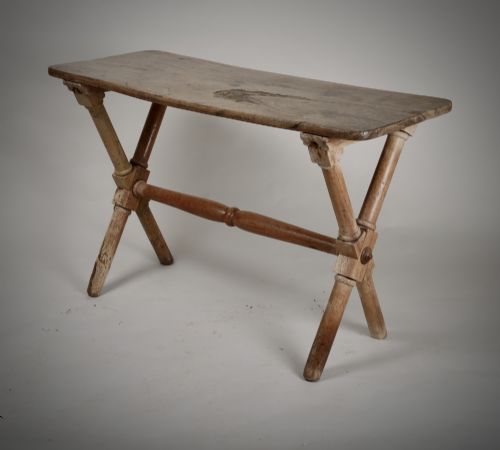
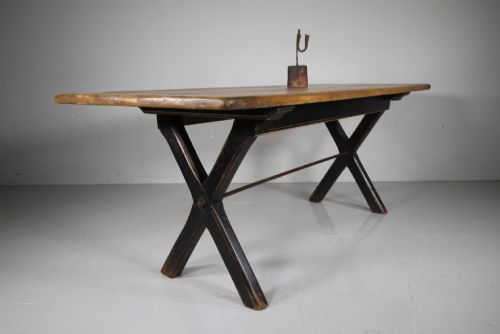
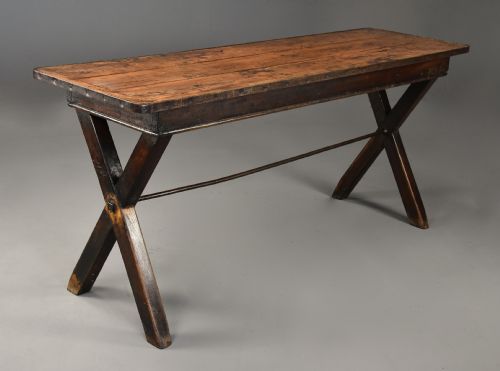
An x frame pub table brings robust communal character and honest utility into a room, offering sturdy charm built for daily gathering.
X Frame Pub Table
When you search for an x frame pub table, you encounter hard-wearing utilitarian furniture designed for public houses, taverns, and rural domestic spaces. These sturdy pieces provide generous surface areas supported by distinctive cross-legged or trestle underframes built to withstand heavy daily use.
Regional origins shape these items significantly, with English, Welsh, and French examples demonstrating local vernacular preferences. Whether configured as a long dining board or a compact occasional stand, each piece reflects the practical demands of historic social spaces.
How they were made
Makers utilised heavy timbers such as oak, pine, elm, sycamore, and assorted regional hardwoods to form thick tops capable of enduring decades of service. These solid wooden boards were joined and secured to robust structural supports designed to eliminate lateral wobble.
The defining underframes relied on timber trestles or iron components, including cast iron table bases that added considerable weight and stability. Many surfaces retain traces of historic paint, such as original red finishes, or display the warm natural tones achieved through centuries of use.
The listings on this page span the Georgian and Victorian periods, showcasing traditional timber and cast iron construction.
What varies in quality
The distinction between standard utility items and superior examples lies in the quality of timber selection and the integrity of the structural joinery. Tables featuring dense native hardwoods like oak and elm command attention for their durability and tactile presence.
Surface character defines the upper echelon of these pieces, where unforced patination and surviving original painted finishes reveal genuine age and careful custodianship. The harmony between a heavy top and a well-proportioned iron or timber x frame dictates the visual success of the piece.
The X Frame Pub Table Glossary
- Tavern table
- A robust communal table historically used in public drinking houses and inns. These pieces prioritize heavy construction and stable bases over delicate ornamentation.
- X frame
- A structural support system formed by intersecting diagonal timbers or metal struts. This configuration distributes weight evenly and maximises legroom beneath the top.
- Patina
- The deep surface sheen and coloration developed by wood and paint over decades of handling and cleaning. It serves as a primary indicator of genuine age.
- Trestle
- A support structure consisting of a horizontal beam fixed to two splayed legs at each end. It forms the backbone of many traditional long tables.
- Vernacular country
- Furniture designed and built by local tradesmen using regional materials to satisfy domestic or local commercial needs. It bypasses formal metropolitan design trends in favour of direct utility.
X Frame Pub Table: Frequently Asked Questions
What is an x frame pub table?
An x frame pub table is a sturdy utilitarian surface supported by intersecting diagonal braces or trestle ends. These pieces were historically built for commercial drinking establishments and rural homes.
Today, they serve as characterful dining or occasional tables that anchor a room with historic presence and honest construction.
How were these tables used originally?
Publicans and innkeepers utilised these heavy tables for serving food and drink to patrons in bustling social settings. Their robust construction allowed them to endure constant movement and heavy daily service.
In domestic contexts, similar tables functioned as central work surfaces for food preparation or family dining in farmhouse kitchens.
How do I live with a pub table?
Living with a historic pub table involves embracing its scars, dents, and honest wear as part of its ongoing history. The durable timbers used in their construction make them exceptionally forgiving for daily dining and entertaining.
Pairing them with simple benches or mismatched chairs allows the distinctive cross-frame base to remain visible and functional.
How can I tell the period?
Determining the age of these pieces requires examining the timber species, tool marks, and overall joinery techniques. Georgian and nineteenth-century examples often display hand-sawn boards and pegged joints characteristic of earlier craftsmanship.
Additionally, surviving original surface treatments like old paint or deep natural patination help anchor the piece within the Victorian or Georgian eras.