


Rustic Wool Area Rug
A rustic wool area rug brings grounded texture and traditional nomadic design into a room through hand-knotted pile and earthy materials.
Rustic Wool Area Rug
A rustic wool area rug encompasses hand-woven floor coverings originating from Persian, Anatolian, and Caucasian weaving traditions. These pieces date from the mid-nineteenth century through the early twentieth century, spanning periods such as 1900, 1920, and 1850.
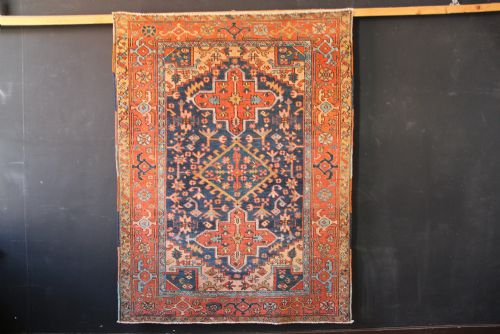
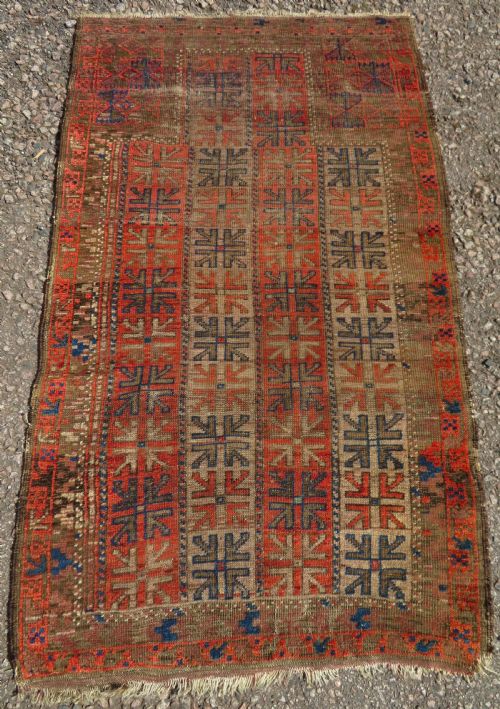
Buyers will most frequently encounter Persian Heriz rugs, Baluch tribal pieces, and Turkish village rugs on this page. Formats range from small prayer rugs and kilims to larger room-size carpets.
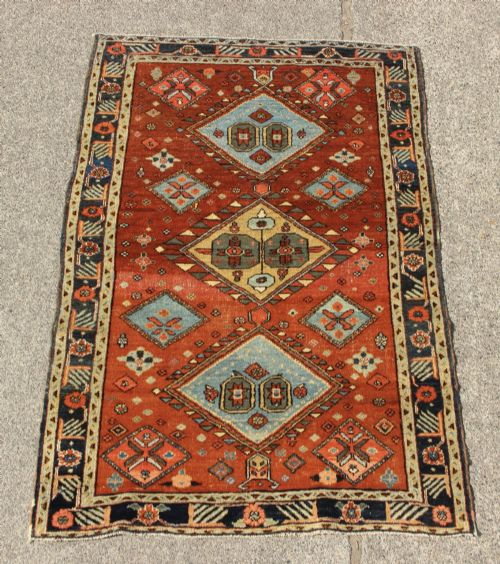
Village and nomadic pieces dominate the selection, showing geometric medallions, tribal motifs, and straightforward formats rather than formal court designs.
Quality differences
The distinction between tiers rests on the fineness of the wool, the clarity and balance of the regional design, and the integrity of the weave. Tightly packed knots and balanced proportions elevate a textile above simpler utility pieces.
Wear patterns and distress also play a part, where honest age and mellowed surfaces hold greater appeal than structural compromise or clumsy repair. The strength of the colour palette and the distinctness of tribal motifs separate standard village work from exceptional examples.
Nomadic weavers frequently incorporated small spontaneous irregularities into their geometric repeats, leaving a quiet thumbprint of human distraction in the wool.
Quchan Kurds·Karakecili
The Rustic Wool Area Rug Glossary
- Heriz rug
- A durable Persian carpet style known for bold geometric medallions and robust structural wool. These pieces originate from the Heris district in northwest Iran.
- Baluch rug
- A nomadic or village textile produced by Baluchi tribes featuring dark palettes and geometric motifs. Camel wool is frequently utilised in these regional pieces.
- Kilim
- A flat-woven carpet or rug made without a pile, produced across Anatolia and Persia. These textiles rely on interlocking weft threads to create sharp geometric patterns.
- Prayer rug
- A small format textile featuring a mihrab or niche design used historically for daily prayer. These portable rugs were woven across village and nomadic workshops.
- Warp
- The stationary vertical threads stretched across a loom that form the foundational skeleton of a rug. The pile knots are tied around these parallel strands.
Rustic Wool Area Rug: Frequently Asked Questions
How do I clean an old wool rug?
Gentle vacuuming without a rotating brush roll helps remove embedded dust from the wool pile without damaging the foundational weave.
Professional specialist cleaning remains necessary for deeper washing to protect the natural dyes and historical fibres.
Are these rugs suitable for high traffic?
Hand-spun wool and sturdy cotton foundations provide natural resilience against heavy foot traffic in active living spaces.
Placing an appropriate rug underlay beneath the textile prevents slipping and reduces fibre friction against hard floors.
How can I tell a village rug from a city piece?
Village and tribal rugs display bolder, more geometric designs and often incorporate slight irregularities in symmetry and line.
City carpets generally exhibit precise curves, intricate floral medallions, and finer knot densities resulting from formal workshop production.
What does camel wool add to a rug?
Undyed camel wool introduces natural warm brown and golden tones that soften visually as the textile ages.
This fibre provides a distinct tactile density and rustic character found primarily in specific regional nomadic weaving.