
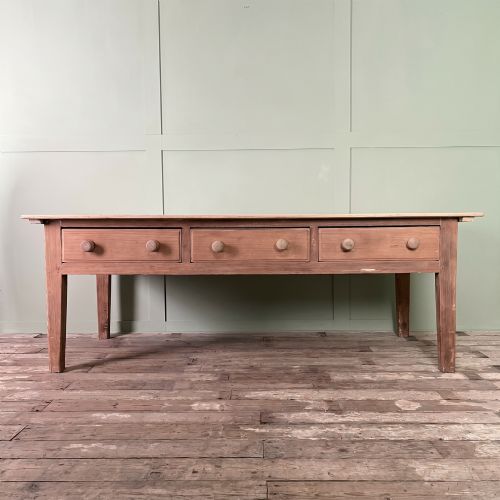


Rustic Wooden Sideboard Table
A rustic wooden sideboard table brings grounded utility and honest grain to a room, drawing on centuries of farmhouse and country design.
Rustic Wooden Sideboard Table
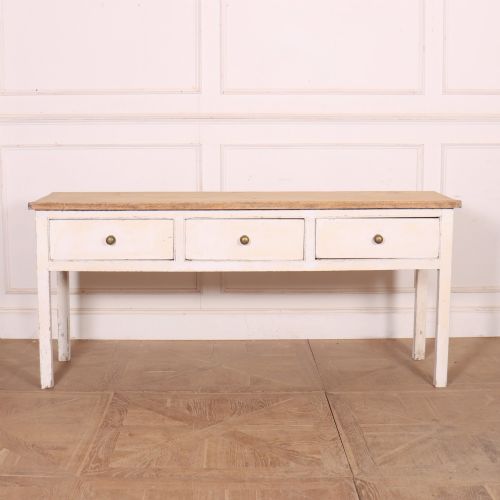
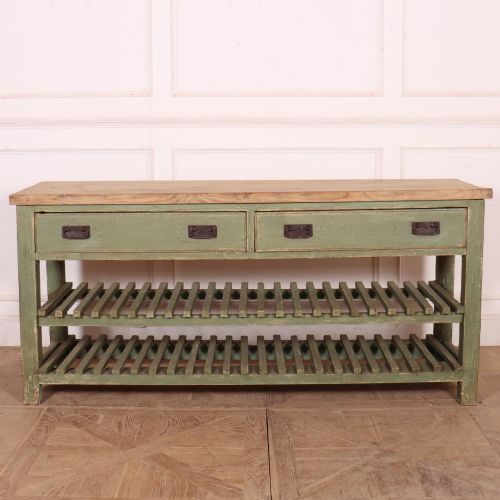
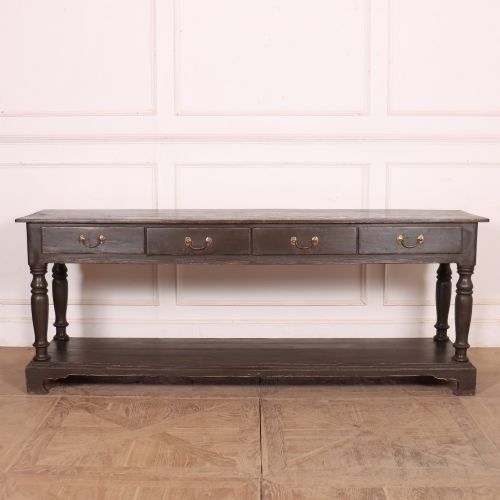
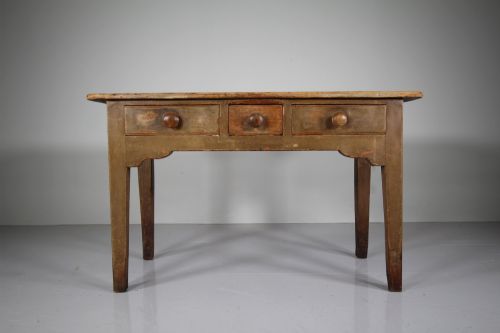
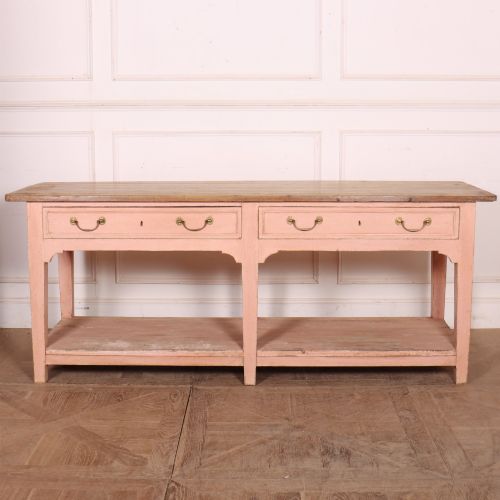
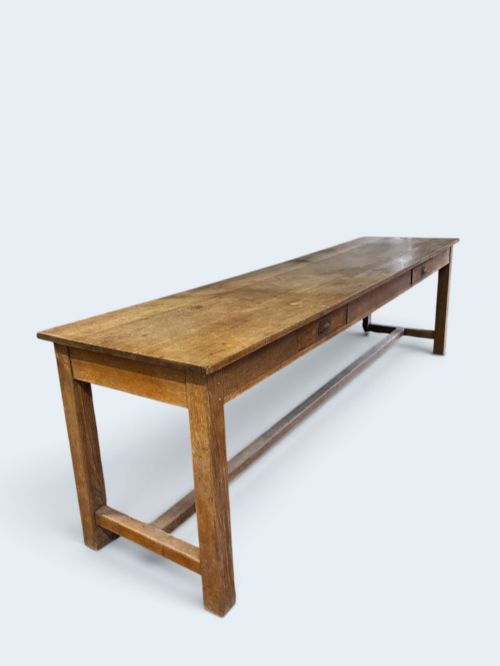
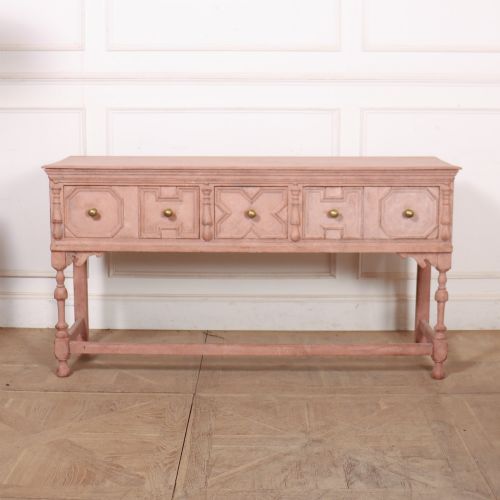
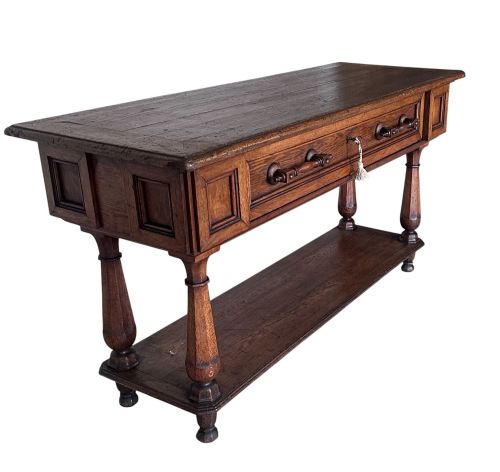
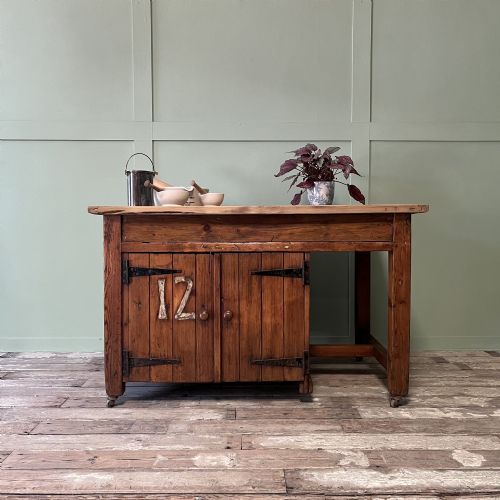
A rustic wooden sideboard table encompasses hardworking utilitarian forms like dresser bases, serving tables, and bakers prep tables designed for practical daily use. When exploring a rustic wooden sideboard table, you encounter heavy timber constructions that originated in kitchens, dairies, and country houses.
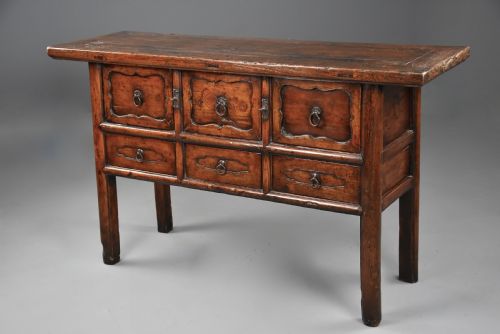
The selections span from eighteenth-century oak and elm examples to nineteenth-century pine, sycamore, and pitch pine pieces. English, Welsh, French, and Chinese origins appear across the listings, reflecting diverse regional domestic traditions.
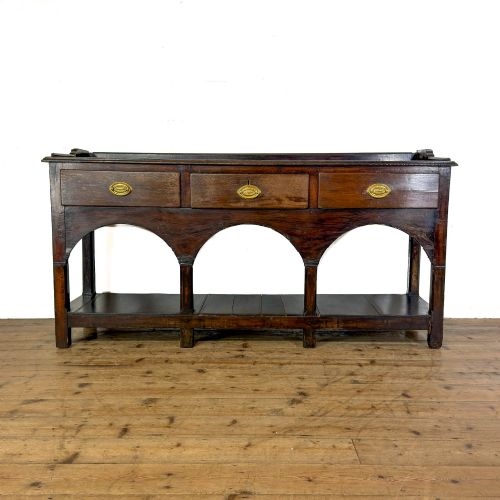
Dresser bases and serving tables dominate the forms, frequently featuring potboards, drawers, or open lower shelves. These sturdy surfaces served generations of cooks and households before finding a place in modern interiors.
What varies in quality
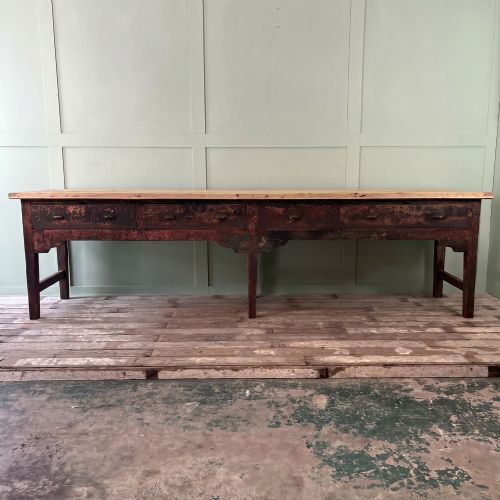
Quality rests in the integrity of the timber and the honesty of the surface finish, whether a deep patinated oak grain or weathered historic paint. Substantial proportions and well-balanced construction separate everyday utility pieces from finer country furniture.
The presence of original hardware, untouched potboards, and untouched backboards elevate a piece. Evidence of genuine domestic work, from scrubbed pine tops to minor historic repairs, adds character rather than diminishing worth.
Listings feature woods including pine, oak, elm, sycamore, cherrywood, and pitch pine across English, French, Welsh, Spanish, and Chinese origins.
The Rustic Wooden Sideboard Table Glossary
- Potboard
- A lower slatted shelf fitted beneath a dresser base or serving table, traditionally used to store heavy pots and pans. This open storage defines many classic country forms.
- Dresser base
- A low wooden storage unit featuring drawers and sometimes a potboard, historically used for food preparation and serving. It stands without the upper plate rack of a full dresser.
- Serving table
- A long, sturdy table utilised for plating meals or storing dining provisions in a hall or dining room. These pieces often feature one or more deep drawers beneath the top.
- Bakers prep table
- A heavy utilitarian work table designed for kneading dough and food preparation, commonly constructed in pine or sycamore. They prioritize functional surface area above all else.
- Patina
- The deep sheen and surface character acquired by wood and paint through decades of use, cleaning, and exposure to light. Collectors prize this tangible record of age.
Rustic Wooden Sideboard Table: Frequently Asked Questions
What is a dresser base?
A dresser base is the lower portion of a traditional country dresser, built with drawers and often a lower potboard shelf. These sturdy units stood in kitchens and dining spaces to hold culinary equipment.
Unlike full dressers, they lack the upper shelving tiers, leaving a broad wooden work surface on top. This makes them adaptable as sideboards or serving consoles in modern homes.
Where were potboards used?
Potboards originated in country kitchens and sculleries as the lower open shelf of a serving table or dresser base. They provided accessible storage for heavy earthenware pots, metal jugs, and utilitarian crockery.
Today, this lower shelf offers a convenient place to stack large art books or baskets. It grounds the furniture piece visually while maintaining an open, airy feel.
How do I date a pine table?
Dating pine furniture involves examining construction marks, nail types, and the depth of the timber patina. Hand-sawn boards, pegged joints, and hand-forged iron nails point toward eighteenth or early nineteenth-century origins.
Pine tables from later periods often show mechanical circular saw marks and standardised fixings. Evaluating the overall wear patterns helps confirm the active period of domestic use.