




French Country Sofa Table
A french country sofa table brings rustic warmth and enduring utility to a room, offering the weathered charm of provincial timber.
French Country Sofa Table
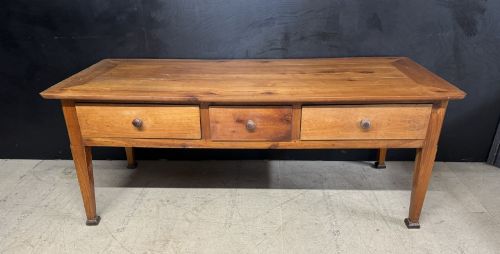
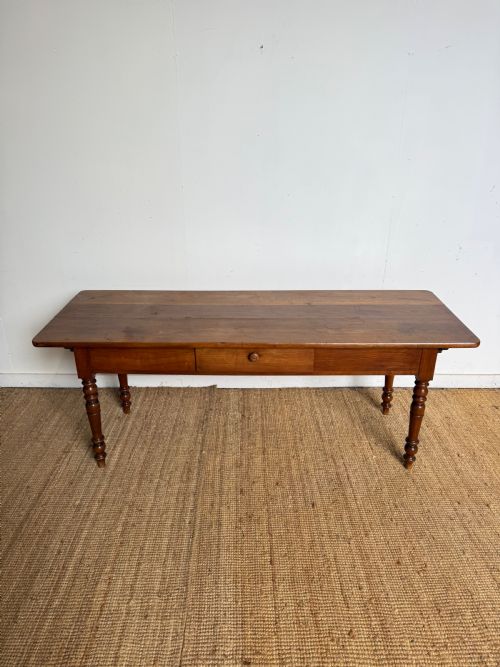
When you search for a french country sofa table, you encounter console tables, centre tables, workbenches, and serving tables originating from periods such as the nineteenth century, nineteen-twenty, and the Edwardian era.
The pieces listed on this page span styles like French Provincial, French Country, Scandinavian Country, French Primitive, Louis XV, and French Chateau.
Most examples take the form of narrow console tables or versatile side tables suited to domestic placement behind seating or along hallways.
How they were made
Construction relies heavily on traditional timbers including oak, pine, cherrywood, elm, and walnut, often finished with paint or left as bleached oak.
Hardware details such as brass fixtures appear alongside robust structural designs like trestle bases and potboard configurations.
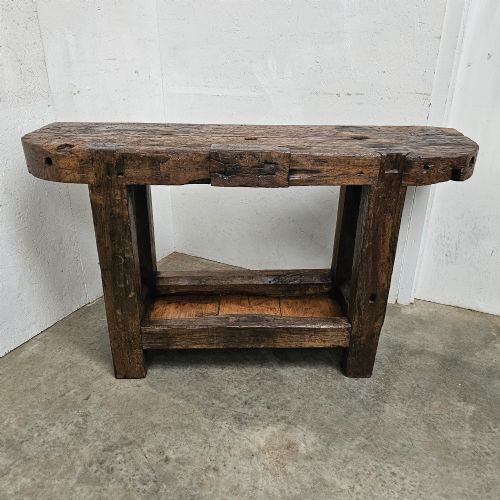
A sturdy nineteenth-century workbench doubles quite happily as a rustic console if you do not mind flour dust in the grain.
What varies in quality
Quality rests in the selection of timber and the integrity of the construction, distinguishing straightforward utilitarian pieces from finer decorated forms.
Surface treatments, whether original paint layers or naturally aged patination on cherrywood and oak, dictate the visual character and depth of the piece.
The French Country Sofa Table Glossary
- Console table
- A table designed to stand against a wall, often narrow in depth to fit restricted spaces.
- Trestle table
- A table featuring a horizontal beam supported by two pairs of slanted legs.
- Potboard
- A lower shelf incorporated into a table base for storing pots and kitchen utensils.
- Bleached oak
- Timber treated to lighten its natural tone, yielding a paler finish popular in rustic interiors.
French Country Sofa Table: Frequently Asked Questions
What is a french country sofa table used for?
These tables function well behind a sofa, in a hallway, or as a side surface in a living space.
Their narrow proportions make them adaptable for displaying lamps, books, and decorative objects without obstructing passage.
How do I identify nineteenth century pieces?
Nineteenth-century examples display traditional joinery and hand-worked surfaces characteristic of the period.
Examination of the timber grain, wear patterns, and structural fasteners helps confirm the age and origin.
Are these tables made from solid wood?
The listings consist of pieces fashioned from solid timbers such as oak, pine, elm, and cherrywood.
These materials provide the durability and weight expected of utilitarian provincial furniture.
How do I care for a painted wooden table?
Maintenance involves dusting with a soft cloth and avoiding excessive moisture on the painted or timber surfaces.
Preserving the aged finish requires gentle cleaning products that do not strip the original patina.