
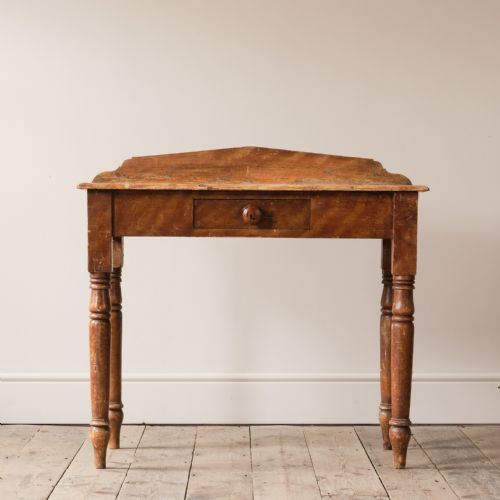
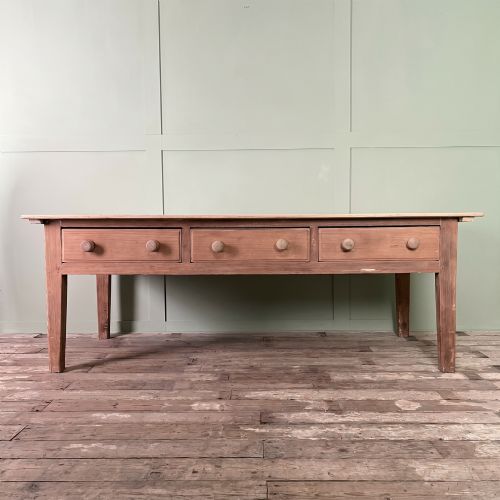

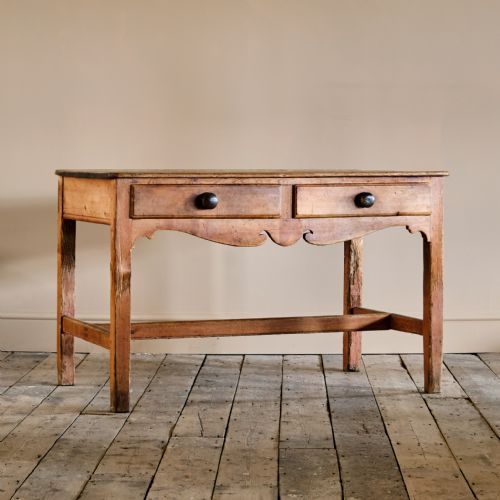
Rustic Wooden Server Table
A rustic wooden server table offers sturdy utility and timeless charm for daily dining service or hallway organisation.
Rustic Wooden Server Table
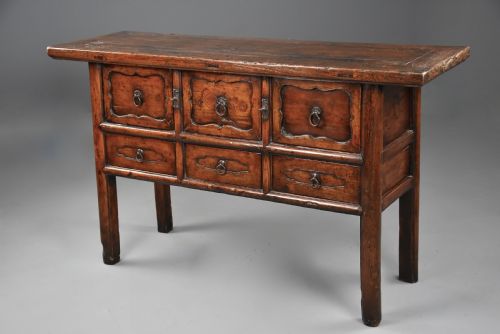
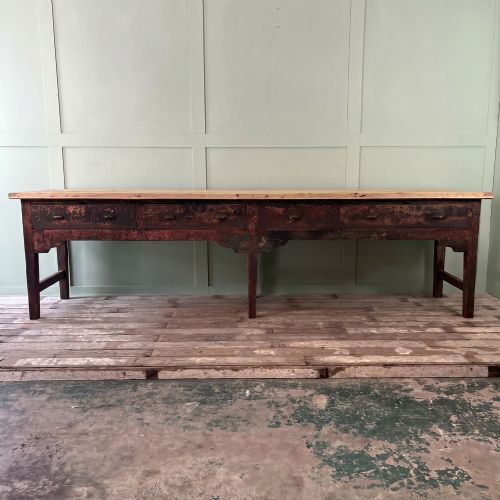
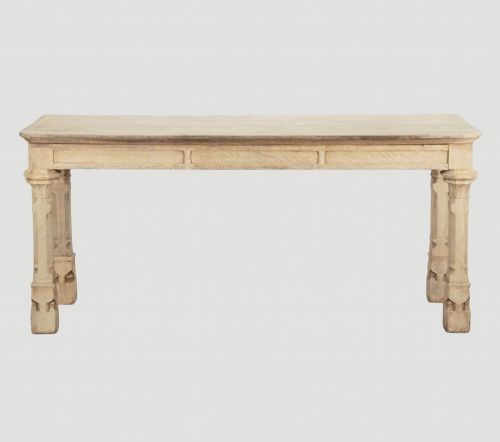
When searching for a rustic wooden server table, a buyer encounters a diverse selection of practical domestic furniture originating from English, French, Welsh, and Spanish traditions. These pieces predominantly take the form of serving tables, dresser bases, console tables, and long side tables designed for utilitarian household tasks.
The inventory on this page most frequently presents 19th-century examples alongside earlier 17th- and 18th-century forms, reflecting generations of domestic use. Common formats include potboard dresser bases, drapers tables, and harvest tables that bridge the gap between kitchen preparation and dining room presentation.
Materials and construction methods
The physical substance of these tables relies heavily on domestic timbers such as pine, oak, elm, fruitwood, and sycamore, often augmented by iron and brass hardware. Cabinetmakers and local joiners utilised these accessible regional woods to build robust frames capable of withstanding heavy daily use.
Surface treatments vary significantly from stripped natural grain to original paint finishes, bleached oak, and patinated surfaces developed over centuries. Joinery techniques prioritise structural stability, visible in thick plank tops, sturdy legs, and functional drawers designed for storage.
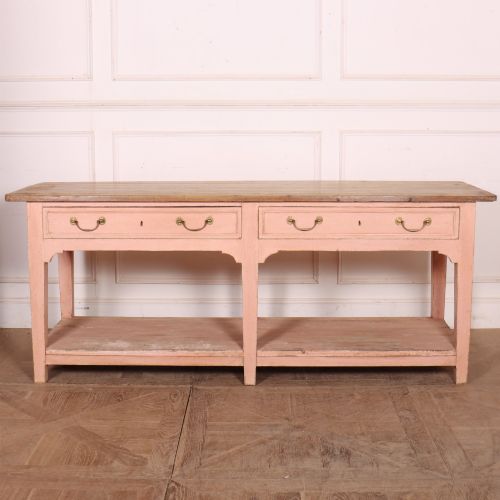
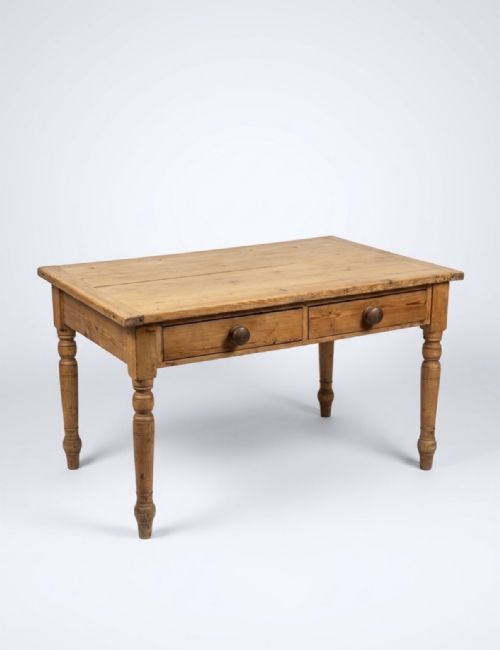
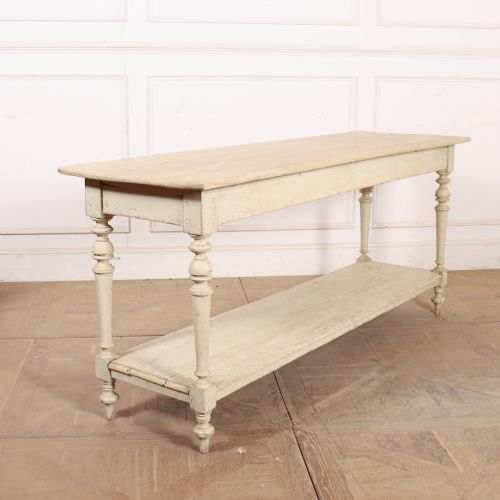
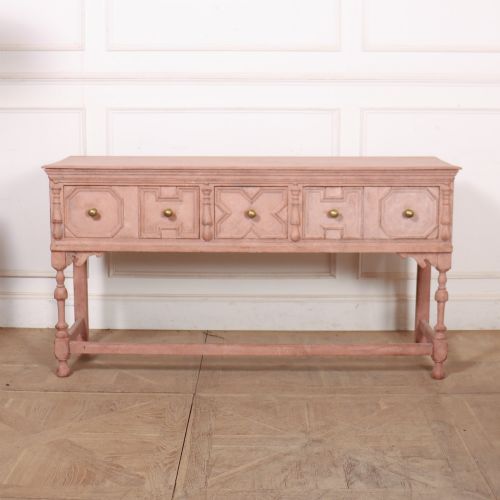
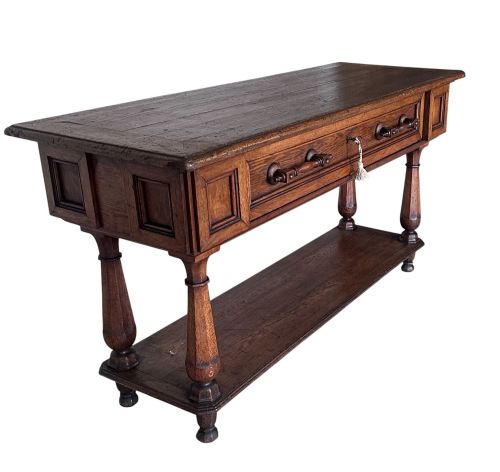
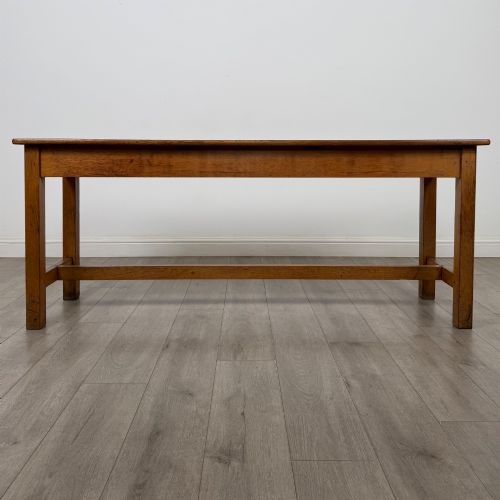
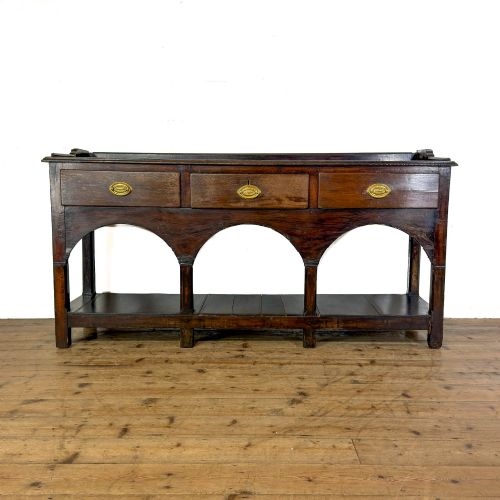
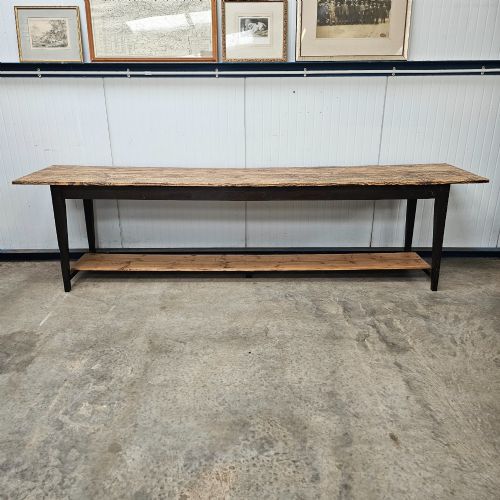
The furniture forms range from French provincial drapers tables to Welsh potboard dresser bases and long harvest tables.
Evaluating construction and finish quality
Quality in these utility tables rests upon the integrity of the timber selection and the preservation of original surfaces like early paint or deep natural patina. Tables constructed from dense hardwoods like oak or walnut or mature pines show superior durability compared to lesser utilitarian pieces.
Proportion and structural honesty dictate the higher tier of the range, where original drawer configurations, untampered potboards, and honest wear outweigh overly restored or heavily sanded surfaces. The balance between practical function and untouched age defines the distinction.
The Rustic Wooden Server Table Glossary
- Dresser base
- A low cabinet or table fitted with drawers and occasionally a lower potboard, traditionally used in kitchens for food preparation and storage. These pieces form a large portion of the available servers.
- Potboard
- An open slatted lower shelf beneath a table or dresser base, historically utilised for storing pots, pans, and heavy kitchen ceramics. It provides crucial lower bracing for long serving tables.
- Patina
- The deep surface sheen and coloration developed on wood and paint through decades of handling, cleaning, and exposure to light. A fine patina indicates genuine age and use.
- Console table
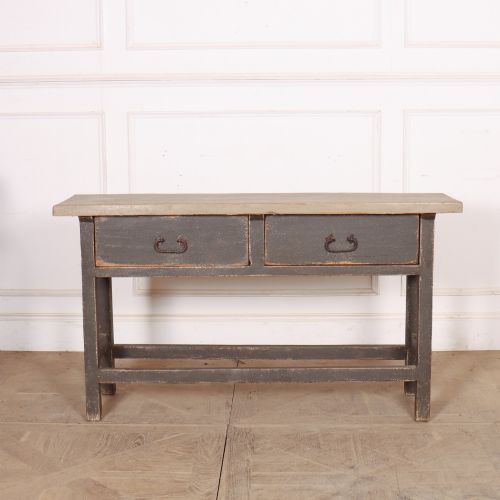
- A table designed to stand against a wall, often featuring a shallow depth suitable for hallways or dining rooms. Many French and English examples serve this exact function.
- Pitch pine
- A resinous, durable pine variety prized in the nineteenth century for structural framing and heavy tabletops. It yields a distinct grain pattern when stripped.
Rustic Wooden Server Table: Frequently Asked Questions
How were these server tables originally used?
These tables served primarily in kitchens, dining rooms, and hallways for food preparation, serving meals, and storing household provisions. Their sturdy construction accommodated heavy daily domestic labour.
Many incorporated lower potboards or multiple drawers to keep utensils and serving dishes close at hand during busy household service.
What woods are most common in these tables?
Pine and oak appear most frequently across English, Welsh, and continental pieces, providing the structural strength needed for heavy work surfaces. Regional variations also introduce fruitwood, elm, sycamore, and walnut.
Painters and joiners selected these timbers for their local availability and resilience against constant use.
How do I identify original paint finishes?
Original paint displays authentic wear patterns, subtle craquelure, and multiple underlying layers appropriate to the period of manufacture. It feels integrated with the wood beneath rather than freshly applied.
Inspect corners and recessed areas where modern brushes struggle to reach for consistent historical layering.