
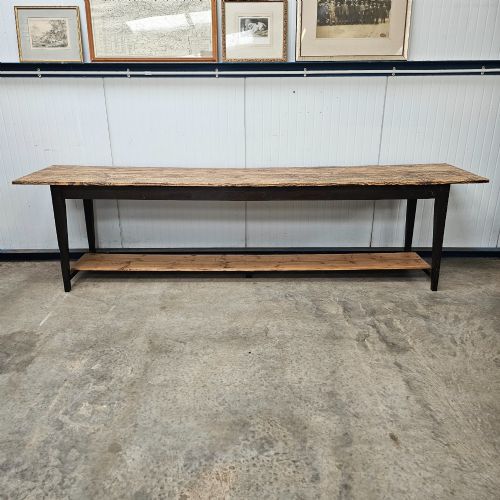


Dark Oak Frame Table
These dark oak frame table pieces are sturdy timber furnishings and accessories built to last, offering rustic charm and solid construction for any traditional interior.
Dark Oak Frame Table
When you search for a dark oak frame table, you encounter a selection of solid timber furniture and related domestic objects spanning several distinct eras. The inventory includes robust dining tables, long harvest tables, and country farmhouse pieces featuring sturdy oak construction.
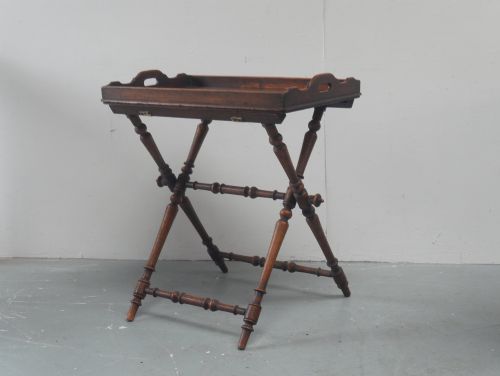
Beyond standard dining forms, the selection encompasses specialised items like serving trays, tray tables, and library tables. You also find decorative and functional tabletop accessories sharing the same timber framework aesthetic.
The pieces on this page originate from various traditional periods, stretching from the Georgian era through Victorian Gothic Revival and Edwardian times. Most items display the heavy grain and deep tones characteristic of genuine aged oak.
Materials and construction methods
Makers utilised dense regional timber, predominantly oak complemented by secondary woods such as pine and elm, to build robust frames. Joinery relied on traditional framing techniques designed to withstand heavy daily use in country houses and rural settings.
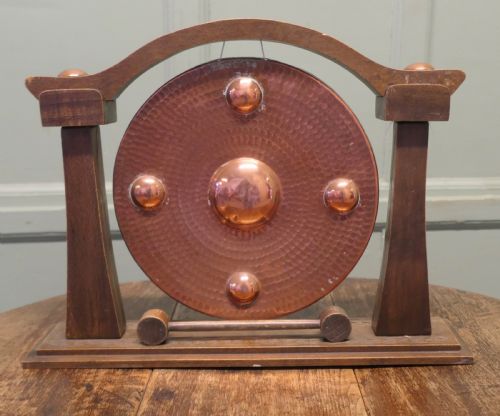
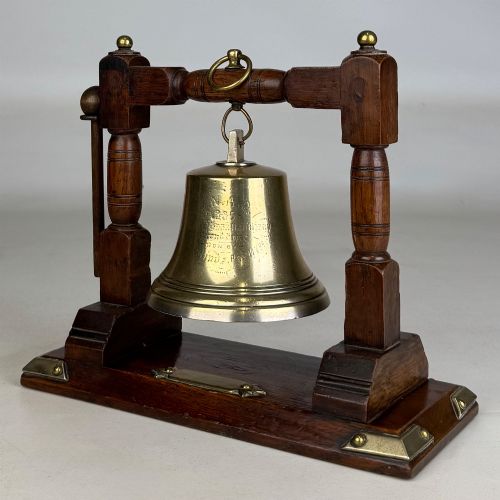
Many items incorporate contrasting metalwork, mounting brass gongs, copper plates, or leather accents directly onto the wooden framework. Carved details frequently appear on Victorian and Arts and Crafts examples, displaying hand-tooled decoration across the timber surfaces.
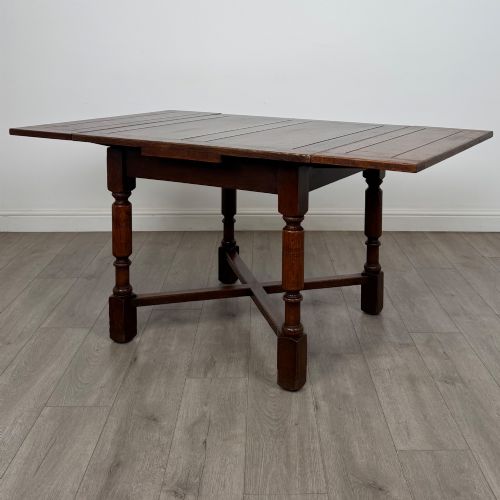
Several dining tables include secret leaf extensions, ready to swallow extra guests at a moment's notice.
Judging quality in oak furnishings
Superior examples exhibit rich natural patina and depth of colour developed through decades of service, whilst lesser pieces may show dry or stripped surfaces. The handling of the timber grain and the crispness of any hand-carved details distinguish workshop output.
The Dark Oak Frame Table Glossary
- Draw leaf
- An extendable table design featuring sliding leaves hidden beneath the main surface that pull out to lengthen the top. This mechanism allows the table to accommodate additional guests without removing the central section.
- H stretcher
- A horizontal timber brace connecting the four legs of a table in the shape of the letter H. This component provides structural rigidity and prevents the legs from wobbling.
- Harvest table
- A long, narrow dining table traditionally used by farm workers for communal meals during the harvest season. These pieces typically feature elongated proportions and simple, sturdy wooden frames.
- Dinner gong
- A metal disc suspended within a wooden or brass frame, struck with a mallet to announce meals. They frequently employ oak stands matching the surrounding dining furniture.
- Patina
- The glossy sheen and surface alteration developed on wood and metal over years of handling and polishing. Collectors value this indicator of age and careful maintenance.
Dark Oak Frame Table: Frequently Asked Questions
How do I clean a dark oak frame table?
Dust the timber regularly with a soft, dry cloth to prevent grit buildup on the surface. Avoid using harsh chemical sprays or excess water, which can damage the aged finish.
Apply a traditional beeswax polish occasionally to nourish the wood and maintain its natural lustre. Buff the surface gently after application to bring out the deep grain patterns.
Can I use an antique harvest table daily?
These tables were originally built for heavy daily labour and dining, making them robust enough for modern family life. The solid timber construction handles regular use well when treated with reasonable care.
Use protective mats under hot dishes and drinks to safeguard the antique surface from rings and heat marks. Position the table away from direct heat sources to prevent the wood from drying out or splitting.
What is the difference between Georgian and Victorian oak tables?
Georgian oak tables generally exhibit simpler, cleaner lines with an emphasis on utilitarian strength and practical country craftsmanship. Their proportions tend to be straightforward, reflecting the domestic needs of the eighteenth century.
Victorian pieces often incorporate heavier ornamentation, such as Gothic Revival motifs or deep hand-carving along the frieze and legs. They frequently utilise darker finishes and more complex framing structures than their earlier counterparts.
How do I identify Arts and Crafts oak furniture?
Arts and Crafts pieces emphasise visible hand-craftsmanship and honest construction without excessive surface masking. You will notice straightforward joinery, chamfered edges, and occasionally hammered copper or brass hardware integrated into the oak frame.
The style rejects mass-produced factory ornamentation in favour of solid proportions and functional design. This movement produced sturdy tables and desk forms that highlight the natural qualities of the wood.