
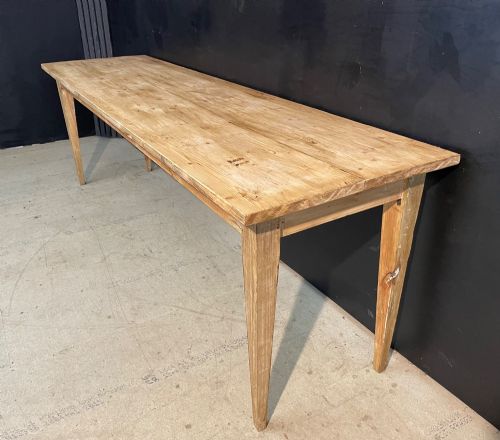
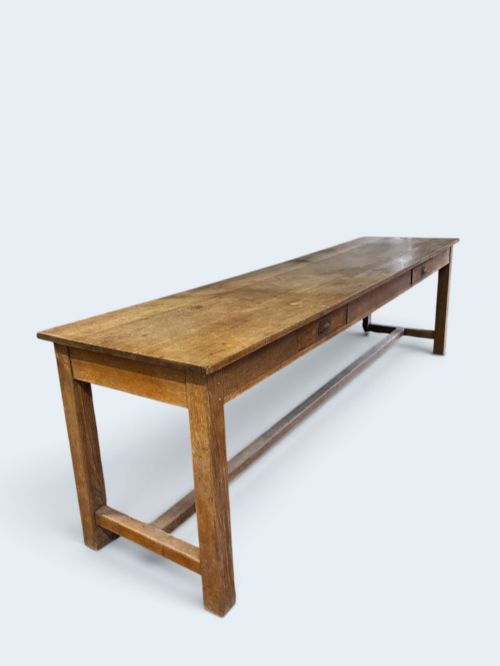
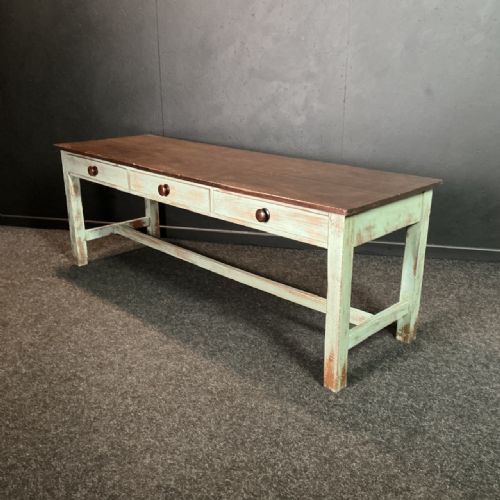
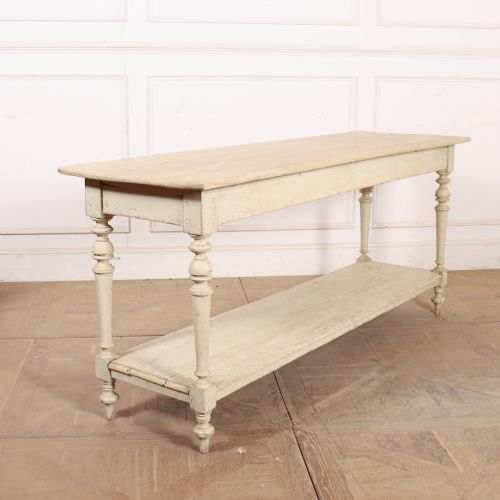



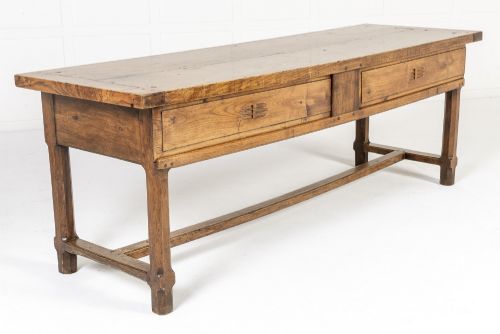


Long Kitchen Prep Table
A long kitchen prep table brings heavy timber, working history and broad surface space straight into the heart of a home.
Long Kitchen Prep Table
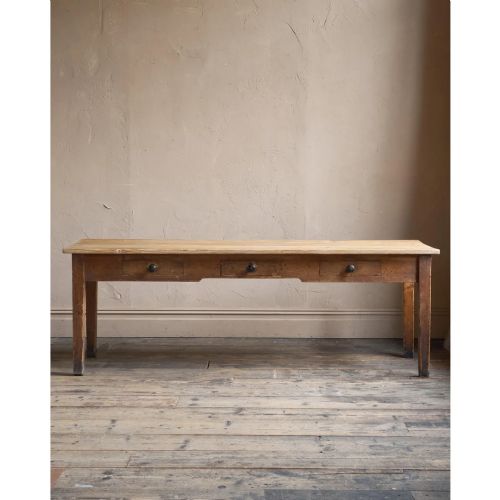
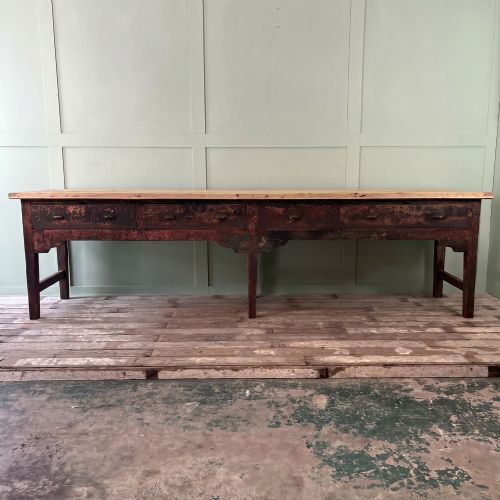
A long kitchen prep table serves as the primary workspace or gathering surface in domestic, trade or institutional rooms, encompassing forms such as drapers tables, serving tables and scullery tables. When you search for a long kitchen prep table, you encounter robust utility items built to handle daily labour, food preparation and textile sorting.
The pieces available span several centuries, reaching from eighteenth-century examples to early twentieth-century designs across English, French, Swedish and Welsh traditions. Pine and oak dominate the selection, appearing either in bare timber or retaining original and later painted surfaces.
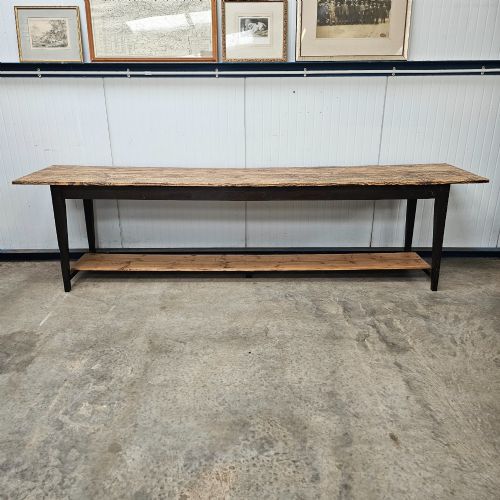
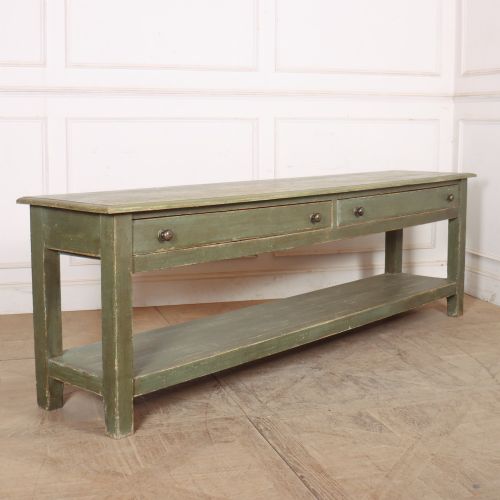
Forms vary from narrow multi-drawer drapers tables to deep potboard serving tables and tall refectory structures. These tables emerge from rural farmhouses, taverns, dairies and schools, carrying the marks of intensive historic use on their tops and frames.
Materials and construction
Makers relied on solid domestic timbers such as pine, oak and elm to withstand constant pressure, moisture and weight. Thick planks form the tops, often joined with breadboard ends to maintain stability across extended lengths.
Underframes utilise mortise and tenon joinery, sometimes incorporating potboards, lower shelves or banks of drawers with brass or iron pulls. Surfaces were left unsealed, painted with lead-based or oil paints, or periodically scrubbed, resulting in deeply textured patinas.
Listings feature eighteenth and nineteenth-century pieces in pine, oak, elm and poplar, alongside painted and bleached timber finishes.
Assessing quality and character
Quality rests in the proportion of the timber, the integrity of the original joints and the honesty of the wear. Tables that retain their original height, unmodified bases and unplaned tops command greater attention from collectors.
The presence of historic paint surfaces, original drawer configurations and native iron or brass hardware elevates an example above altered or heavily restored pieces. Timber selection also matters, particularly dense quarter-sawn oak or old-growth pine with tight grain patterns.
The Long Kitchen Prep Table Glossary
- Drapers table
- A long, narrow table traditionally used in textile shops or large households for folding cloth, typically featuring multiple drawers beneath a generous top.
- Potboard
- An open slatted lower shelf fitted between the legs of a serving or prep table, originally designed to hold heavy pots and pans.
- Scullery table
- A heavy utilitarian table built for washing, cleaning and food preparation in the back of a large house.
- Breadboard ends
- Transverse pieces of timber fixed to the ends of a tabletop to prevent warping and keep the long boards flat.
- Refectory table
- A long, narrow dining or assembly table of substantial height and timber weight, historically used in communal dining halls.
Long Kitchen Prep Table: Frequently Asked Questions
How do I clean a historic prep table top?
Scrub the timber gently with warm water, mild soap and a stiff brush, following the direction of the grain rather than using harsh chemical strippers.
Allow the wood to dry naturally and nourish dry pine or oak with a clear beeswax to protect the fibres without sealing away the historic patina.
Were these tables meant for dining or cooking?
These tables served multiple functions depending on their original setting, acting as work surfaces for food preparation in dairies and sculleries, or as serving tables in large dining spaces.
Their generous dimensions and sturdy construction make them equally suited for modern family meals or large kitchen gatherings.
How can I tell an eighteenth-century table from a nineteenth-century one?
Examine the tool marks, timber width and construction methods beneath the frame, as earlier pieces often display hand-sawn pit marks and pegged joints.
Eighteenth-century examples frequently utilise wider single-plank boards and show deeper, more organic wear patterns from decades of manual labour.
Will a painted finish survive daily kitchen use?
Historic painted finishes require careful maintenance to prevent flaking, but they tolerate normal household use if kept away from standing water and excessive heat.
Many surfaces show layers of historic paint that have hardened over generations, creating a durable skin that resists light knocks.