
Farmhouse Harvest Table
A farmhouse harvest table brings scale and utility to a room, offering a sturdy surface built for daily communal dining.
Farmhouse Harvest Table
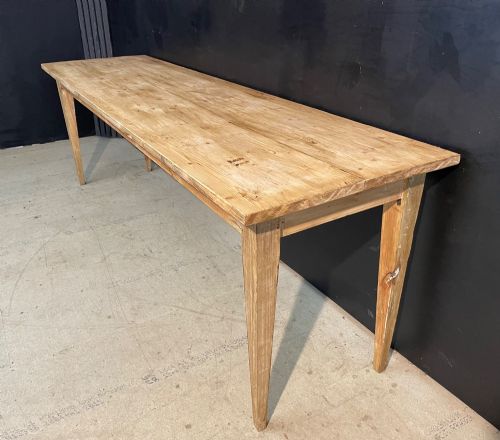
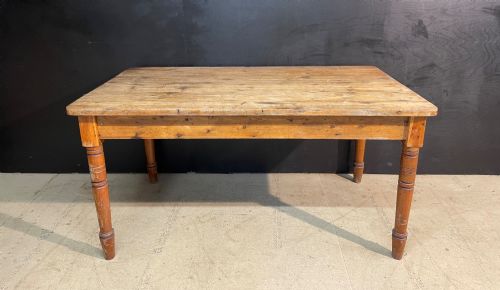
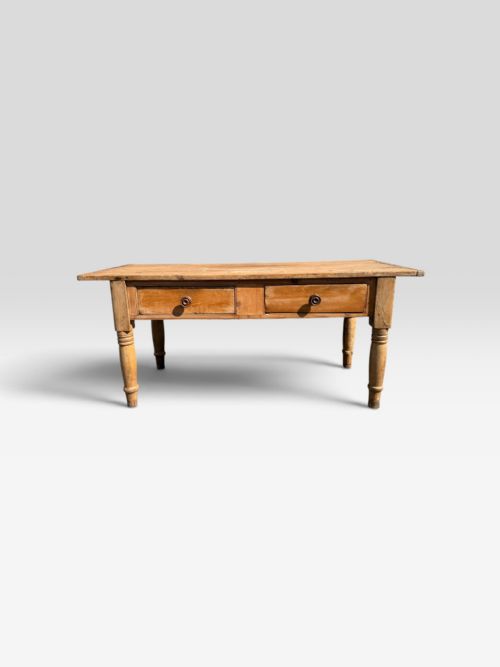
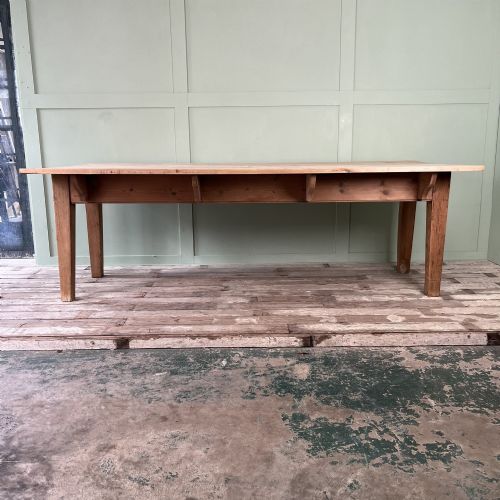
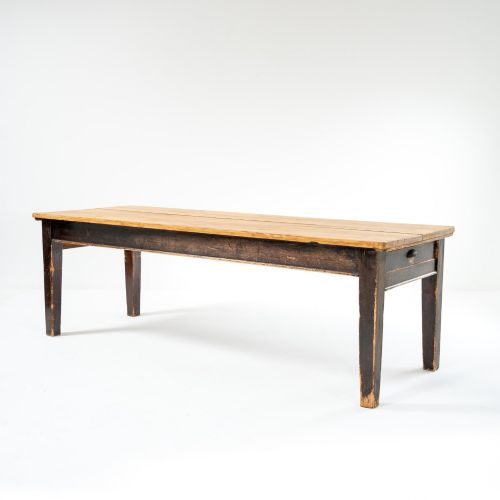
A farmhouse harvest table is a large dining or kitchen table designed for practicality and heavy domestic use. The pieces gathered here span from the eighteenth century through the early twentieth century, originating from English and French traditions.
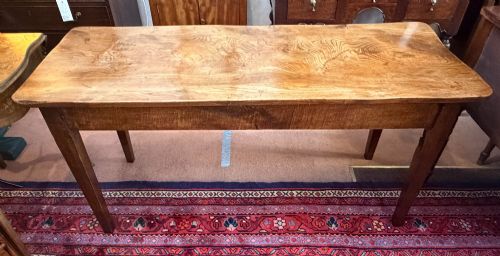
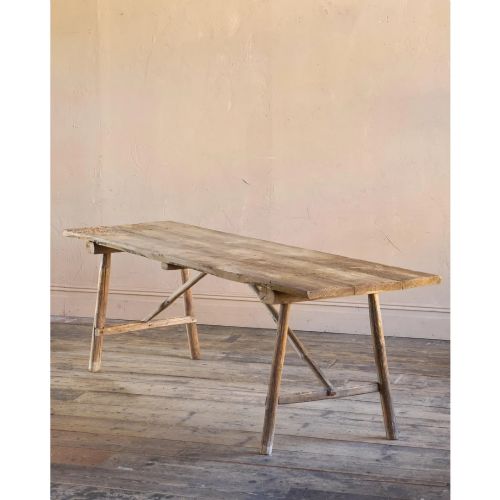
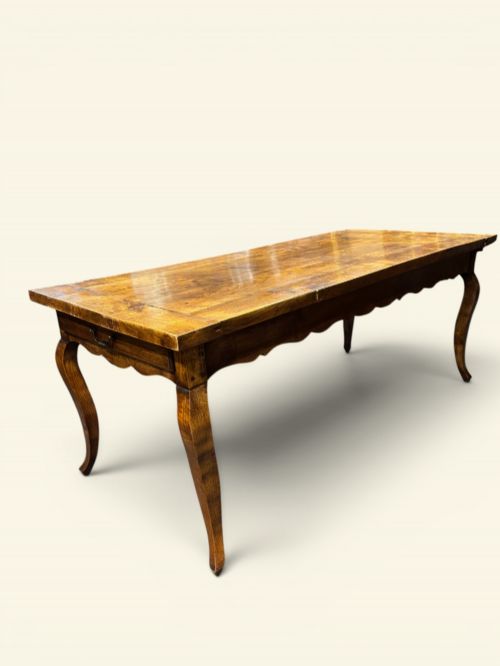
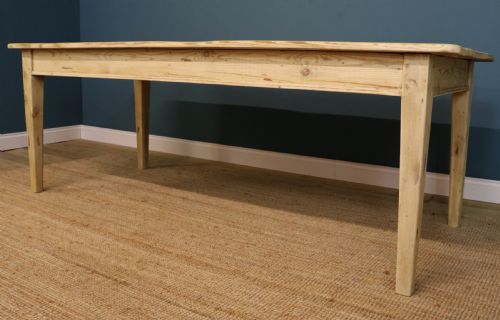
Pine is the material most frequently met on this page, often appearing in scrubbed finishes or large proportions suitable for community gatherings. Alongside pine, examples in oak, fruitwood, elm, and walnut reflect the regional timbers available to makers of past centuries.
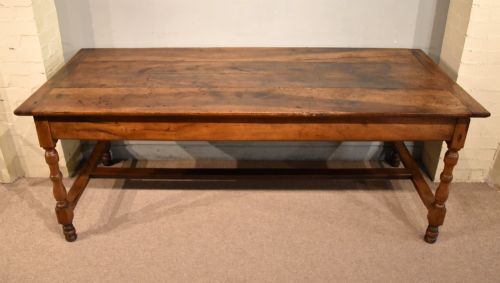
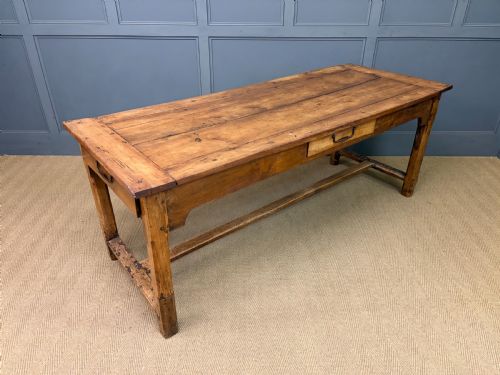
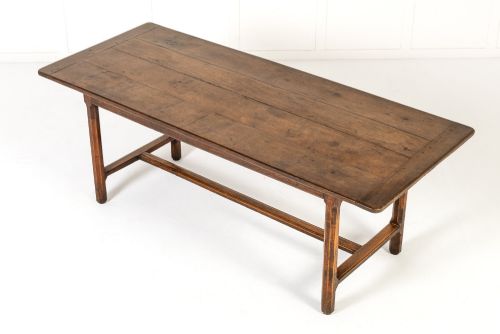
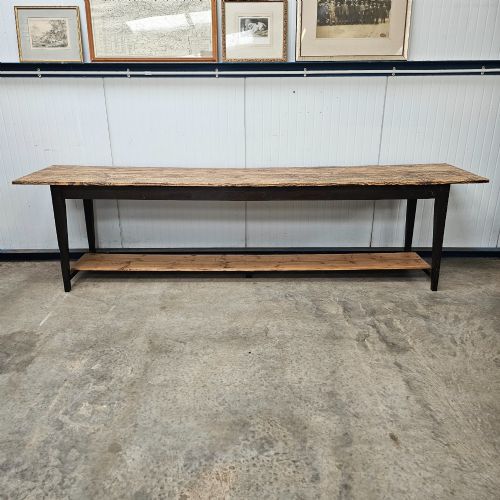
The forms vary from long refectory styles with end stretchers to D-end designs and two-tier variations. Buyers encounter rustic country styles alongside Georgian and Victorian examples, all sharing a straightforward rectangular format built to seat many diners.
Materials and Construction
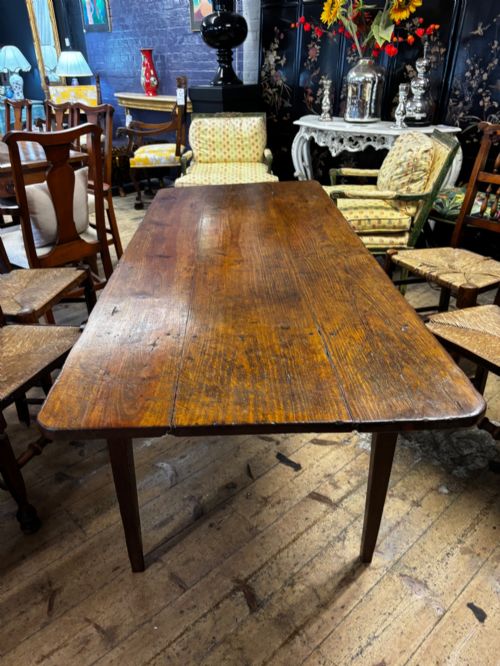
Construction relies heavily on solid timber boards joined to robust underframes, utilising hardwoods like oak and fruitwood alongside softer woods such as pine and pitch pine. Timber selection dictated the daily endurance of the surface, with dense woods resisting the wear of kitchen tasks.
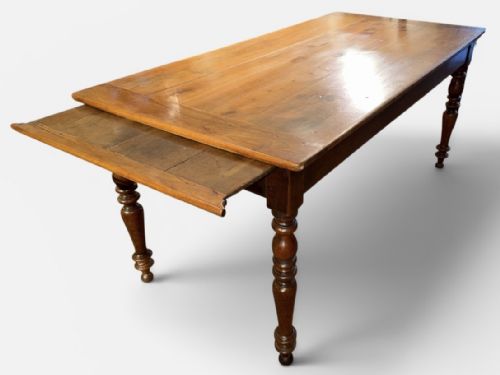
Joinery methods include turned legs, square section supports, and H-stretchers that stabilise long spans against heavy downward pressure. Tables often feature scrubbed top surfaces designed to withstand vigorous cleaning, paired with stable structural frames.
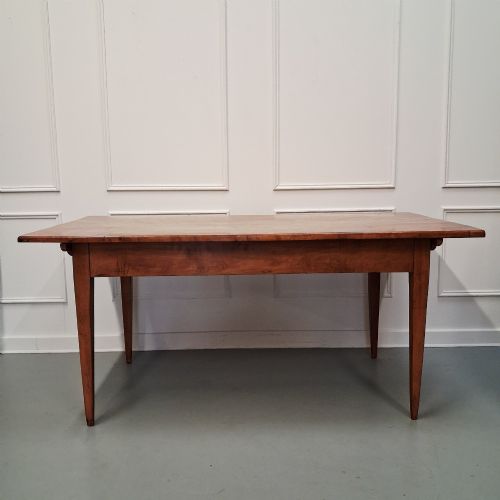
Formats span from compact console dining tables to community harvest pieces measuring over twelve feet in length.
Evaluating the Build
Quality rests in the integrity of the timber and the balance of the proportions, particularly across longer spans exceeding eight feet. Tables that retain their original stretcher supports and timber tops without excessive bowing demonstrate superior initial construction.
The distinction between ordinary utility items and finer examples lies in the choice of wood, such as satin birch or figured walnut, and the careful turning of legs. Grain movement and patination accumulated through generations of use separate purposeful antique pieces from later reproductions.
The Farmhouse Harvest Table Glossary
- Refectory table
- A long dining table historically used in communal eating spaces. This form is common among French and English listings.
- Stretcher
- A horizontal support beam connecting the legs of a table to increase rigidity. Many pieces feature end or H-stretchers for stability.
- Scrubbed pine
- A wooden surface washed repeatedly with water and abrasive brushes to clean the grain. This finish yields a pale, matte texture characteristic of kitchen tables.
- D-end
- A table format featuring semicircular ends that can stand alone or receive drop-in leaves. These appear in mid-nineteenth-century examples.
Farmhouse Harvest Table: Frequently Asked Questions
How do I clean a scrubbed pine top?
Scrubbed pine surfaces tolerate traditional soap and water cleaning methods well, matching their original utility in country kitchens. Avoid harsh chemical sealants that alter the natural matte texture.
Regular gentle washing maintains the pale tone of the wood without stripping the historic character built into the grain over centuries.
What size room needs an eight-foot table?
Tables measuring eight feet or longer require substantial floor space to allow comfortable movement and chair clearance around all sides. These proportions suit large open kitchens or dedicated dining rooms designed for hosting.
Consider the placement of doors and surrounding furniture before selecting community-scale lengths exceeding nine feet.
Are fruitwood tables durable for daily use?
Fruitwoods such as pear or cherry provide a dense and stable surface suitable for regular dining activities. These timbers develop a rich patina through handling.
Their natural hardness resists everyday knocks while offering a warmer colour than standard pine.
How do I identify a French farmhouse table?
French examples frequently utilise local fruitwoods or oak, often displaying softer corner profiles and slender turned legs compared to heavier English vernacular designs. Regional origins from areas like the southwest influence the specific timber choices.
Construction details such as breadboard ends and specific stretcher placements help distinguish continental workshops from British ones.