
Rustic Windsor Seat
A rustic windsor seat brings substantial elm and ash timbers together in domestic forms shaped for generations of kitchen use.
Rustic Windsor Seat
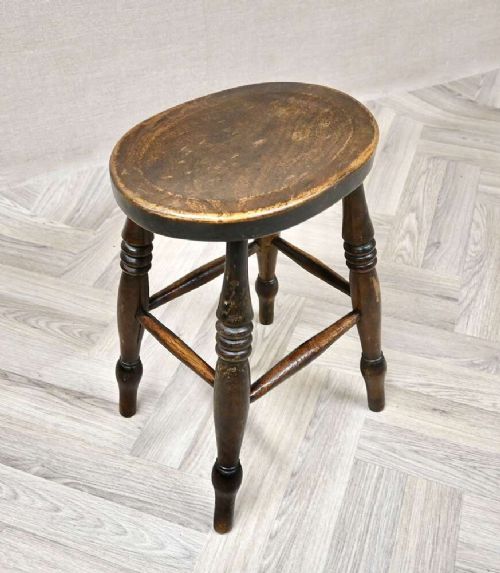
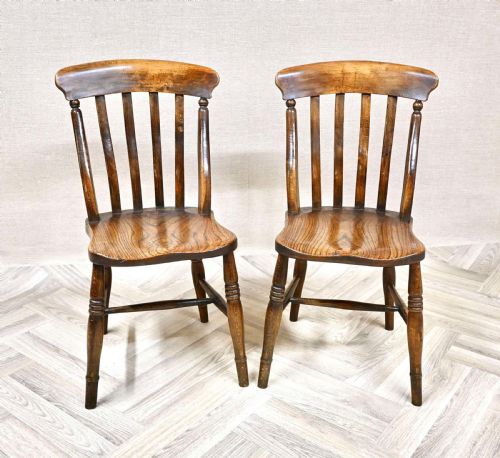
A rustic windsor seat offers sturdy timber construction designed for everyday utility in country kitchens and farmhouses. Buyers exploring this category will encounter robust armchairs, dining sets, low stools, and occasional children's seating.
The prevailing examples originate across the eighteenth and nineteenth centuries, often manifesting regional English vernacular characteristics. Makers utilised local hardwoods to build chairs intended for hard domestic service rather than formal parlours.
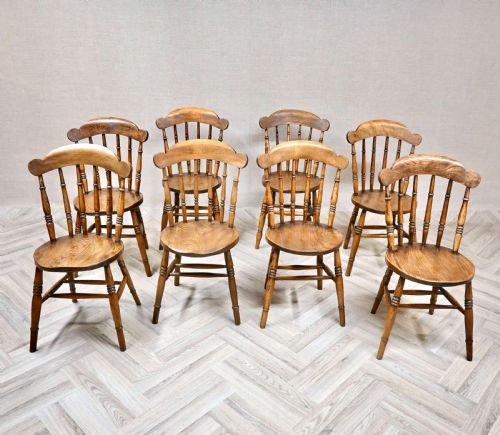
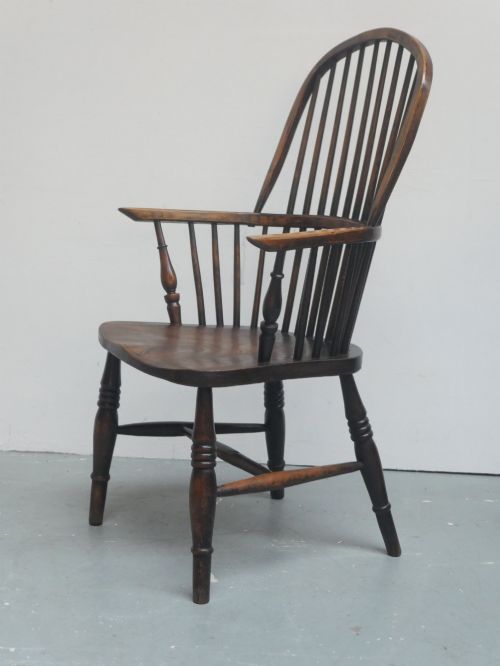
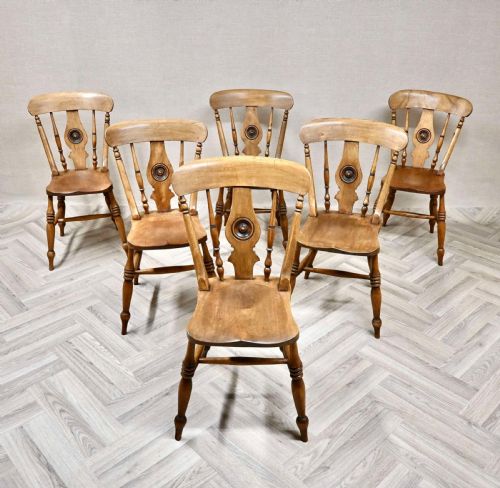
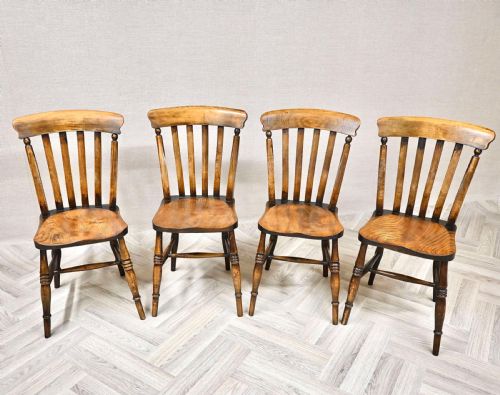
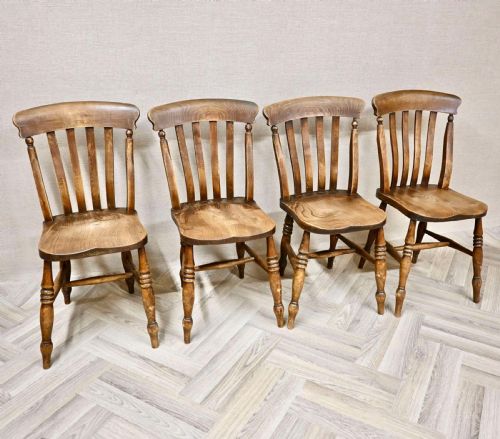
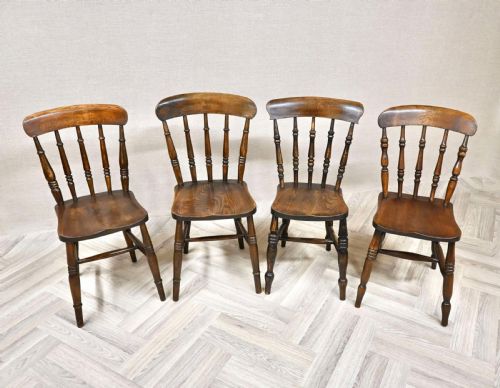
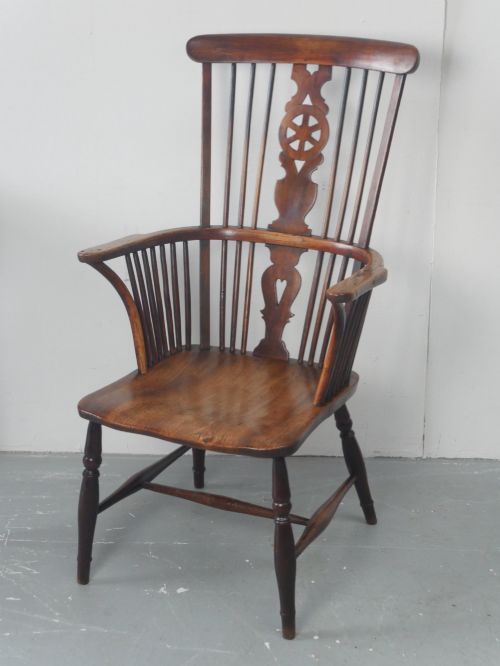
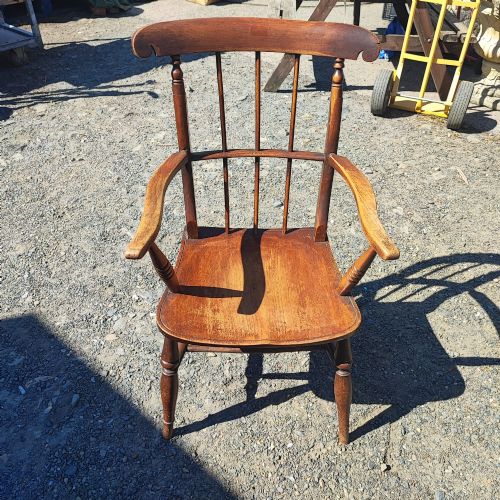
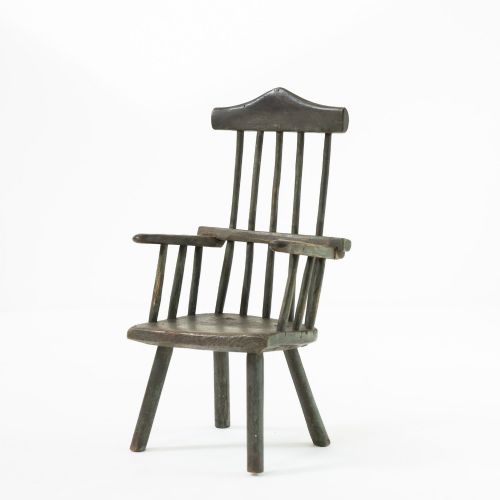
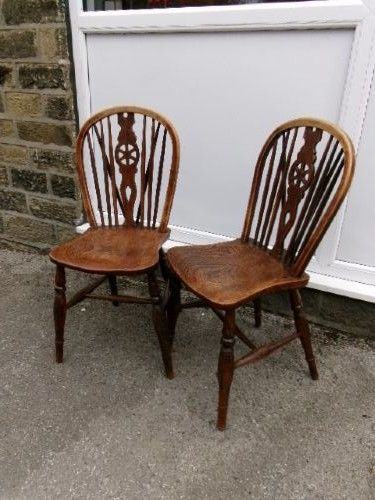
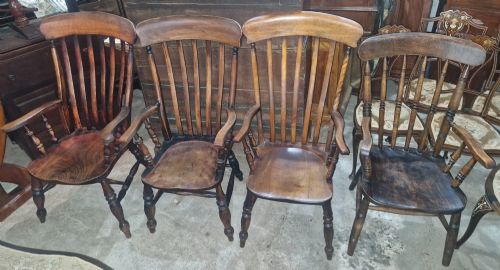
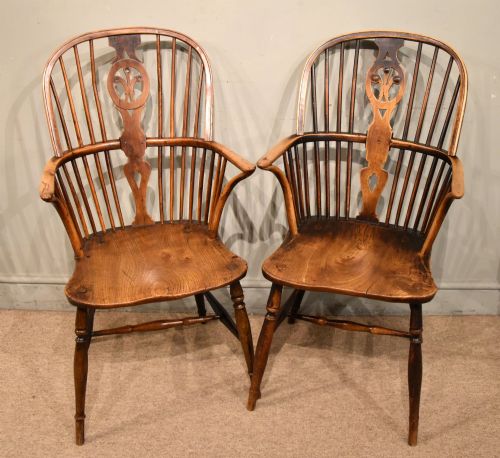
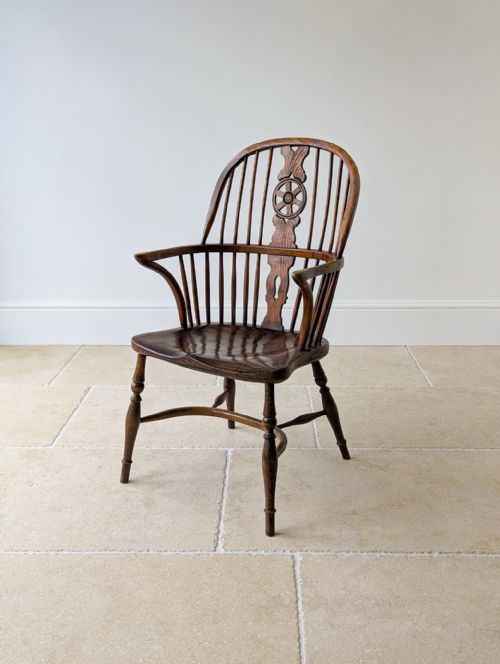
Forms span from simple stick backs and low backs to high-backed armchairs, wheelbacks, and comb backs. These pieces reflect the pragmatic needs of rural households through honest construction methods.
Distinctions in quality
Quality reveals itself in the generosity of the timber dimensions, particularly the thickness and deep saddling of the solid elm seat slab. Superior examples display carefully sculpted contours that provide genuine comfort alongside balanced proportions in the back spindles and armbows.
The integrity of the original joints and the preservation of honest surface patination set finer examples apart from heavily restored or compromised pieces. Grain harmony across the mixed woods and the crispness of turned components indicate skilled regional craftsmanship.
Listings span multiple nineteenth-century decades alongside eighteenth-century examples, incorporating native elm, ash, beech, oak, and yew.
The Rustic Windsor Seat Glossary
- Comb back
- A Windsor chair variation where the vertical spindles extend upward to support a horizontal top rail, resembling the teeth of a comb.
- Wheelback
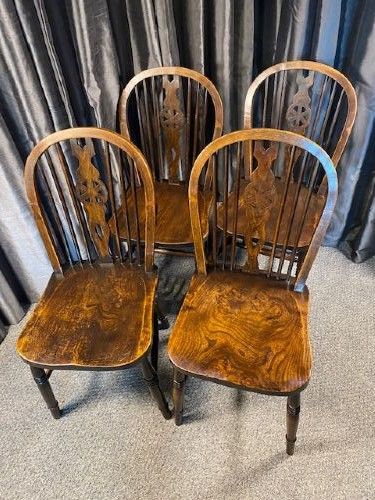
- A distinct Windsor chair style featuring a pierced central splat carved in the shape of a wheel, often found on nineteenth-century kitchen dining sets.
- Stick back
- A minimalist vernacular chair design where simple turned or cleft spindles are socketed directly into the seat without a solid central splat.
- Smokers bow
- A low-backed Windsor armchair with a continuous curved armrail, traditionally associated with public houses and Victorian country sitting rooms.
- Saddled seat
- A solid wooden seat carved into a concave depression to improve comfort and ergonomics for the sitter.
Rustic Windsor Seat: Frequently Asked Questions
How do I care for a wooden seat?
Keep wooden seats away from direct heat sources and sudden temperature fluctuations to prevent timber shrinkage and splitting. Regular dusting and occasional application of natural wax help maintain the historic surface finish.
Avoid using modern liquid polishes that leave silicone residues on the wood. Gentle cleaning preserves the underlying patination built up over centuries of use.
Are these chairs comfortable for daily use?
The deep saddling carved into the solid timber bases makes these chairs surprisingly supportive for long periods at a dining table. Their sturdy construction handles regular shifting and daily sitting without losing structural integrity.
Different back heights and arm designs offer varied seating postures across the available forms. Selecting an armchair or a dining chair depends entirely on the intended living space and personal preference.
How do I identify an older country chair?
Early pieces from the eighteenth century typically exhibit hand- cleft spindles, deep colour patination, and vernacular joinery unique to specific English regions. Tool marks and irregular turning reflect the manual labour involved before industrial standardisation took hold.
Nineteenth-century examples often show cleaner lathe work and standardised components produced in larger regional workshops. Examining the underside reveals how the legs and spindles are wedged into the seat slab.
What is a vernacular chair?
A vernacular piece is built using local traditions and available materials rather than following strict academic furniture patterns. These items were made by regional joiners and wheelwrights for practical rural use.
Such objects carry distinct local characteristics that vary from one English county to another. This regional diversity forms a major part of their appeal to collectors.