




Rustic Walnut Desk
A rustic walnut desk brings heavy timber, tactile grain and enduring centuries of craft directly into a working room.
Rustic Walnut Desk
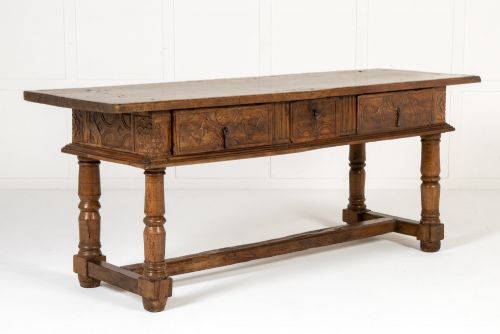
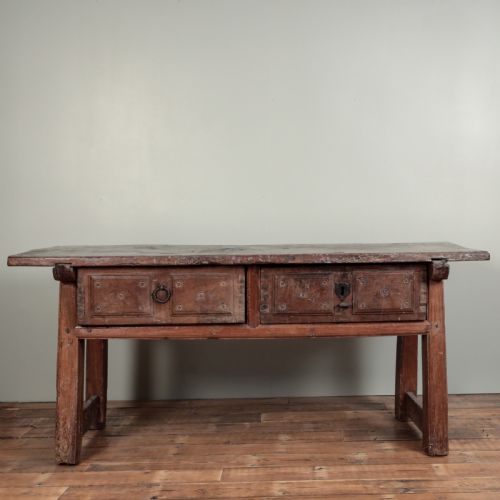
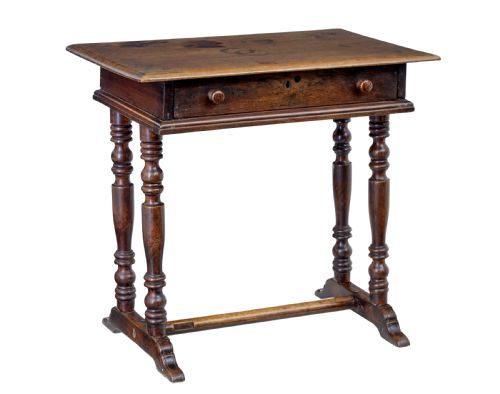
A rustic walnut desk or associated table combines robust fruitwood and walnut construction with regional European provincial traditions. These forms bridge centuries of domestic utility, spanning seventeenth-century Spanish workshops and later provincial revivals.
Buyers meet side tables, console formats and trestle designs adapted for writing or surface work, frequently built with straightforward drawers and sturdy stretcher bases. The walnut surfaces display deep patination earned through long use in domestic and monastic settings.
Italian country chairs, Spanish Baroque tables and French provincial side tables share this category, offering unpretentious working surfaces rooted in seventeenth and eighteenth-century craftsmanship.
How they were made
Cabinet makers utilised solid walnut and fruitwood timbers, joining heavy tops to trestles or four-legged frames using traditional pegged joinery and hand-carved elements. Wrought iron bracing and hardware provided structural rigidity for heavy daily use.
Surfaces bear the marks of hand tools, with carved details appearing on specific regional pieces such as Black Forest inkstands or Spanish provincial tables. Timbers were selected for distinct grain patterns rather than uniform perfection, reflecting practical rural production.
Hand-carved Black Forest bears occasionally keep watch over inkstands from the nineteenth century.
What varies in quality
The distinction between standard provincial pieces and finer examples rests upon the depth of timber selection and the integrity of the original construction. Superior pieces retain untouched surface patination and substantial walnut thickness across the top boards.
Proportion and regional detailing separate simpler utilitarian forms from sophisticated Baroque or provincial survivals. The balance between iron hardware and timber framing dictates the visual weight of each piece.
The Rustic Walnut Desk Glossary
- Provincial
- Describing furniture made in regional areas outside major capital cities, often following local traditions rather than court fashions. These pieces prioritise practical construction and available local timbers.
- Trestle table
- A table structure consisting of two or more supports connected by a horizontal beam or stretcher, holding a heavy top. This form provides stable writing and dining surfaces.
- Patina
- The surface sheen and colour developed on wood through decades of handling, polishing and exposure to light. It indicates age and consistent historical use.
- Baroque
- A stylistic period spanning the seventeenth and early eighteenth centuries, characterised by robust proportions and restrained carved ornamentation. Regional interpretations adapt these motifs for rural workshops.
Rustic Walnut Desk: Frequently Asked Questions
What periods do these desks cover?
The available selection spans from the seventeenth century through the eighteenth century, alongside later provincial revivals from the nineteenth and early twentieth centuries.
Earlier examples originate primarily from Spanish and French regional workshops, while later iterations reflect enduring country styles.
Are these pieces made entirely of walnut?
While walnut is the primary timber, makers frequently incorporated fruitwood, oak and wrought iron supports depending on regional availability and structural needs.
Secondary woods appear in internal drawer construction and framing components.
How do I maintain a walnut surface?
Maintain the wood by avoiding excessive moisture and applying traditional beeswax sparingly to nourish the dry grain over time.
Regular soft dusting preserves the historical patination without stripping the surface character.
Where were these tables originally used?
These forms served functional roles in provincial houses, country estates and monastic settings across Spain, France and Italy.
Their robust construction suited everyday writing, dining and administrative tasks.