


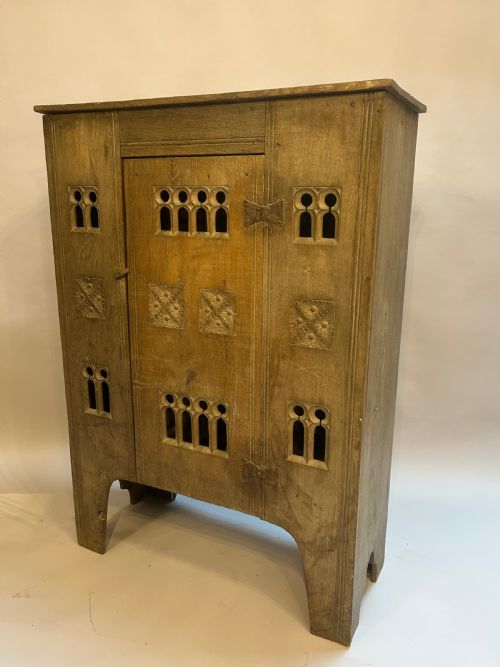


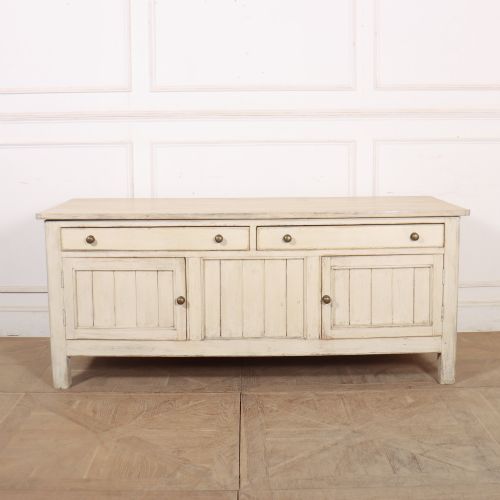
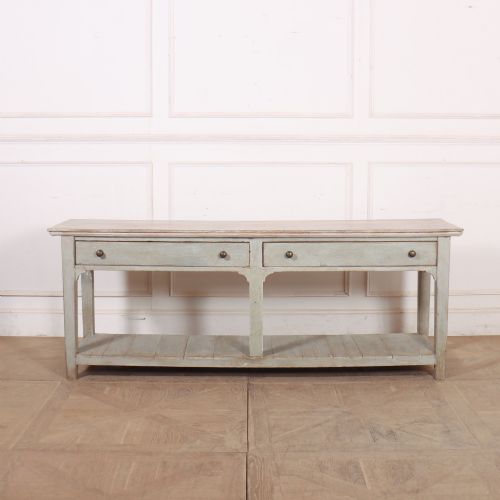
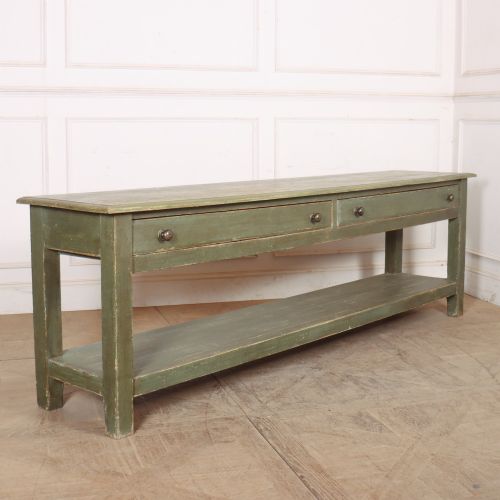

Rustic Timber Sideboard
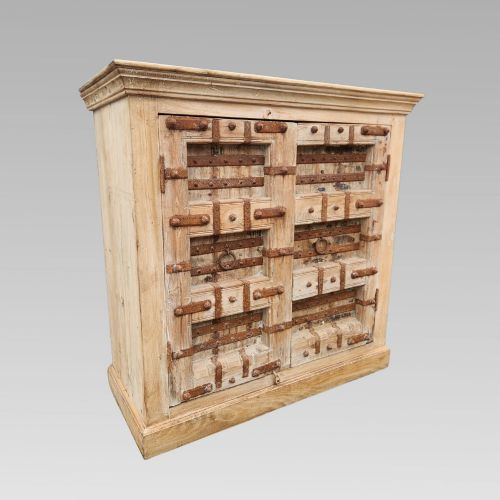
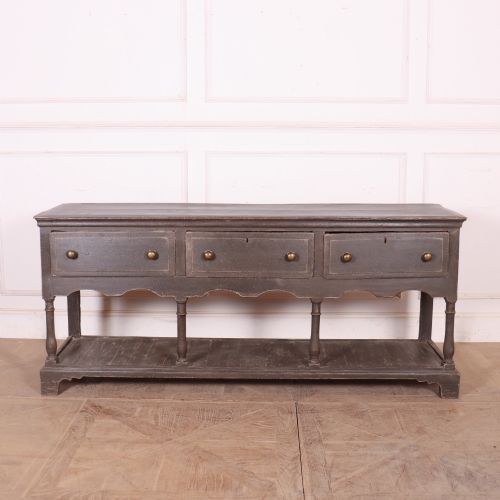
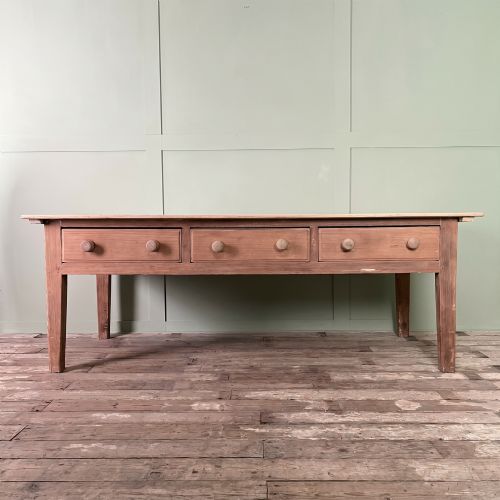
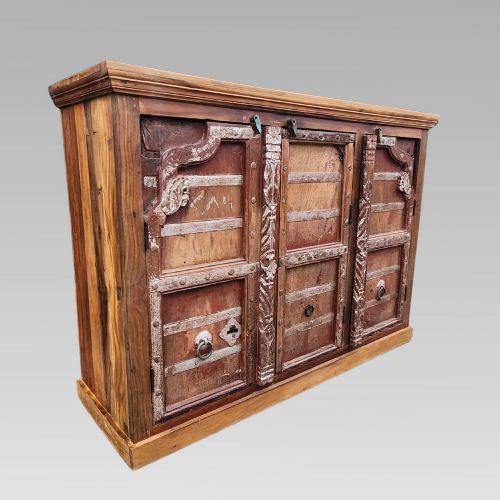
These rustic timber sideboards span centuries of utilitarian woodworking, offering practical storage built from honest pine, oak, and reclaimed teak.
Rustic Timber Sideboard
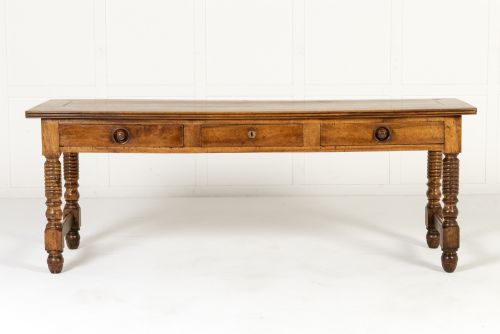
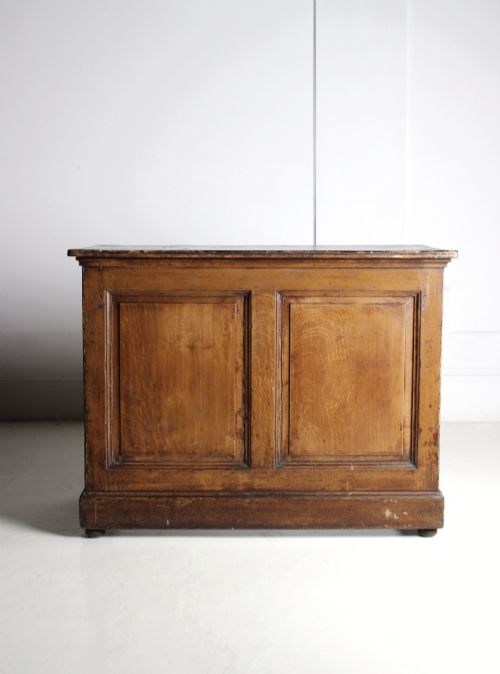
A rustic timber sideboard serves as a practical storage piece rooted in domestic and workshop utility, drawing from regional traditions across England, France, Wales, and India. Buyers searching for a rustic timber sideboard encounter sturdy kitchen dressers, potboard bases, console tables, and heavy workbenches adapted for modern interiors.
The pieces on this page heavily feature nineteenth-century examples alongside eighteenth-century origins and early twentieth-century workshop forms. Domestic versions prioritise surface space for serving and deep storage drawers, whilst workshop iterations bring raw utility through integrated vises and heavy timber construction.
Painted finishes frequently appear alongside bare pine, oak, ash, and cherrywood surfaces. Regional variations span English country houses, French provincial settings, and traditional Indian reclaimed teak formats.
How they were made
Constructed primarily from domestic softwoods and hardwoods like pine, oak, sycamore, elm, and ash, these pieces rely on straightforward joinery suited to heavy daily use. Tool marks and panel construction reflect regional carpentry methods from nineteenth-century rural workshops and earlier periods.
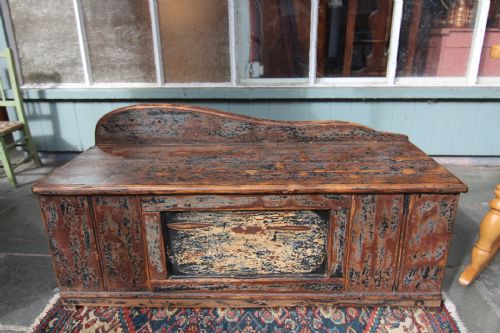
Many surfaces carry original or later layers of paint, ranging from soft greens to polychrome details that protect the underlying timber. Iron and brass hardware, including handles, hinges, and vices, provide functional reinforcement to doors, drawers, and work surfaces.
Rustic Timber Sideboard Retail Price Guide 2026
Typical asking prices for rustic timber sideboard among the pieces listed under this phrase on Sellingantiques today, from the lower quarter to the upper quarter. They describe what is for sale here now, not the wider market.
Materials range from indigenous European softwoods and hardwoods like sycamore and cherrywood to imported Indian reclaimed teak.
What varies in quality
The distinction between ordinary utility items and superior examples lies in the integrity of the original timber and the survival of untouched painted surfaces. Pieces retaining their initial patination and structural hardware command greater interest than those stripped or overly restored.
Proportion and scale also dictate quality, particularly in larger country house dresser bases and substantial French workbenches. The harmony between the base frame, potboard shelf, and top surface separates standard utilitarian furniture from exceptional regional craftsmanship.
The Rustic Timber Sideboard Glossary
- Potboard base
- A dresser base featuring a lower open shelf designed originally for storing pots and heavy kitchen utensils. This lower tier often sits directly above floor level on simple feet.
- Dresser base
- A low cabinetry unit providing surface workspace and drawer or cupboard storage, historically standing beneath open wall plate racks. These pieces form the primary category of large serving and storage furniture.
- WorkBench
- A heavy-duty utilitarian table fitted with a carpenter's vise and thick timber top, repurposed as a sideboard or console. These items originate from French, Swedish, and general European trade workshops.
- Polychrome
- Decorated or painted in multiple colours, frequently seen on folk art storage boxes and regional cupboards. This finish preserves the decorative intent of nineteenth-century artisans.
- Reclaimed teak
- Seasoned timber salvaged from older structures and repurposed into heavy storage cupboards and sideboards. This material provides dense durability and deep grain patterns.
Rustic Timber Sideboard: Frequently Asked Questions
How do I clean a painted wooden sideboard?
Dust the surface regularly with a soft, dry cloth to prevent dirt accumulation on the painted finish. Avoid harsh chemical cleaners that might strip the historic paint layers.
For stubborn marks, wipe gently with a slightly damp cloth and dry immediately. Preserving the original patina is essential for maintaining the character of these antique pieces.
Are workbenches suitable for use as sideboards?
Heavy wooden workbenches make exceptional sideboards due to their generous length and solid timber construction. Their integrated vices and tool wells add distinct character to modern dining rooms and kitchens.
Ensure you measure your floor space carefully, as industrial workbenches often feature substantial proportions and heavy frames.
What is the difference between a dresser base and a sideboard?
A dresser base traditionally originates from kitchen environments, often incorporating potboards or deeper drawers for culinary storage. Sideboards generally emerged from formal dining settings with dedicated compartments for crockery and cutlery.
Both serve similar practical functions in contemporary homes for surface display and concealed storage.
How can I tell if the paint is original?
Original paint typically exhibits natural wear patterns, minor craquelure, and integration with the underlying timber structure. Examine edges and handles where handling creates authentic smoothing over decades.
Subsequent repainting often feels flat or lacks the subtle colour variations found in nineteenth-century surface treatments.
Where were potboard dressers used?
Potboard dressers originated primarily in English and Welsh country houses and farmhouses for daily food preparation and kitchen storage. The open lower shelf allowed heavy earthenware vessels to dry and remain easily accessible.
Today, these lower shelves provide ideal display space for baskets, books, or large ceramics.