
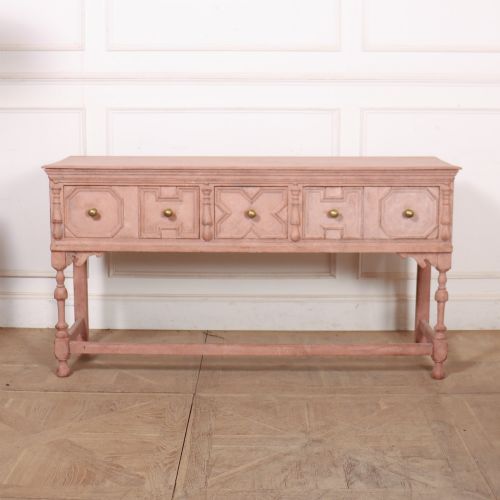
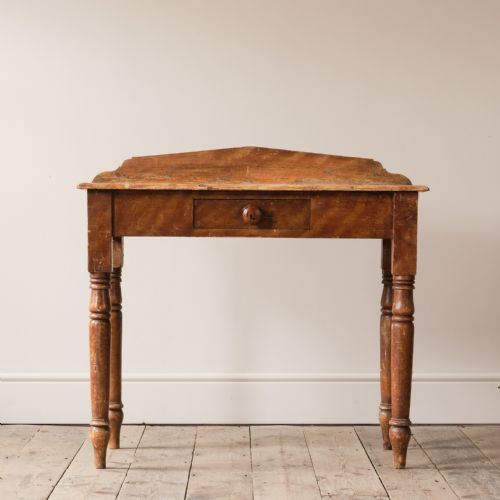
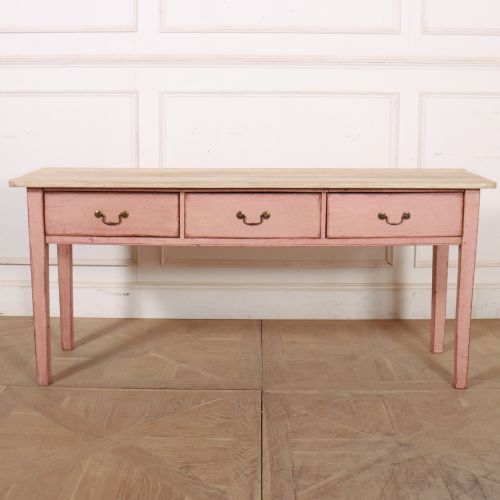
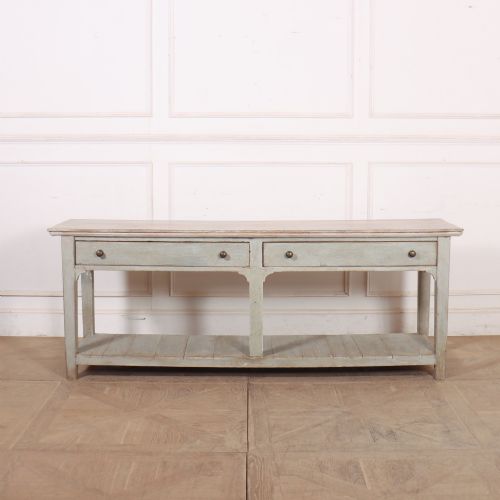

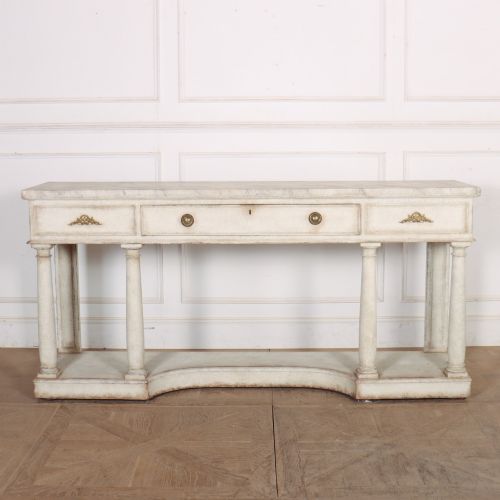


Painted Wooden Server
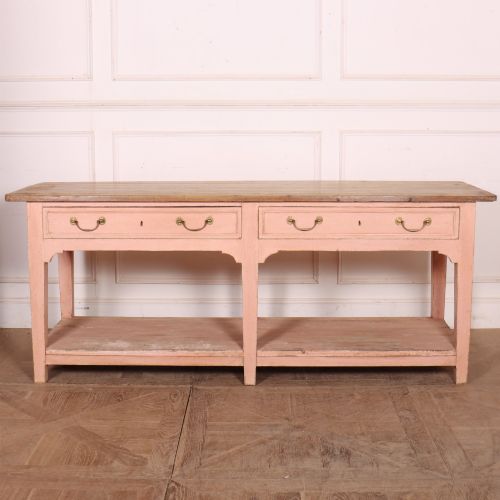
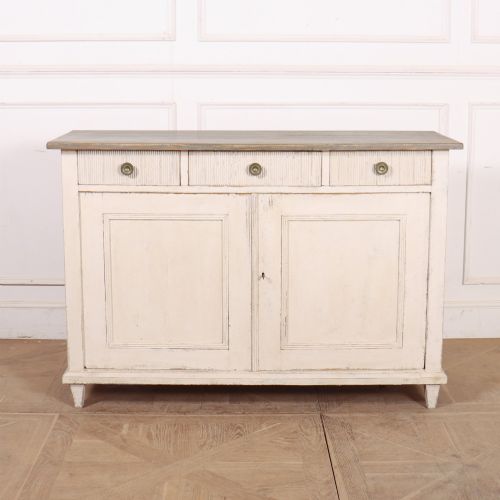
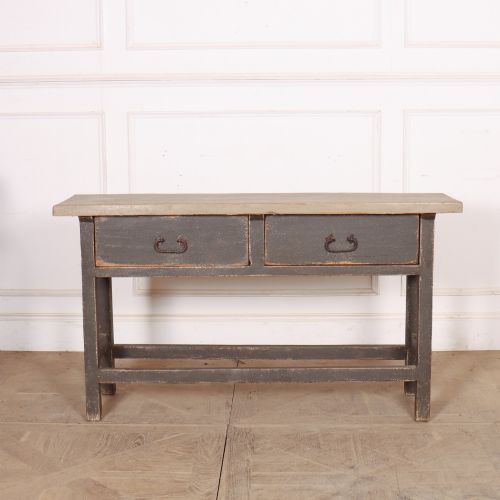
A painted wooden server brings robust utility and colourful character to a room, offering generous surface space and practical storage.
Painted Wooden Server
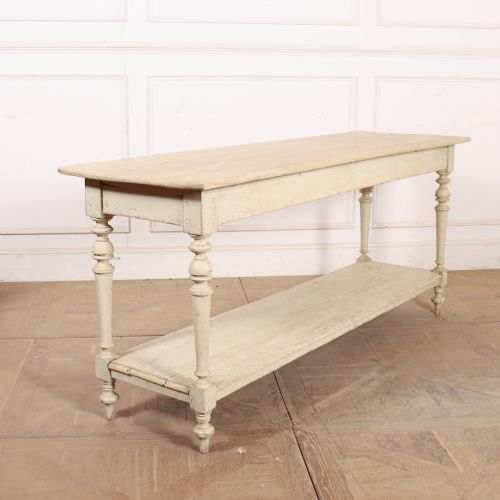
A painted wooden server provides substantial surface space for dining and kitchen preparation, frequently taking the form of a dresser base, console table, or serving table. These pieces emerge across the eighteenth, nineteenth, and early twentieth centuries in English, French, Scottish, and Italian regional styles.
The painted wooden server most likely to be met on this page is a nineteenth-century pine console table or dresser base finished in its original paint. Such pieces embody English country, rustic farmhouse, or French provincial traditions, often featuring drawers and potboards.
Makers and origins span British and continental workshops, including specific pieces like the hand-painted French buffet by Melissa White. The selection encompasses forms ranging from shallow lamp tables to large serving tables with multiple drawers.
Materials and construction
Construction relies primarily on pine and oak, complemented by secondary timbers such as mahogany. Artisans shaped these woods into robust frames for heavy daily use in kitchens, dining rooms, and hallways.
Surfaces receive layers of paint, sometimes in black and white or original polychrome schemes, occasionally accented with brass or iron hardware. Carpenters built these tables with mortise and tenon joints, integrating drawers and pot-shelves for functional stability.
One unexpected side table bears a later hotel sign-writing for the Midland Grand Hotel.
Qualities that separate examples
The retention of original paint surfaces heavily dictates distinction, as untouched historical decoration commands greater regard than later repainting. The integrity of the timber substrate, from solid pine boards to aged oak frames, further defines the standard of an individual piece.
Proportion and regional carpentry traits establish further divergence, with neatly dovetailed drawers and well-balanced potboard bases representing superior craftsmanship. The balance between utilitarian wear and preserved decorative character dictates the standing of each console or server.
Melissa White
The Painted Wooden Server Glossary
- Potboard dresser base
- A low sideboard or preparation table featuring an open lower shelf for storing pots and kitchenware. This form is common in nineteenth-century English and Scottish country interiors.
- Drapers table
- A long, narrow console table traditionally utilised in fabric shops for measuring cloth. These pieces typically offer shallow drawers and extended wooden tops.
- Original paint
- Pigment applied during the period of manufacture that remains undisturbed by later stripping or heavy repainting. Surviving original finishes preserve the authentic colour history of the furniture.
- Buffet
- A low sideboard or cabinet designed for serving food and storing dining utensils. Continental examples frequently incorporate enclosed cupboard doors rather than open shelving.
Painted Wooden Server: Frequently Asked Questions
What is a painted wooden server used for?
These tables function as practical surface areas for serving food, displaying objects, or storing household items within kitchens and dining rooms. They provide deep drawers and lower shelves to organise domestic supplies.
Historically, they served as preparation tables for food or display units in country houses and provincial dwellings. Today, they bring functional workspace and decorative utility to modern interiors.
How do I identify a nineteenth-century piece?
Nineteenth-century examples frequently utilise solid pine construction, hand-cut joinery, and accumulated layers of historic paint. Examination of the timber reveals tool marks and wear patterns consistent with early manufacturing methods.
Stylistic cues such as rustic farmhouse proportions, potboards, and original hardware help separate these pieces from later reproductions. Regional variations, including Scottish and French construction traits, also assist in dating.
Where were these servers originally made?
Origin points span across British regions, including England, Scotland, and Wales, alongside continental workshops in France, Italy, and Hungary. Each region imparted distinct characteristics through local joinery traditions and preferred timber choices.
English country houses and provincial French farmhouses produced the majority of these utility tables. Local tradesmen built them to withstand heavy daily labour rather than follow strict court fashions.
How do I care for original paint?
Maintain original painted surfaces by avoiding harsh chemical cleaners, abrasive cloths, and excessive moisture. Gentle dusting with a dry microfibre cloth protects the fragile historic pigment.
Keep the furniture away from direct sunlight and strong heat sources to prevent the wood from warping and the paint from flaking. Occasional light waxing can preserve exposed wooden elements without harming the painted finish.