

Rustic Kitchen Server
A rustic kitchen server brings domestic utility into modern rooms through honest timber and straightforward proportions.
Rustic Kitchen Server
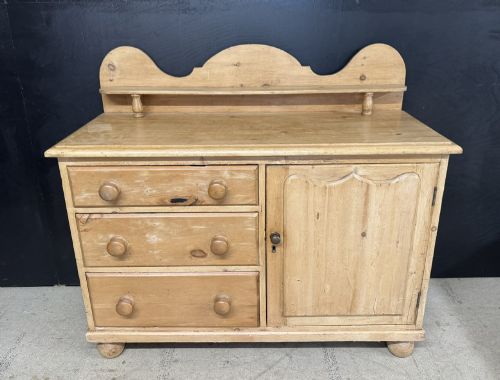
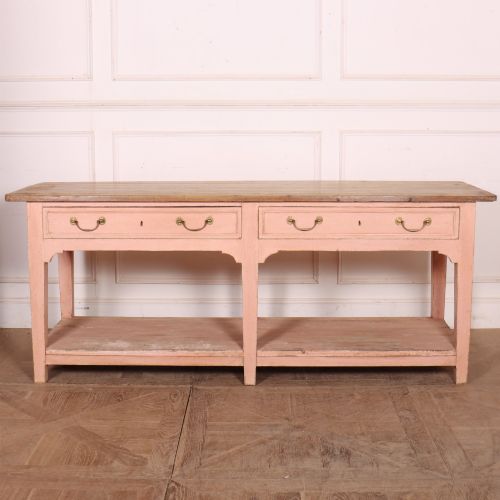
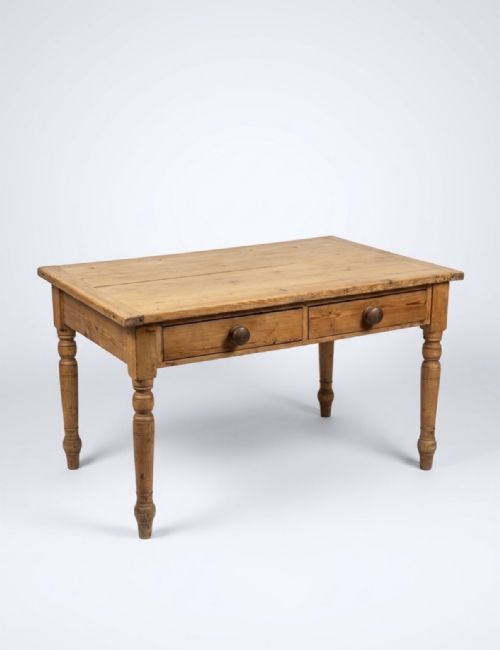
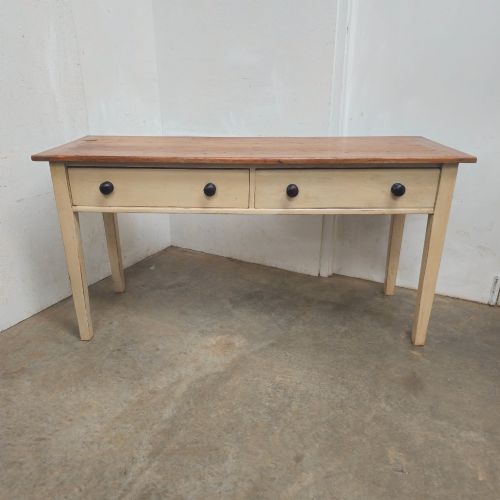
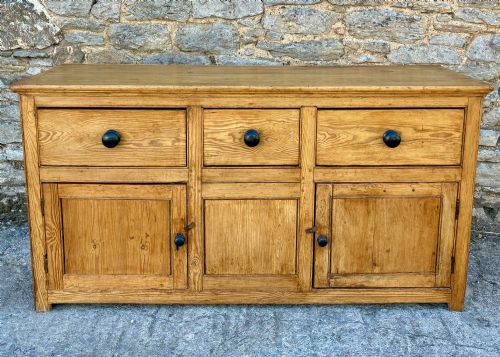
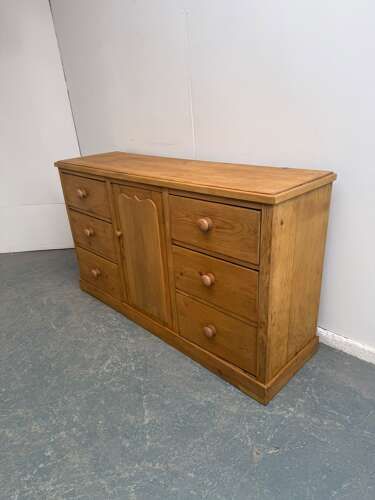
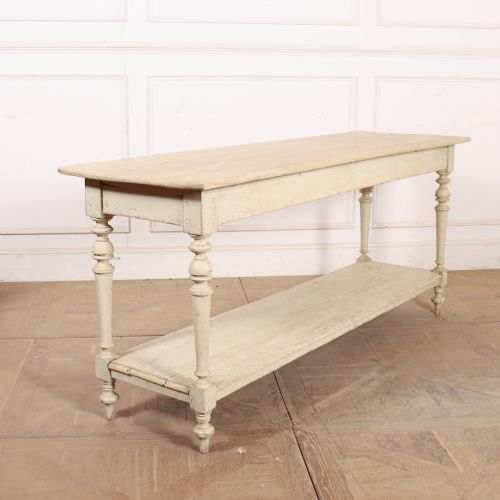
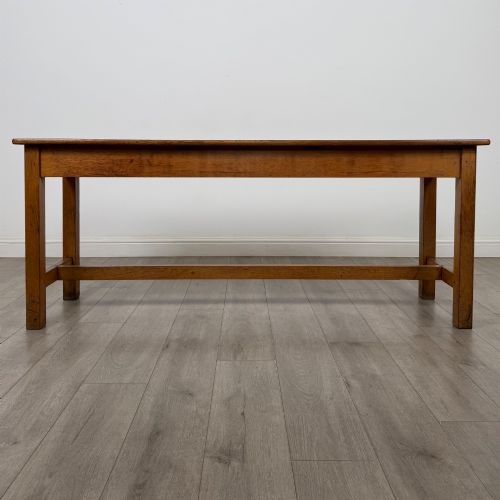
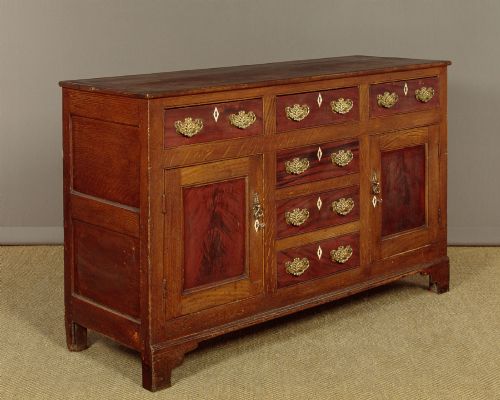
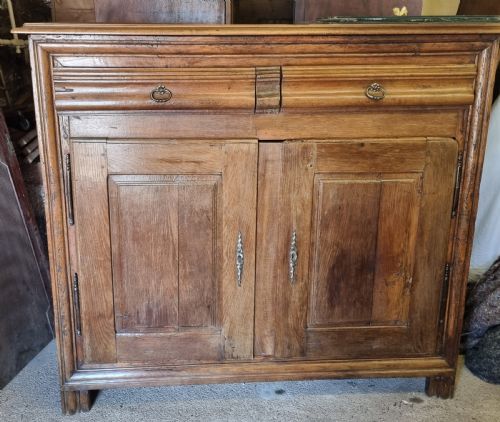
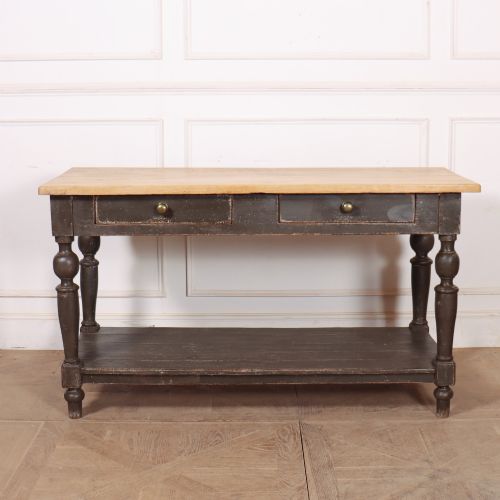
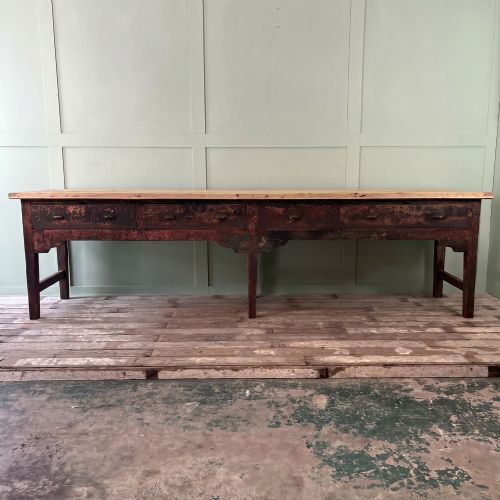
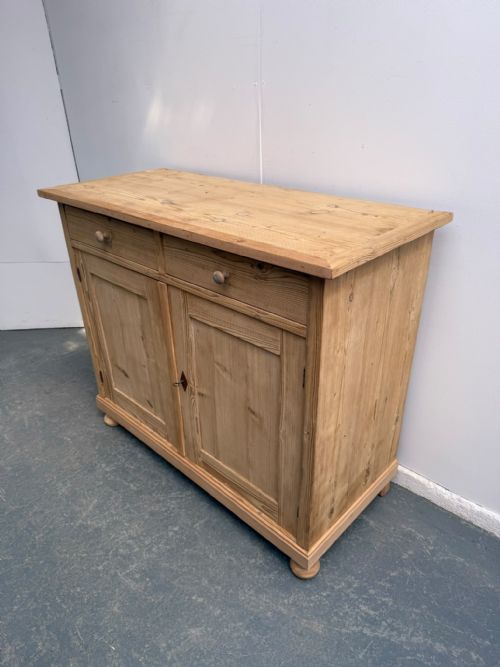
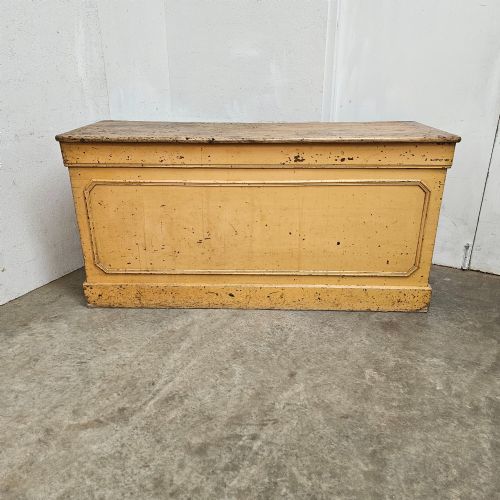
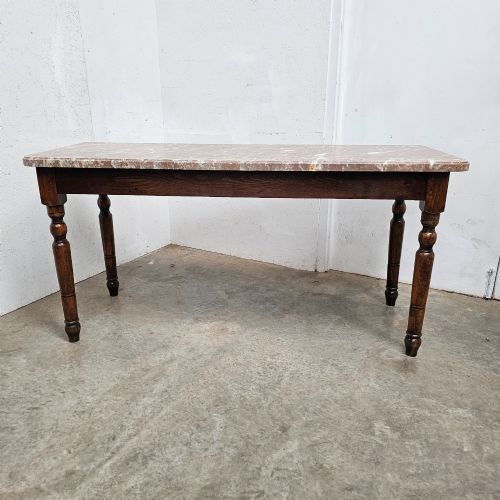
A rustic kitchen server encompasses practical storage pieces designed for domestic work, appearing most frequently on this page as nineteenth-century pine and oak dresser bases, serving tables, and drapers tables. These forms originate largely from English, Welsh, Scottish, and French country houses, farmhouses, and provincial shops where daily preparation took place.
Buyers encounter heavy potboard bases, two-door and two-drawer sideboards, and long scrubbed preparation tables fitted with lower shelves. The selection ranges from compact waxed sideboards to monumental country house servers built for heavy domestic use.
Judging quality and proportion
Proportion and integrity separate exceptional examples from standard utilitarian pieces. Superior servers retain their original timber thickness, uncompromised potboards, and balanced heights that suit modern placement.
The character of the surface finish plays a significant role, where untouched original paint or deep patinated wax reflects proper age and preservation without aggressive stripping or reconstruction.
Listings span the eighteenth, nineteenth, and early twentieth centuries, featuring native pine, oak, fruit wood, and marble surfaces.
The Rustic Kitchen Server Glossary
- Potboard
- A lower open shelf positioned beneath a dresser base or serving table, traditionally used for storing heavy pots and pans.
- Draper table
- A long, narrow display table originating from textile shops, characterised by deep boards and frequently utilised as a serving table or island.
- Dresser base
- The lower section of a kitchen dresser, featuring drawers and cupboards beneath a flat top surface suitable for food preparation and service.
- Fruit wood
- Dense timber sourced from fruit-bearing trees such as pear or apple, employed by provincial cabinetmakers for solid framework and decorative contrast.
Rustic Kitchen Server: Frequently Asked Questions
Where were these servers originally used?
These servers served practical functions in farmhouse kitchens, dairies, country houses, and provincial shops for food preparation and storage.
They stood in heavy-use environments where durability mattered more than refined ornamentation.
How do I care for a waxed pine surface?
Maintain waxed timber by applying a traditional beeswax polish and buffing with a soft cloth to preserve the sheen.
Avoid placing these pieces near direct heat sources or excessive moisture to protect the historic wood.
Can I use a serving table for food preparation?
Many of these pieces were built precisely for kitchen work, featuring robust wooden tops that handle daily domestic activities.
Historic surfaces benefit from sensible protection against standing liquids and harsh cleaning agents.
How do I distinguish eighteenth-century pieces from Victorian ones?
Earlier pieces from the eighteenth century often display hand-sawn board dimensions and simpler, pegged structural joinery.
Victorian examples frequently incorporate standardised hardware and machine-sawn elements alongside traditional pine and oak construction.