



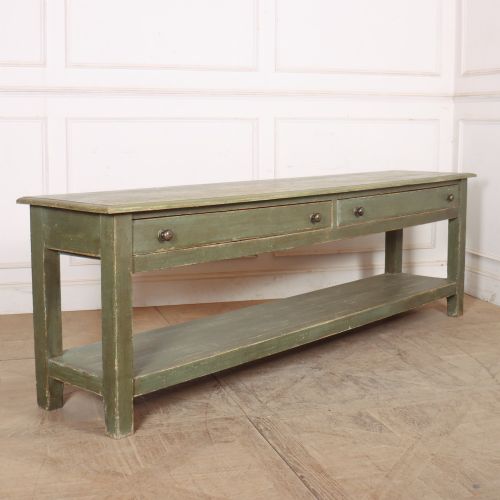


Rustic Timber Server Table
A rustic timber server table brings solid utility and honest character to a room, drawing on centuries of provincial craftsmanship.
Rustic Timber Server Table
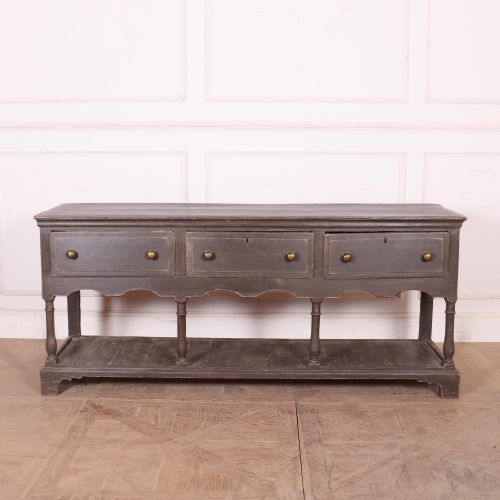
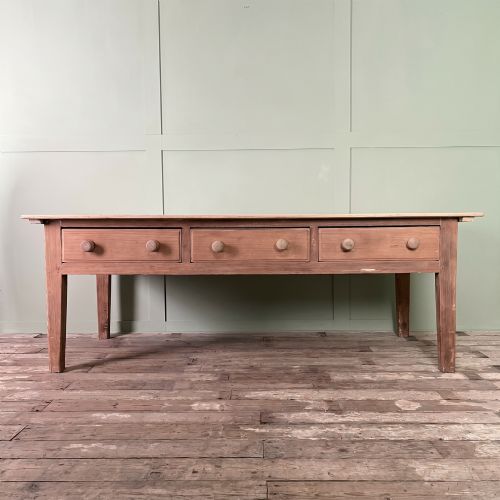
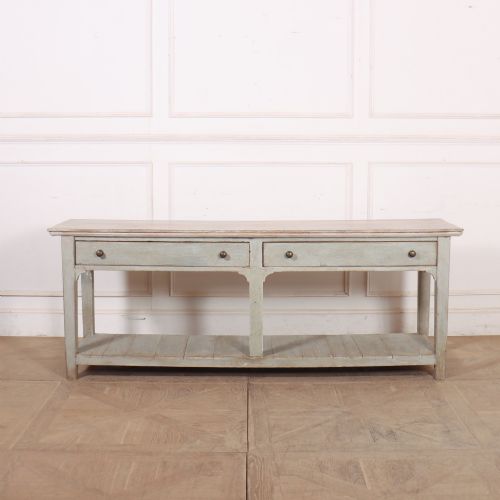
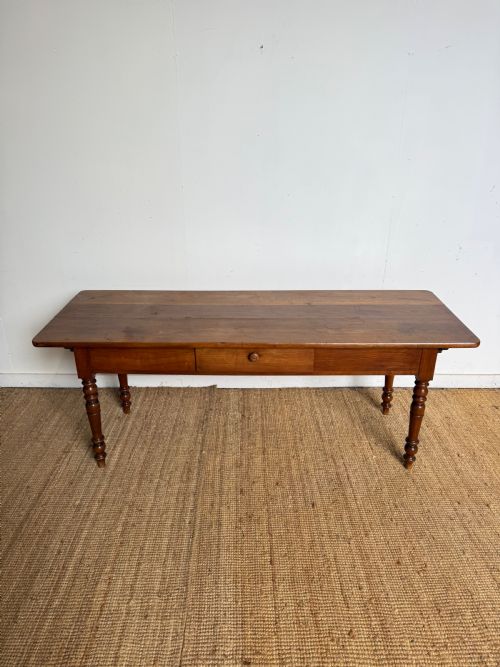
A rustic timber server table is a utilitarian surface designed for preparation and display, encompassing forms such as dresser bases, console tables, and prep tables. When searching this phrase, buyers encounter substantial pieces originating from the eighteenth and nineteenth centuries, rooted in English, French, and Welsh country traditions.
The inventory on this page largely consists of nineteenth-century examples alongside eighteenth-century prototypes, featuring potboard bases, drawers, and extended tops. These tables function naturally in kitchens, hallways, and dining rooms where practical surface area is required.
Makers built these items for hard daily use rather than formal display, resulting in honest proportions and sturdy construction. Regional variations appear across English country houses and French provincial workshops, giving each piece a distinct local identity.
How they were made
Construction relies heavily on robust native timbers such as pine, oak, cherrywood, walnut, and sycamore, often paired with secondary softwoods for internals and backs. Carpenters utilised solid planks for tops and heavy framing for bases to withstand daily preparation work.
Surfaces frequently show layers of original or historic paint, while hardware relies on functional brass or iron fixtures. Joinery is straightforward and strong, designed to maintain stability through decades of heavy domestic use.
Object forms span console tables, serving tables, dresser bases, and dedicated preparation tables designed for domestic utility.
What varies in quality
Quality in a rustic timber server table rests upon the integrity of the timber, the depth of patination accumulated through use, and the honesty of the construction. Pieces retaining their original painted finishes and unreplaced boards stand apart from heavily restored examples.
Proportions and scale also dictate quality, with well-balanced tables offering greater utility and visual harmony than awkward or heavily altered variants. The presence of original potboards, drawers, and period hardware preserves the historical integrity of the piece.
The Rustic Timber Server Table Glossary
- Potboard base
- A low slatted or boarded shelf beneath the main surface of a dresser base or serving table, traditionally used for storing pots and pans. This lower tier defines many English country pieces.
- Prep table
- A heavy-topped utilitarian table built for food preparation in large kitchens or dairies. These tables feature thick timber surfaces suited to rigorous daily tasks.
- Console table
- A table designed to stand against a wall, frequently supported by brackets or legs at the front. French provincial examples often serve this architectural function.
- Patina
- The surface sheen and colour developed over decades through handling, polishing, and wear. It indicates the age and authenticity of the timber.
- Sycamore
- A dense hardwood commonly used in dairy and kitchen preparation tables for its pale colour and resistance to splitting. It provides a clean, durable surface for working.
Rustic Timber Server Table: Frequently Asked Questions
How do I use a server table at home?
These tables fit naturally in kitchens as preparation islands, in hallways as console surfaces, or in dining rooms for serving food during gatherings.
Their sturdy timber construction handles everyday items easily while adding historical warmth to modern interiors.
How do I tell an English table from a French one?
English pieces often feature potboard bases in oak or pine with straightforward utility forms, typical of country houses.
French examples frequently utilise cherrywood or walnut with softer provincial lines and distinct console or server proportions.
Are painted finishes original on these tables?
Many tables retain historic layered paint finishes applied during their working lives in country kitchens and dairies.
Distinguishing between original working paint and later decoration depends on examining the wear patterns and adherence to the underlying timber.
What woods were used for these tables?
Carpenters utilised whatever local timbers were available, most commonly pine, oak, cherrywood, walnut, and sycamore.
Hardwoods provided durable working tops while softer timbers served for internal framing and secondary structures.