
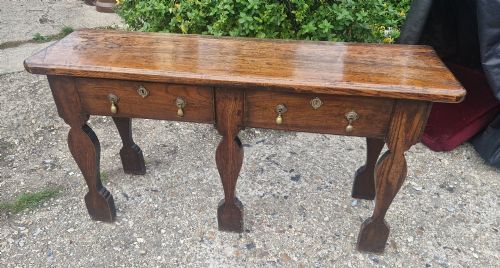
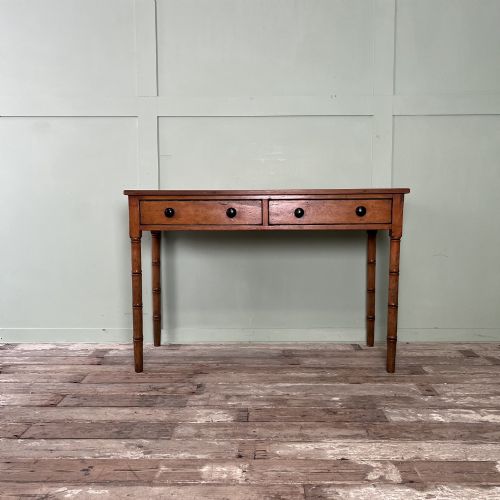
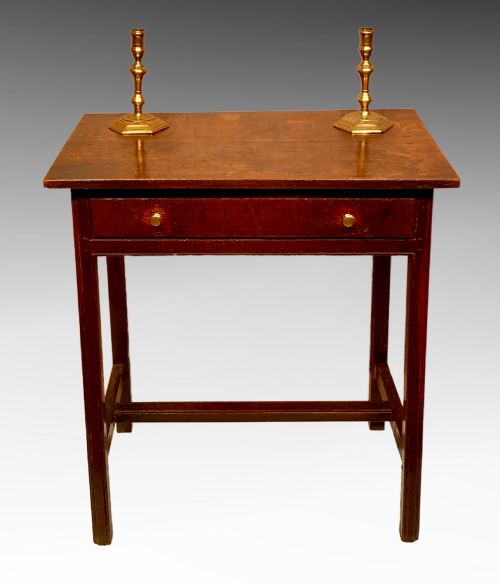
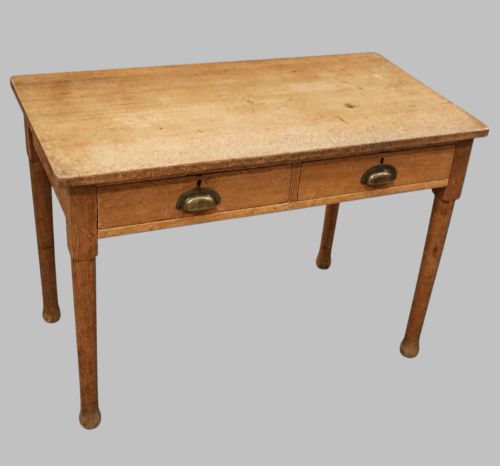
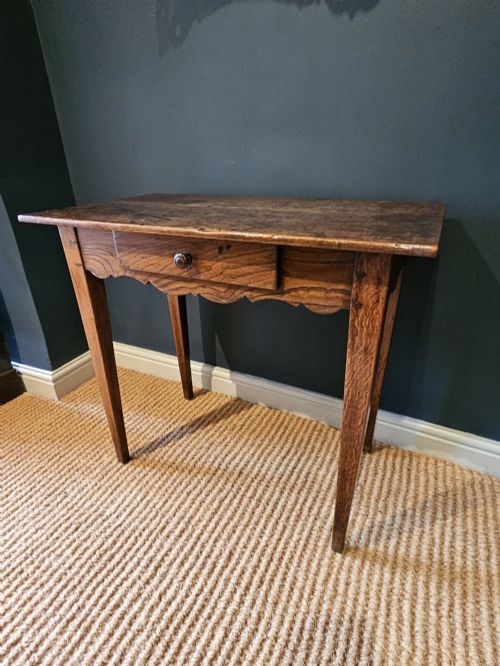
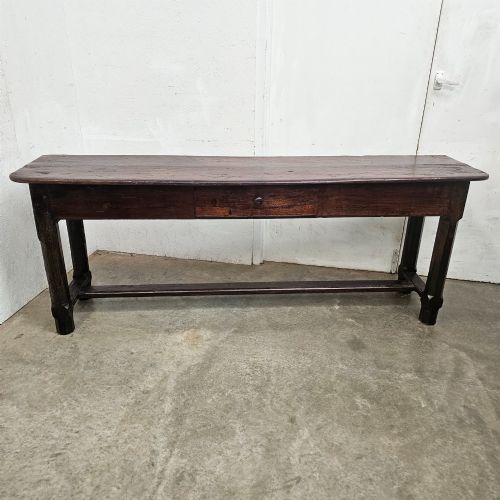
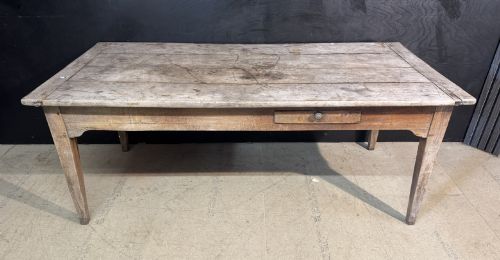
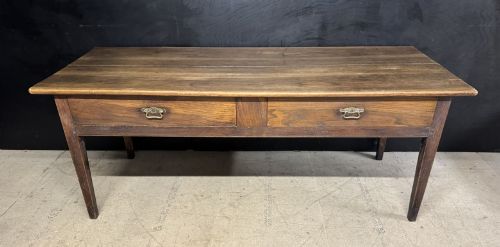
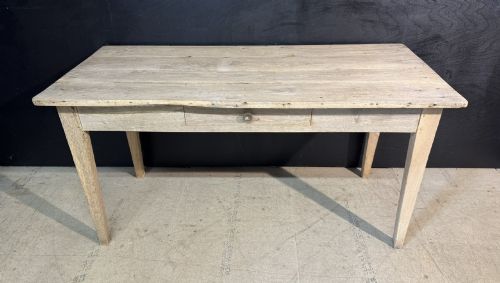
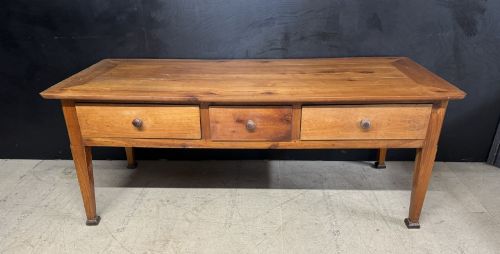
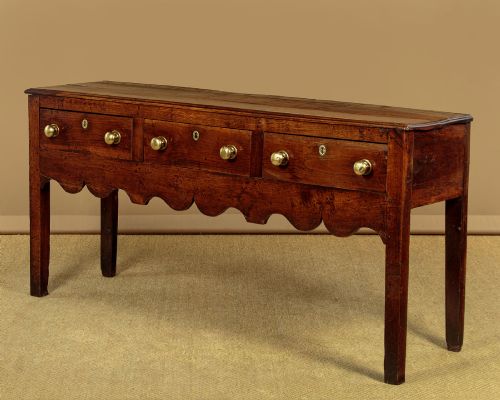
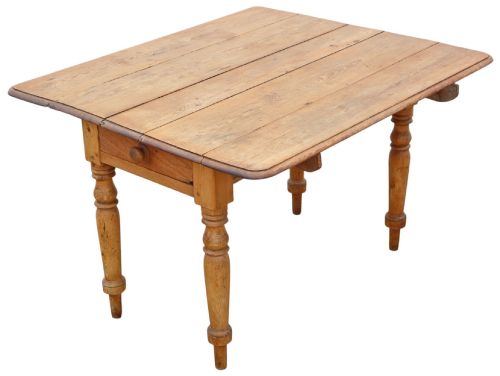
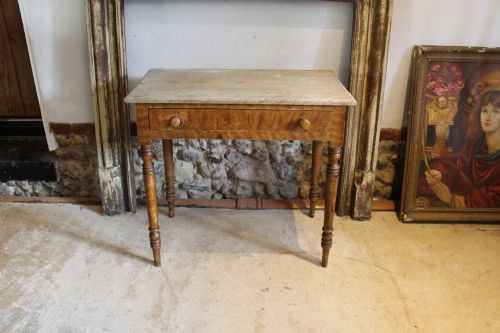
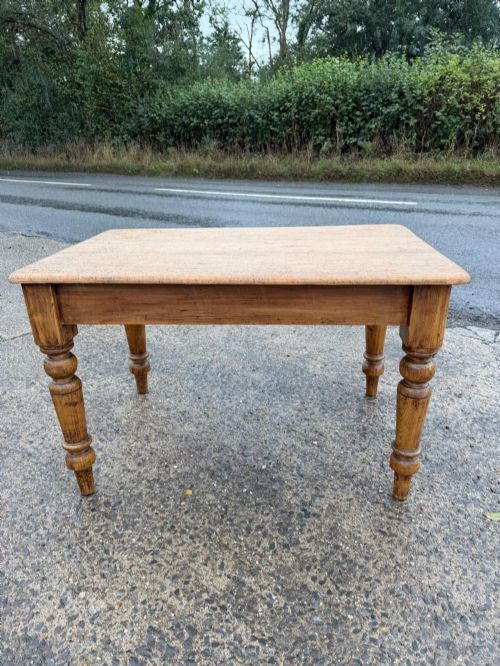
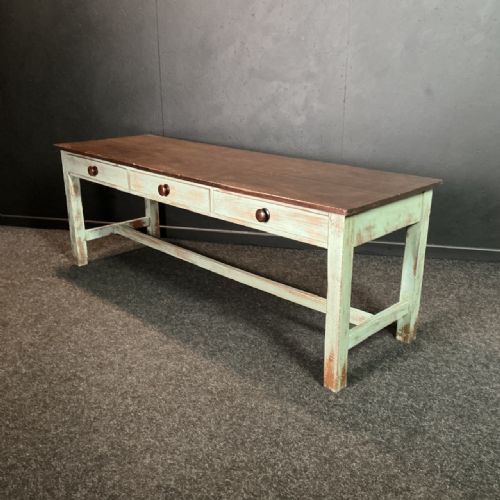
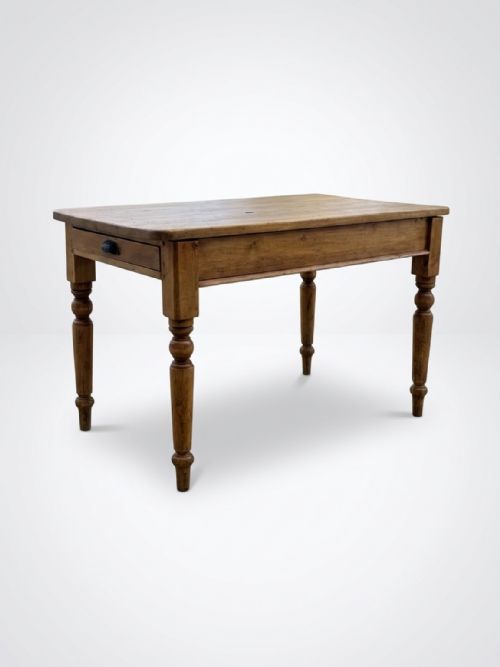
Rustic Side Drawer Table
A rustic side drawer table provides robust utility and honest character, bringing practical storage and warm timber grain into everyday rooms.
Rustic Side Drawer Table
A rustic side drawer table combines domestic utility with utilitarian charm, serving as a functional surface with at least one integrated drawer to the front frieze. These pieces emerge in formats such as compact side tables, servers, writing desks, and prep tables designed for hardworking household spaces.
The versions most commonly met on this page span the nineteenth century and the Victorian era, constructed predominantly from durable timbers like pine, oak, and pitch pine. Regional expressions range from English country house prep tables and Welsh tavern pieces to French provincial consoles.
Form follows practical function in these items, showing simple lines that accommodate daily tasks in kitchens, sculleries, and living quarters. Their surfaces often bear the marks of active use, reflecting decades of domestic service.
Materials and construction methods
Makers relied heavily on sturdy local woods, utilising solid pine, oak, elm, and fruitwood to build frames that could withstand heavy daily tasks. Pitch pine and birch also appear frequently, selected for their resilience and distinct grain patterns in utility furniture.
Surfaces frequently display plain timber finishes left natural, stripped, or waxed, alongside applied painted finishes such as scumble or later coats that protect the underlying wood. Construction focuses on functional durability rather than ostentatious decoration, utilising straightforward joinery to house single or multiple drawers.
Several tables retain traces of historic flour, batter, or dairy spills, quietly testifying to generations of vigorous kitchen prep.
Distinctions in quality and execution
The tier of a rustic side drawer table is governed by the integrity of its timber selection and the retention of original surface treatments, whether aged paint or honest bare wood. Superior examples maintain structural soundness alongside uncompromised drawer runners and original hardware.
Subtleties in proportion and regional vernacular detailing separate standard utilitarian workbenches from refined country pieces. The presence of untouched scumble paint or authentic period patina elevates the visual interest of a table significantly.
The Rustic Side Drawer Table Glossary
- Frieze drawer
- A drawer integrated directly into the horizontal band beneath the tabletop. It provides discreet storage for small household items.
- Scumble
- A decorative paint technique used to imitate the grain of more expensive woods or to create mottled patterns on furniture surfaces.
- Dresser base
- A lower sideboard or cabinet featuring drawers and sometimes cupboards, historically used for food preparation and storage in country kitchens.
- Drop leaf
- A hinged tabletop flap that folds down to save space or lifts up to extend the surface area when needed.
- Pitch pine
- A resinous, durable softwood derived from pine trees, prized for its strong linear grain and heavy structural capacity.
Rustic Side Drawer Table: Frequently Asked Questions
What rooms suit a rustic side drawer table best?
These tables fit naturally into kitchens, hallways, and living spaces where practical surface area and compact drawer storage are required.
Their straightforward proportions allow them to function as side tables, small desks, or serving surfaces without dominating a room.
How do I care for an old painted wood finish?
Maintain painted surfaces by dusting gently with a dry cloth and avoiding harsh chemical cleaners that might strip historical layers.
Keeping the furniture away from direct heat sources prevents the wood from warping and protects the integrity of the original paint.
Are these tables sturdy enough for daily use?
Solid timber construction makes these pieces inherently robust and well-suited for everyday household tasks.
Their historical use in dairies, kitchens, and taverns proves their capacity to endure active environments.
How can I tell a Victorian table from a Georgian one?
Georgian examples often feature refined proportions in hardwoods like oak, elm, or fruitwood, reflecting earlier cabinet-making traditions.
Victorian versions frequently utilise pine or pitch pine, sometimes displaying utilitarian painted finishes tailored to industrial-era country homes.