
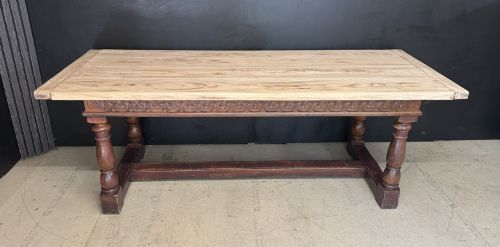
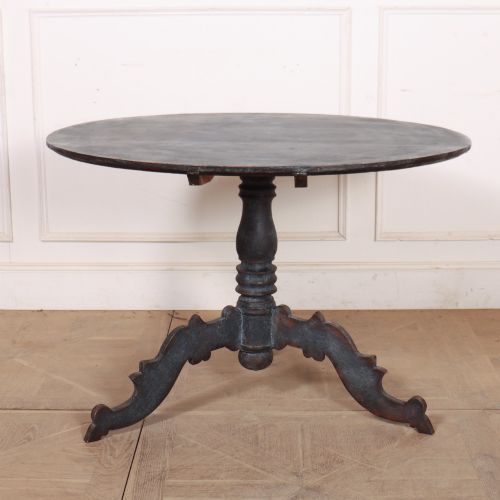
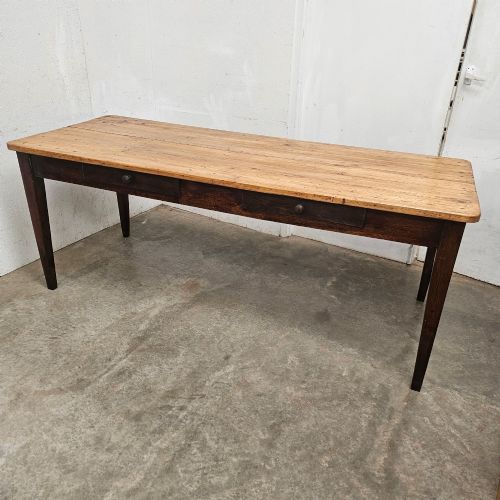
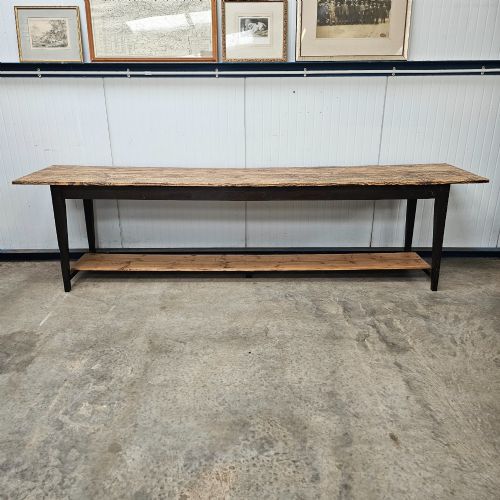


Dark Pine Dining Table
A dark pine dining table anchors a room with its rich grain and unpretentious utility, offering a sturdy surface for daily life.
Dark Pine Dining Table
A dark pine dining table encompasses robust country house, farmhouse, and tavern pieces designed for hard use. These items bring functional warmth to a room through deep wood tones and honest construction.
Most examples encountered here originate from the nineteenth century, including Victorian kitchen and refectory formats. Regional variations such as Welsh, French, and Scandinavian designs frequently appear.
Buyers select these dining tables for their generous proportions and patinated surfaces that show decades of domestic history. They range from compact six-seater country house tables to long harvest tables exceeding nine feet.
How they were made
Construction relies primarily on solid pine and pitch pine timbers, sometimes paired with oak for structural strength. Selected pieces incorporate stained timber surfaces or painted wood finishes to achieve a darker aesthetic.
Joinery methods reflect traditional workshop practices, utilising trestle supports, X-legs, and refectory framing to handle heavy loads. Certain examples incorporate functional additions like drawers or two-tier platforms.
Metal elements remain minimal, though specific institutional or naval pieces feature durable bronze feet and official stamps.
One exceptional Victorian table bears an official crown estate stamp and solid bronze feet, proving even utility furniture occasionally wears royal boots.
What varies in quality
Quality rests in the integrity of the timber selection and the honesty of the underlying structure. Dense pitch pine and well-seasoned nineteenth-century deals provide superior stability compared to softer, more reactive woods.
Proportion and scale dictate the visual success of the piece, particularly in longer tavern and refectory formats. Well-balanced leg placement and clean stretcher arrangements separate utilitarian benches from finer country dining furniture.
The Dark Pine Dining Table Glossary
- Pitch pine
- A dense, resinous timber known for its pronounced grain pattern and durability. It was frequently utilised for nineteenth-century utility and serving tables.
- Refectory table
- A long, narrow dining table traditionally built for communal dining halls. Nineteenth-century interpretations adapt this sturdy format for domestic kitchens and large dining rooms.
- Trestle table
- A table comprising two or more supports connected by a horizontal beam. This design maximises legroom and stability.
- Harvest table
- An elongated utility table historically used during seasonal gatherings. These items typically offer substantial length and narrow proportions.
- Patina
- The surface sheen and colour developed through years of use, cleaning, and exposure to light. It serves as an indicator of age and material authenticity.
Dark Pine Dining Table: Frequently Asked Questions
How do I clean a dark pine dining table?
Wipe the surface regularly with a slightly damp cloth to remove dust and crumbs. Avoid harsh chemical cleaners that strip the historic finish.
Nourish the timber occasionally with a suitable natural wax to maintain the moisture and depth of the wood.
Will a nineteenth century table handle daily family meals?
These pieces were originally built for hard kitchen and tavern use, making them naturally robust. Their solid construction easily withstands the demands of contemporary family life.
Using heat-resistant mats protects the historic surface from hot serving dishes and moisture rings.
How do I identify a Victorian pine table?
Look for distinct structural markers such as hand-cut joinery, thick plank tops, and deep timber patination. Nineteenth-century examples often display minor imperfections that reveal manual construction methods.
Hardware details and overall proportions also help place a table within the Victorian period.
What is the difference between a refectory and a farmhouse table?
Refectory tables typically feature a long, narrow format supported by stretcher-linked legs or trestles designed for communal spaces. Farmhouse tables often incorporate four legs and sometimes integrated drawers for domestic storage.
Both styles utilise solid pine and oak but serve slightly different architectural proportions in a dining room.