
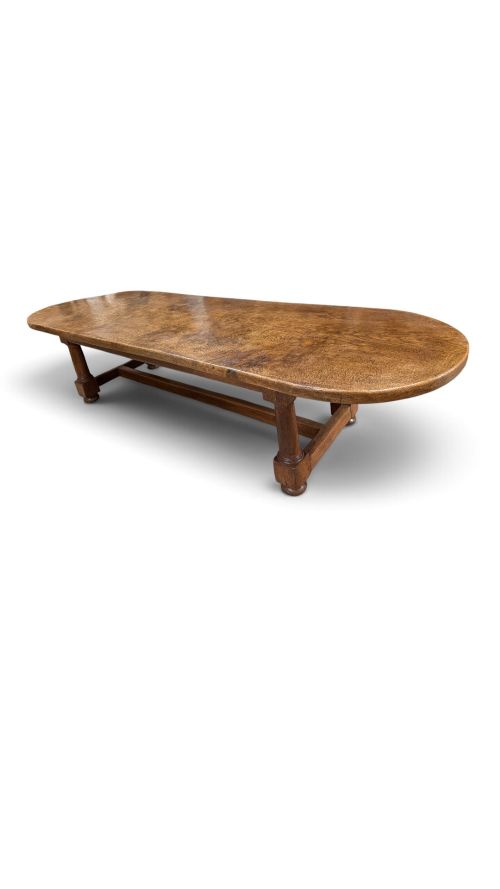
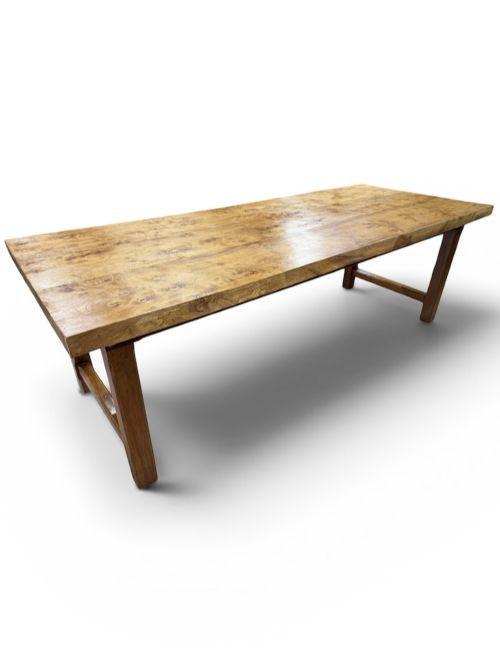
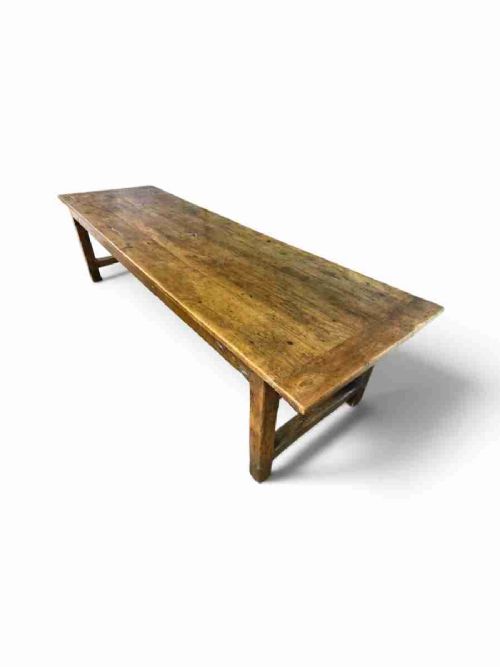
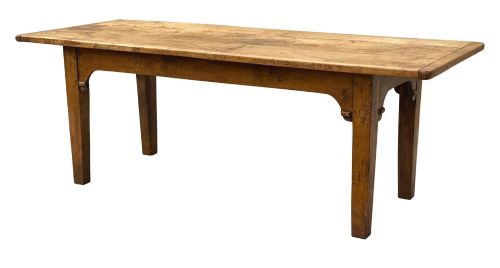
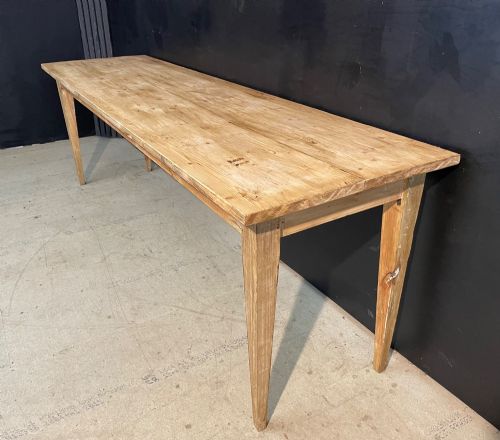
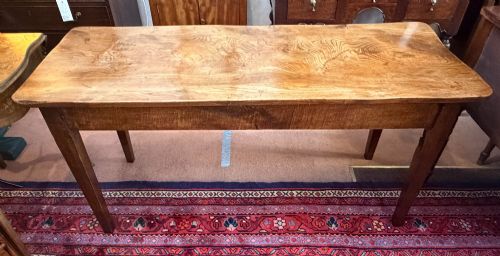
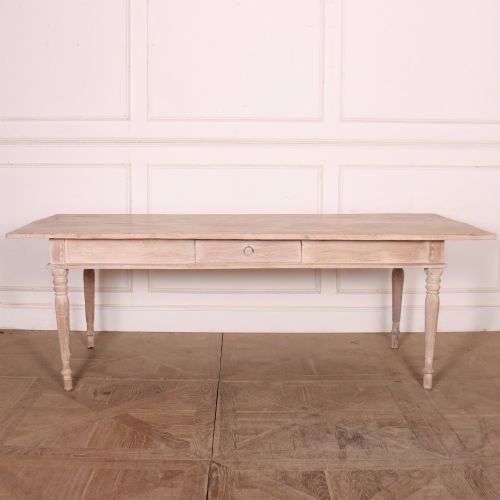
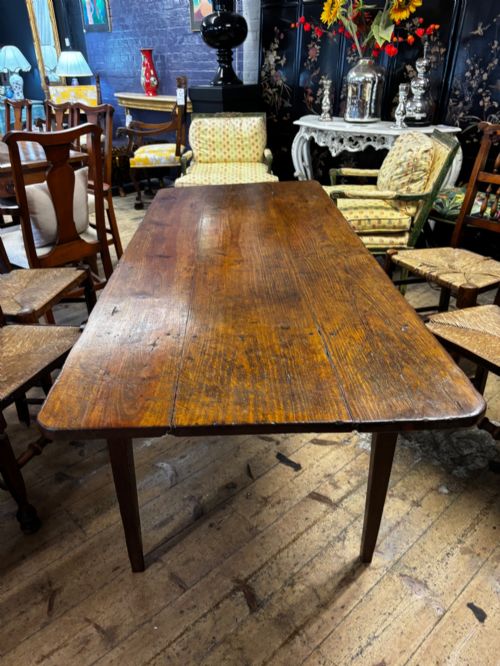
Rustic Refectory Kitchen Table
A rustic refectory kitchen table brings sturdy timber and centuries of dining history straight into the heart of the home.
Rustic Refectory Kitchen Table
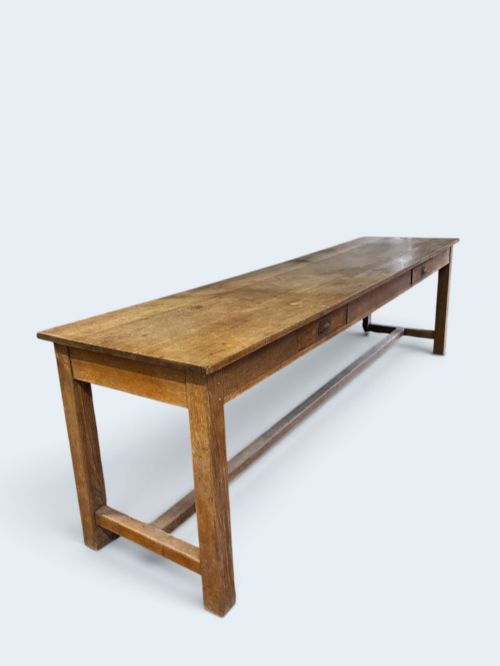
A rustic refectory kitchen table serves as a durable gathering place, combining the long proportions of monastic dining boards with the practicality of domestic furniture. When searching this phrase, buyers encounter substantial boards designed for daily meals, communal preparation, and hard domestic use.
The pieces appearing here span several centuries and regions, drawing heavily on 18th century, 19th century, and early 20th century periods. Examples range from English oak formats to French provincial designs, incorporating styles like rustic farmhouse, French country, and Spanish Baroque.
Most entries favour robust construction, often taking the form of dining tables, serving tables, and benches. Buyers frequently meet oak, pine, and fruitwood builds, reflecting the utilitarian origins of these large boards.
Materials and construction
Makers relied on durable native hardwoods and softwoods, predominantly oak, pine, elm, fruitwood, beech, and sycamore. These timbers were selected for their ability to withstand heavy daily wear in busy kitchens and dining halls.
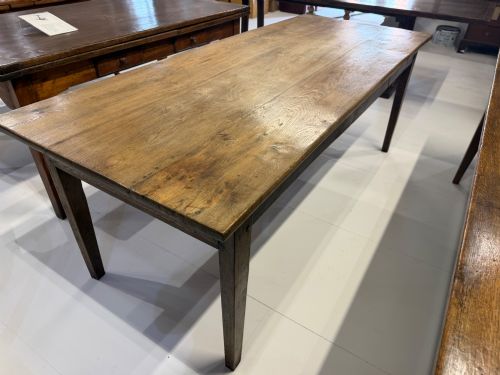
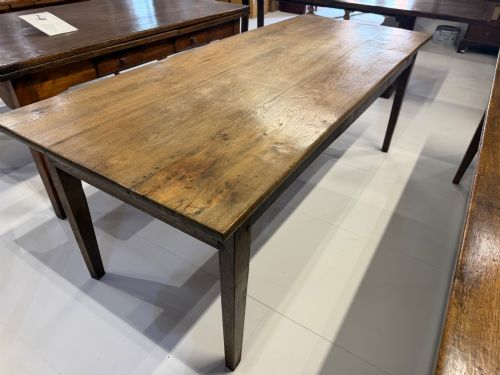
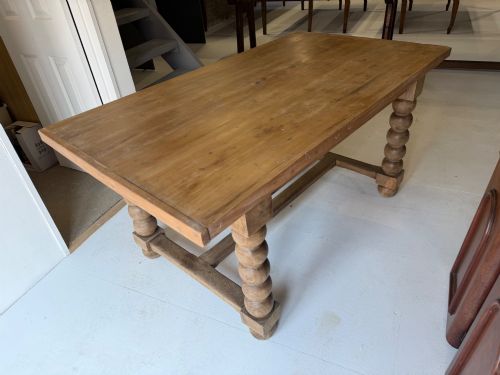
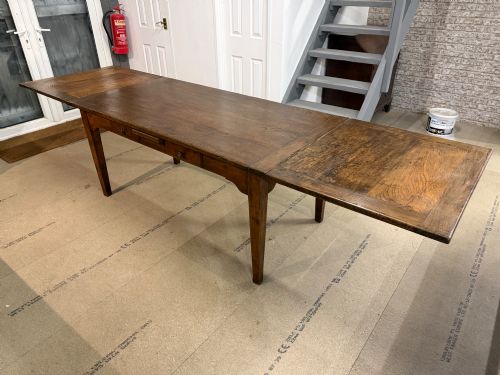
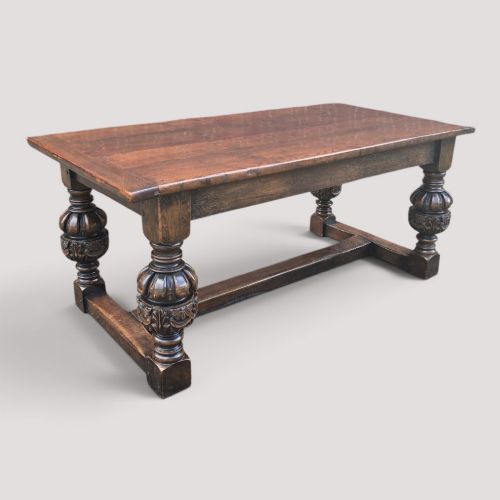
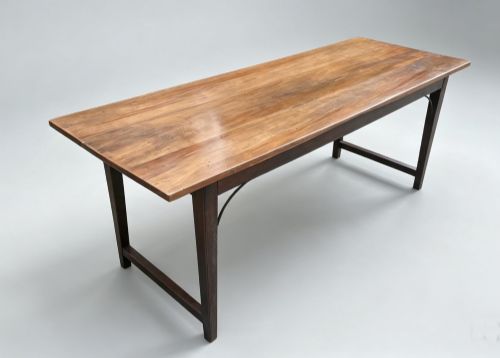
Construction techniques prioritise structural stability, utilising solid planks joined for expansive table tops, often paired with trestle ends, tapered legs, or bobbin turned supports. Iron and wrought iron elements occasionally appear for additional bracing and hardware.
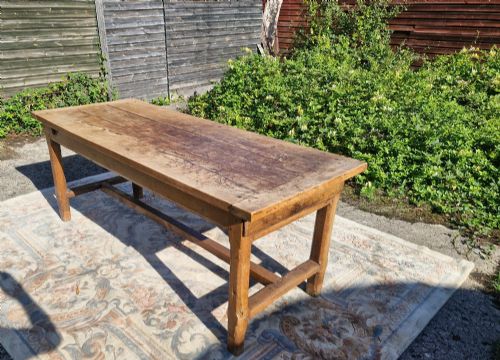
Surfaces finished through traditional methods such as waxing or plain scrubbing reveal the natural grain and age of the wood. The integration of solid timber boards ensures that each table maintains a heavy, grounded stance.
Regional styles represented include French provincial, Spanish Baroque, and Arts and Crafts designs, alongside traditional English farmhouse formats.
Distinctions in quality
Quality depends upon the integrity of the timber used for the top surface, particularly where single plank boards or substantial fruitwood and oak slabs are involved. Tables constructed from dense, well-seasoned hardwoods demonstrate greater endurance over centuries of use.
The refinement of the undercarriage and leg turning dictates the character of the piece, moving from simple utilitarian framing to shaped trestle ends and decorative turned legs like bobbin or tapered styles. Proportion and balance between the massive top and the supporting legs separate standard workshop output from finer regional interpretations.
The Rustic Refectory Kitchen Table Glossary
- Refectory table
- A long narrow dining table traditionally used in monastic dining halls. These forms evolved to serve domestic kitchens with generous lengths and sturdy underframes.
- Single plank
- A table top constructed from one continuous width of timber rather than multiple joined boards. This feature indicates a tree of significant maturity.
- Trestle ends
- Upright supports placed at either end of a table, connected by a central stretcher. This design provides ample legroom along the length of the board.
- Fruitwood
- Timber sourced from fruit-bearing trees such as pear, cherry, and apple. Cabinet makers valued these woods for their fine grain and warm tones.
- Bobbin legs
- Turned furniture supports shaped to resemble a string of wooden bobbins or spools. This decorative turning style appears frequently on 19th century pieces.
Rustic Refectory Kitchen Table: Frequently Asked Questions
How do I choose the right size table?
Consider the available floor space in your kitchen or dining room, leaving enough clearance around the edges for chairs and movement. Many of these tables seat eight or more people, making room planning essential.
Measure the length and width carefully against your daily seating requirements and the scale of the room. Long refectory formats dominate a space, so ensure doorways and corridors allow for delivery.
What is the difference between oak and pine tables?
Oak is a dense hardwood that offers exceptional durability and a deep, varied grain structure. It handles heavy daily wear with ease and develops a rich patina over centuries.
Pine is a softer timber that yields a lighter, more relaxed country aesthetic. Pitch pine and standard pine boards often show knots and softer surface marks that tell the story of their domestic history.
How do I care for a antique wooden top?
Maintain the finish by applying natural beeswax periodically to nourish the dry timber and protect against moisture. Avoid using harsh chemical cleaners that strip the historic surface.
Use placemats and coasters to shield the wood from heat and spills while allowing the natural character of the old grain to remain visible.
Are these tables suitable for daily family use?
These pieces were built specifically for heavy domestic service, food preparation, and communal dining. Their robust timber construction makes them well-equipped for modern family life.
Existing marks, bumps, and stains on antique boards mean you do not need to worry about adding the occasional new sign of use. They thrive when lived with and used constantly.