
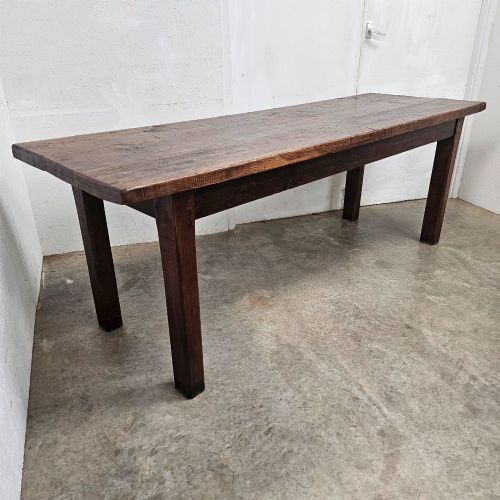
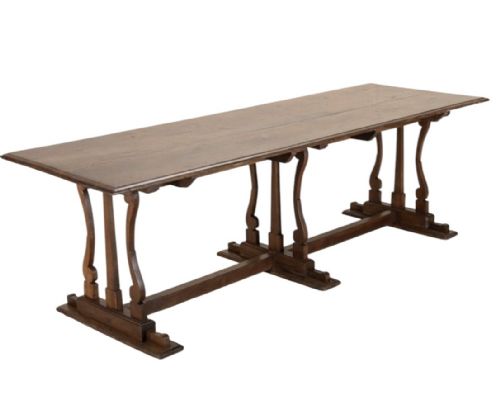
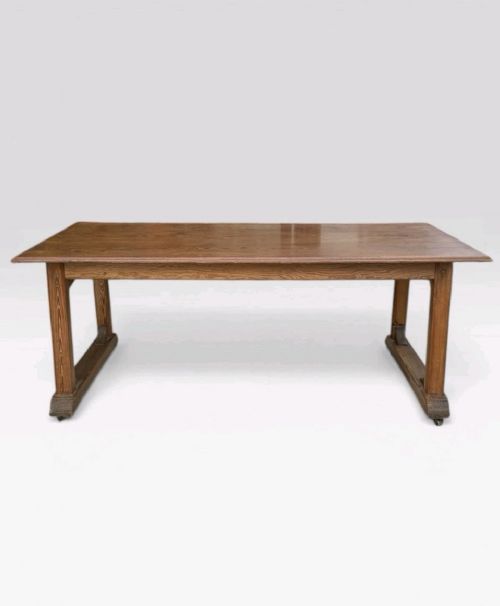
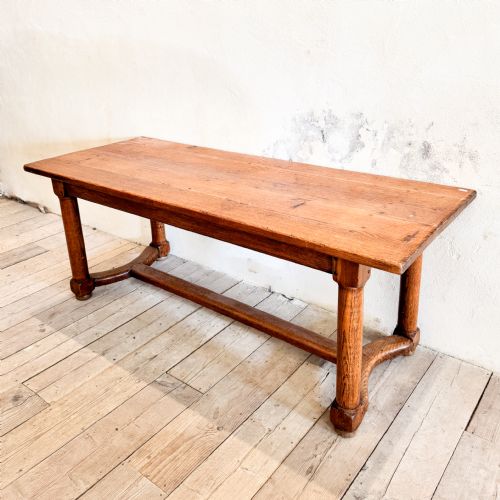


Traditional Wood Trestle Table
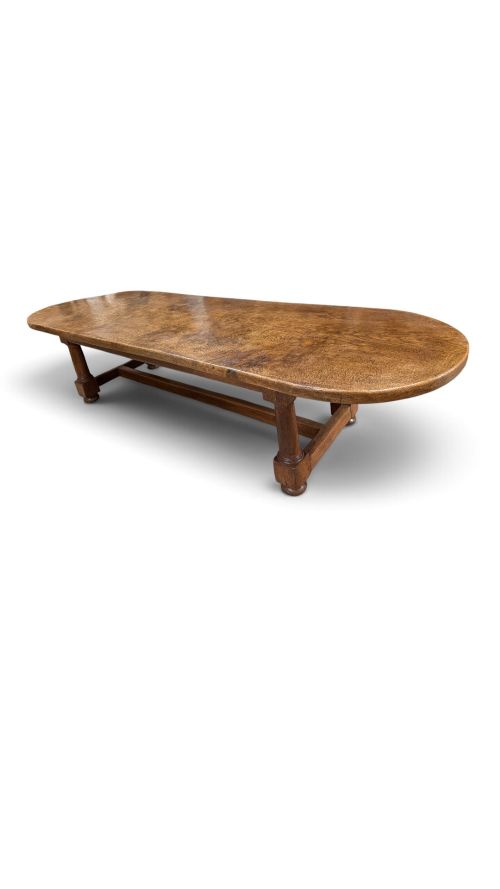
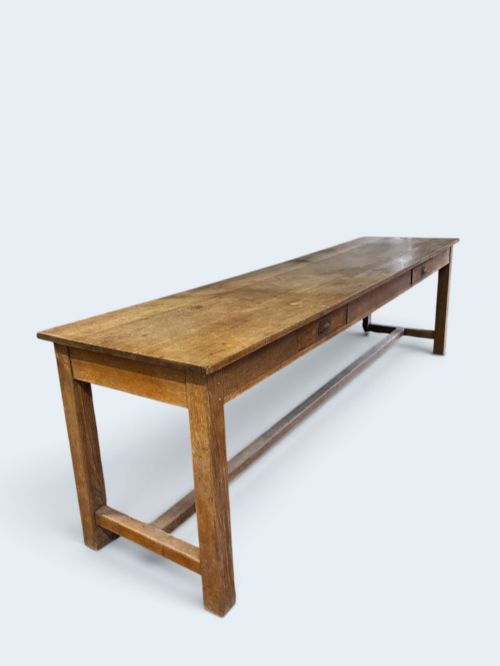
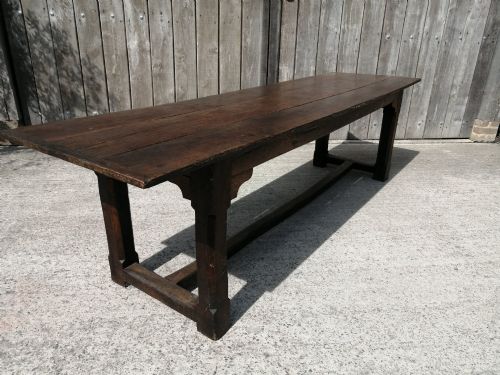
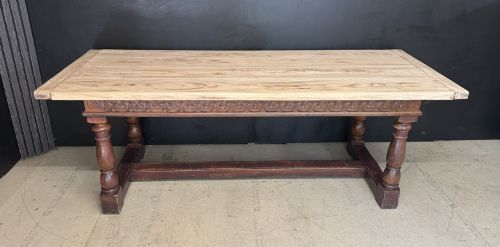
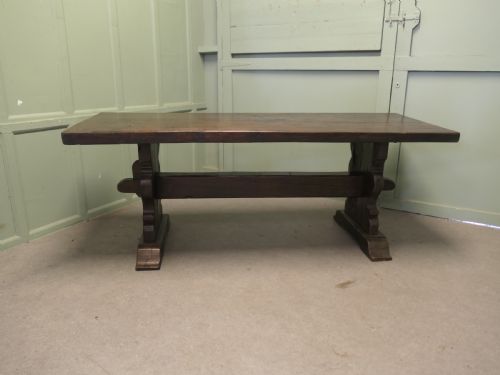
A traditional wood trestle table provides a sturdy surface built for gathering, grounded by sturdy end supports rather than standard corner legs.
Traditional Wood Trestle Table
When searching for a traditional wood trestle table, buyers encounter durable surfaces designed for communal dining, kitchen preparation, or workspace utility. The selections span centuries of cabinetmaking, featuring formats ranging from large refectory boards to smaller coffee tables and tavern pieces.
Most examples appearing here draw upon 18th century and 19th century construction methods, often manifesting as rustic farmhouse or country styles. Oak, walnut, and mahogany dominate the offerings, occasionally paired with elm, pine, or wrought iron stretchers.
Origins vary across English, French, Spanish, and Chinese traditions, yielding distinct proportions and edge profiles. Buyers will find heavy single plank tops, folding mechanisms, and monastery designs suited to both historic interiors and modern spaces.
Materials and construction methods
Carpenters utilised solid hardwoods such as oak, walnut, and mahogany to construct these surfaces, frequently selecting thick planks for endurance. Elm and pine appeared in supportive elements, while brass and wrought iron provided structural bracing.
Joinery relied on pegged tenons, mortise joints, and heavy stretchers like H frames to stabilise the span between trestle ends. Surface finishes ranged from plain wax to traditional painted treatments, including Swedish Falu paint and bleached oak applications.
Listings feature woods including oak, walnut, mahogany, elm, pine, and satin birch across periods from the 18th century to the 1930s.
Distinctions in construction and material grade
The division between standard workshop pieces and superior furniture rests upon the selection of timber and the integrity of the joinery. Single plank timber tops command greater regard than multi-board tops joined together, especially when the grain runs straight and true.
Proportion and stability define the upper tier of these tables, where substantial trestle bases support heavy loads without visible sway. Hand-carved details, pegged joints, and secondary timbers like elm or walnut indicate higher levels of regional craftsmanship.
Gillingtons of Dublin·Honourable Company of Edinburgh Golfers
The Traditional Wood Trestle Table Glossary
- Refectory table
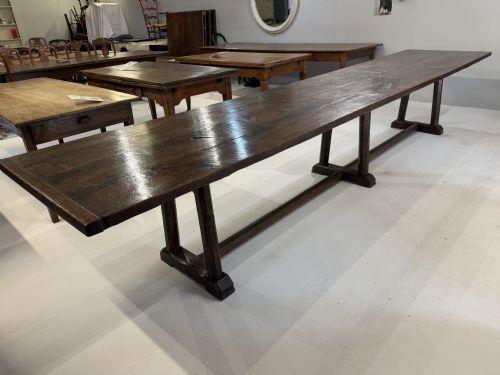
- A long narrow dining table historically used in communal dining halls and monastic refectories. These examples frequently feature heavy oak or walnut timber supported by thick central trestles.
- Trestle
- A structural support consisting of a horizontal beam fixed to two splayed legs at either end. This design allows maximum legroom along the length of the table.
- Plank top
- A table surface constructed from boards laid side by side rather than a single sheet of wood. Earlier iterations often utilise single wide planks of oak or elm.
- H stretcher
- A horizontal wooden brace connecting the two legs or trestles of a table in the shape of the letter H. This component adds significant rigidity to the entire frame.
- Tavern table
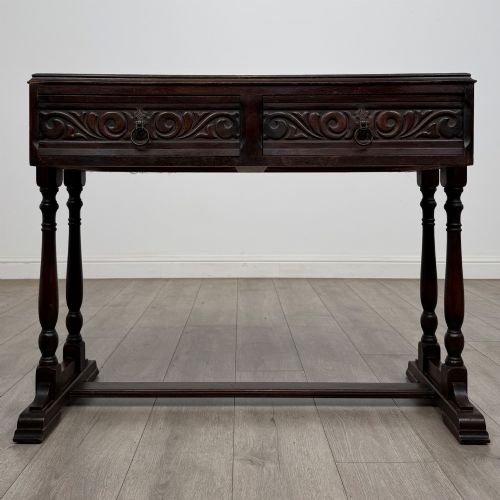
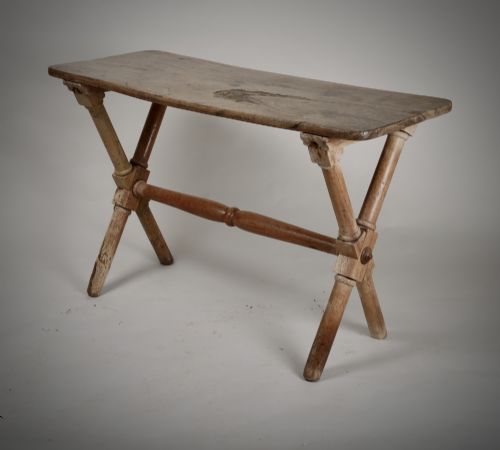
- A compact, sturdy table originally found in public houses and commercial spaces. These pieces typically combine thick wooden tops with robust turned legs or trestle bases.
Traditional Wood Trestle Table: Frequently Asked Questions
What is a traditional wood trestle table?
A traditional wood trestle table uses solid timber boards resting on end supports rather than standard legs at each corner.
This construction maximises seating space along the edges and distributes weight evenly across the floor.
How were these tables used historically?
These tables served primarily for communal dining, kitchen food preparation, and administrative tasks in homes and institutions.
Heavier formats were built to withstand daily commercial or domestic service in taverns and refectories.
How do I style a trestle table today?
Pair the sturdy wooden surface with benches or mismatched chairs to accentuate the rustic or country aesthetic.
Keep the centre relatively clear to highlight the grain of the timber and the architecture of the trestle base.
How do I identify older examples?
Examine the underside and joints for hand-cut pegged mortise and tenon construction rather than modern metal screws.
Notice the timber species, such as native oak or elm, and the presence of natural wear patterns accumulated over centuries.