


Rustic Provincial Dresser
A rustic provincial dresser brings honest craft and working storage to a room, offering practical utility through sturdy timber construction and time-worn surfaces.
Rustic Provincial Dresser
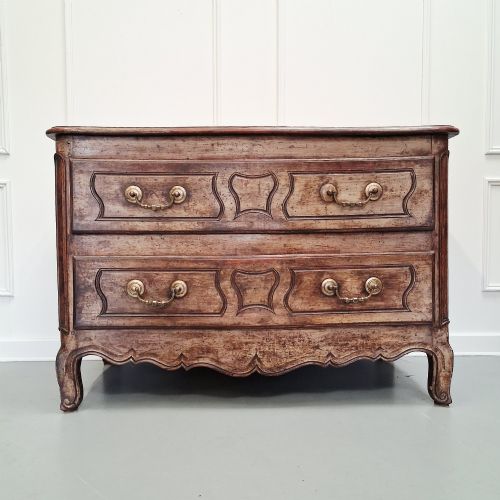
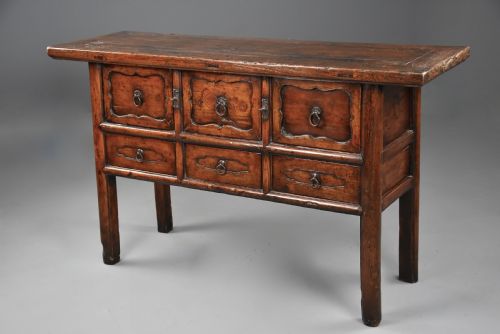
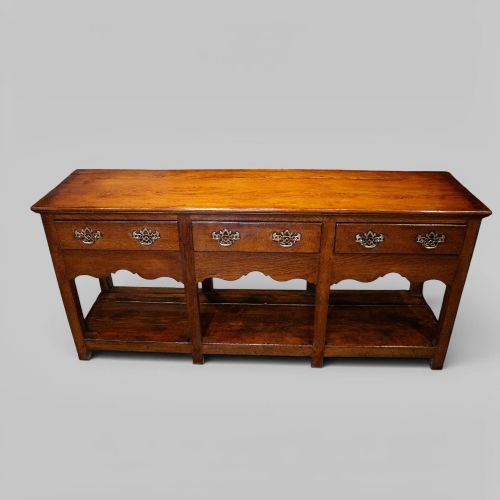
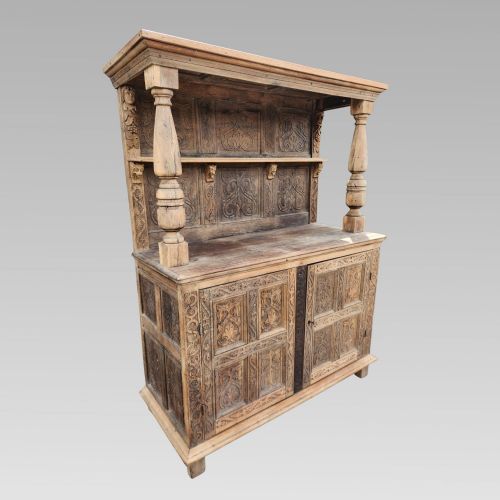
A rustic provincial dresser encompasses practical storage furniture built for regional houses, spanning kitchen dressers, dresser bases with pot boards, enfilades, and upright cupboards. These pieces originate from French, English, and Chinese provincial traditions, reflecting the local needs of country dwellings.
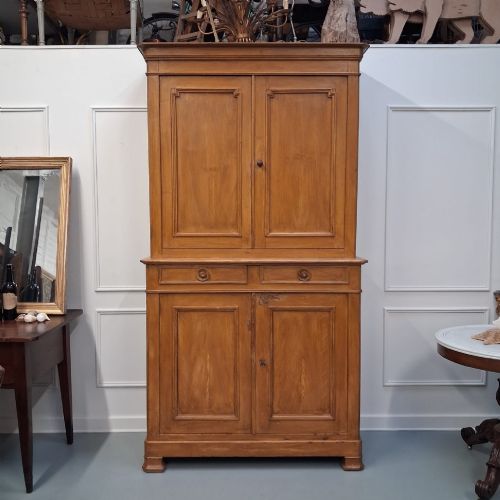
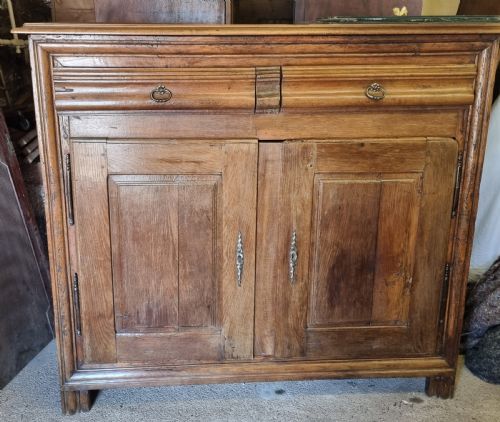
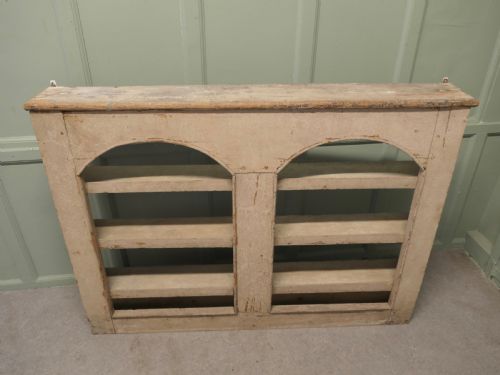
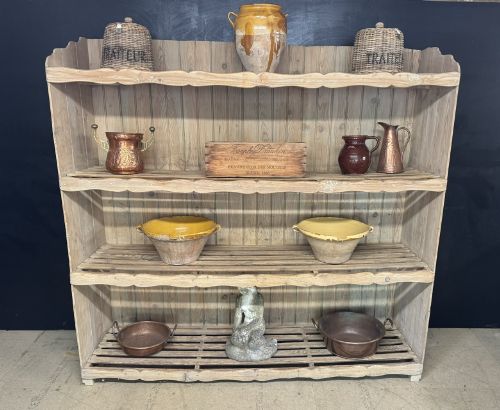
The pieces appearing here lean heavily toward French provincial examples alongside English country versions. Oak, pine, fruitwood, and elm form the primary bodies, shaped into sturdy sideboards, shelved alcove cupboards, and two-part dressers intended for everyday domestic service.
Materials and Construction
Local cabinet makers relied on native hardwoods and softwoods such as oak, elm, cherry, chestnut, and pine, often joined with pegged mortise and tenon joints to withstand heavy domestic use. Surfaces received simple hand planes, leaving tool marks that record the manual labour involved in their creation.
Hardware consists of forged iron hinges and brass pulls, secured directly to panelled doors and drawer fronts. Painted finishes, where present, use traditional oil or distemper layers that wear down gradually to expose the underlying timber.
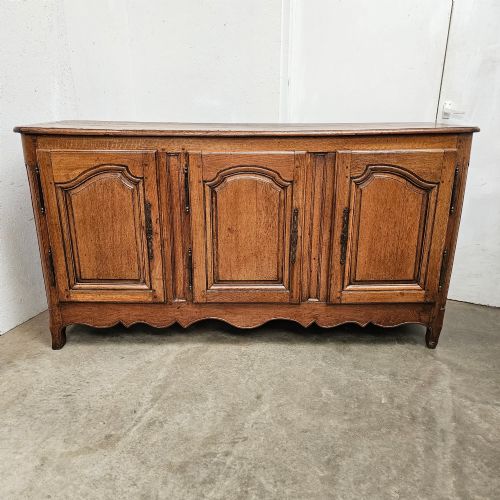
The inventory includes diverse utilitarian forms ranging from French enfilades and cherrywood buffet bases to English West Country kitchen dressers.
Distinctions in Execution
Quality rests upon the selection of timber and the integrity of the original construction rather than decorative excess. Denser hardwoods like oak and burr elm provide greater structural permanence than softer pines, while well-proportioned cornices and tight joinery separate utilitarian work from finer regional cabinet making.
Surfaces demonstrate variation through patination and the survival of original finishes. Unstripped timber with deep wax accumulation or intact historical paint layers holds greater integrity than pieces stripped down to raw wood in modern workshops.
The Rustic Provincial Dresser Glossary
- Pot board
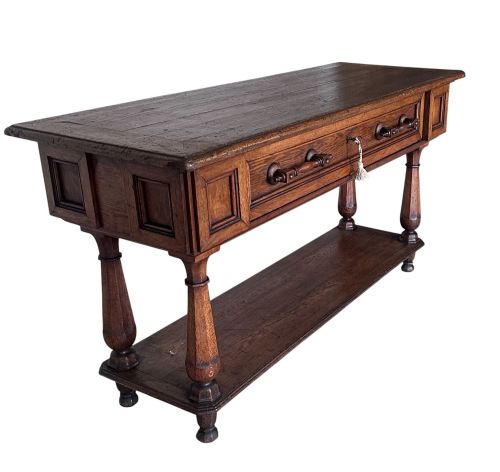
- An open lower shelf built into a dresser base or serving table, traditionally used for storing heavy pots and earthenware. It sits just above the floor, supported by sturdy legs or trestles.
- Enfilade
- A long sideboard or buffet featuring a sequence of three or more doors in a continuous line. This form originated in large provincial dining rooms for serving food.
- Buffet a deux corps
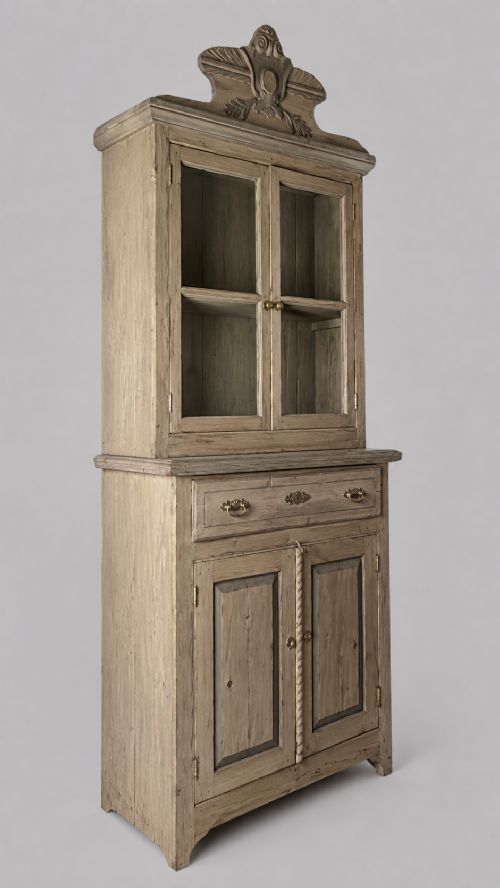
- A tall two-piece storage cupboard comprising a lower sideboard base beneath an upper shelved cabinet. The sections divide horizontally for transport.
- Vaisseliere
- A traditional provincial piece incorporating open shelving or rack space specifically designed for displaying plates and dishes. It forms the upper portion of a kitchen dresser.
- Patina
- The surface sheen and colour acquired by wood and metal over decades of handling, polishing, and environmental exposure. It serves as an indicator of age and genuine use.
Rustic Provincial Dresser: Frequently Asked Questions
How do I clean a rustic dresser?
Dust the surfaces regularly with a dry, soft cloth to prevent grit accumulation in the grain. Apply a traditional beeswax sparingly to nourish dry timber and maintain the natural sheen without forming a sticky buildup.
Avoid modern liquid polishes containing silicone, which penetrate the wood pores and damage historical patination over time.
Are these dressers suitable for modern kitchens?
These pieces fit well in contemporary spaces, providing generous storage for dinnerware, cookware, and dry goods. Their deep drawers and sturdy tops accommodate everyday kitchen routines while adding visual warmth.
Ensure the room humidity remains relatively stable to prevent solid timber from splitting or warping near cookers and dishwashers.
How can I tell oak from chestnut?
Oak displays prominent medullary rays, visible as small silver flecks or ribbon patterns across the grain. It feels heavy and dense, carrying a warm brown tone that deepens with age.
Chestnut possesses a lighter, more golden colour with a coarser, straighter grain pattern lacking the distinctive medullary flecks found in oak.
What is the difference between a dresser base and a full dresser?
A dresser base consists solely of the lower chest or sideboard section, featuring drawers, cupboards, or an open pot board. It offers a flat surface top suitable for food preparation or serving.
A full dresser includes both the lower base and an integrated upper section with shelves or a glazed cabinet for displaying crockery.