
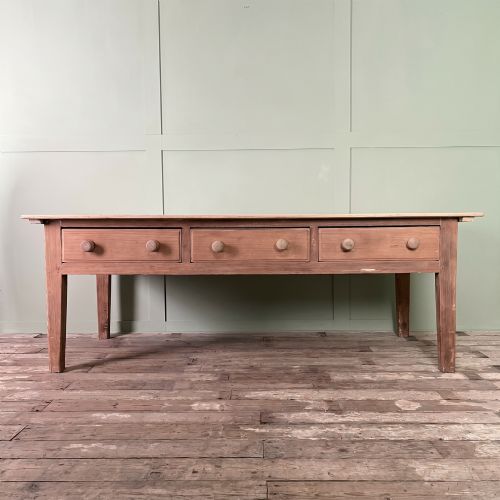
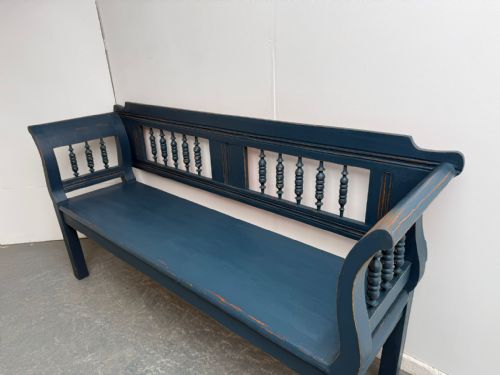

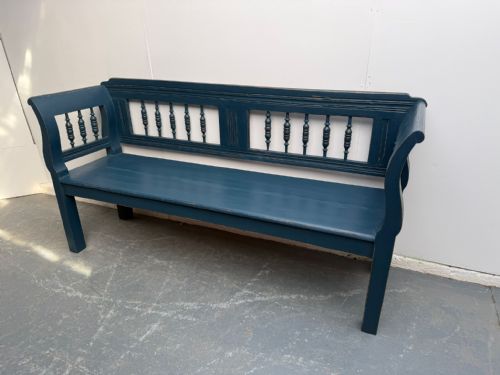


Rustic Pine Kitchen Bench
A rustic pine kitchen bench offers sturdy utility and honest grain, bringing practical charm to any dining space.
Rustic Pine Kitchen Bench
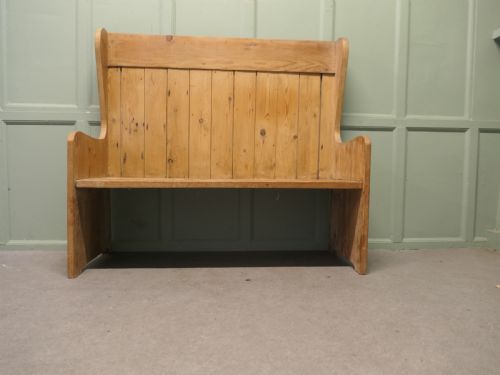
A rustic pine kitchen bench is a practical seating option shaped by regional European traditions, originating from periods such as the nineteenth century and the Victorian era. These pieces range from simple plank-seated settles with high backs to long dining benches built for communal meals.
Most examples found on this page display the straightforward construction typical of farmhouse and country workshops. They serve equally well along a kitchen table or beside a hallway wall, showing the straightforward utility expected from period utilitarian furniture.
How they were made
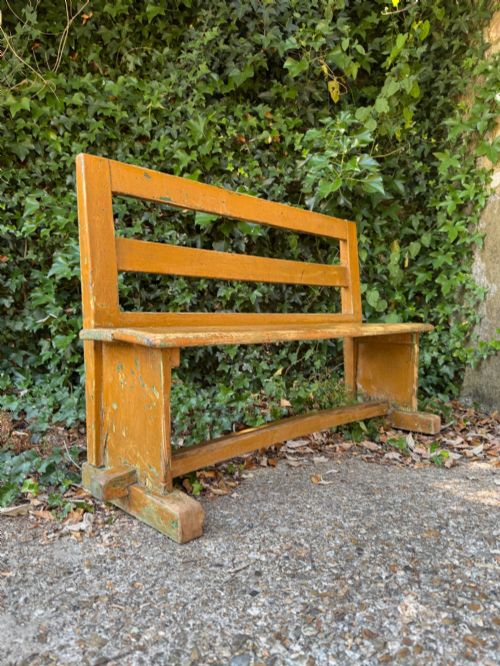
Makers built these pieces primarily from softwood and pine, sometimes combining them with sycamore or adding cast iron elements for structural reinforcement. Surfaces frequently retain traces of early paint, including blue and green tones applied over timber.
Joinery relied on sturdy pegs, tongue and groove boards, and solid planking designed to withstand daily domestic or workshop use. Construction prioritised function over ornament, resulting in robust forms that endured generations of service.
Listings feature pine, sycamore, and softwood forms originating from nineteenth-century workshops across France, Sweden, Austria, and Hungary.
What varies in quality
Quality in these pieces depends upon the integrity of the original timber and the retention of authentic surface finishes, such as early paint layers. Benches that maintain their structural proportions without excessive replacement wood stand apart from heavily altered examples.
The balance between utilitarian strength and pleasing regional character defines the better specimens. Proportion, depth of seating, and the undisturbed patina of the pine surface indicate the care with which an item was originally made and subsequently kept.
The Rustic Pine Kitchen Bench Glossary
- Settle
- A wooden bench with a high back, solid arms, and often a storage compartment beneath the seat. It was designed to block draughts in older kitchens.
- Softwood
- Timber from conifer trees, such as pine, which was commonly used for utilitarian country furniture due to its availability and ease of working.
- Patina
- The surface sheen and colour acquired by wood through age, wear, and regular cleaning over many decades.
- Prep table
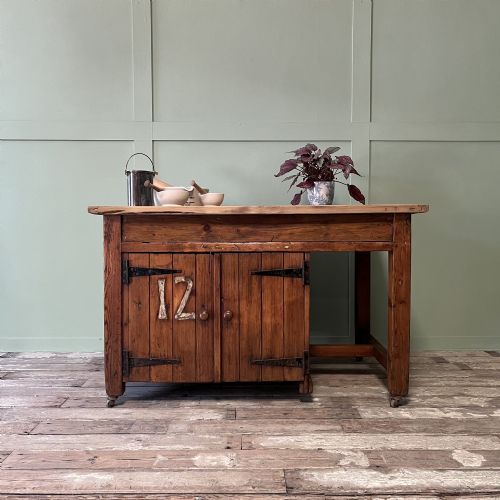
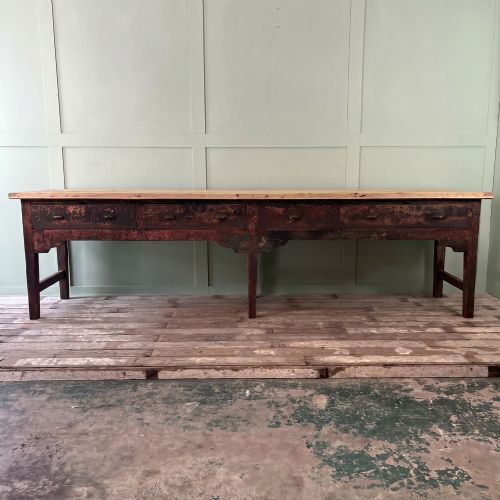
- A utilitarian work table designed for food preparation or domestic labour, often featuring a robust top and simple frame.
Rustic Pine Kitchen Bench: Frequently Asked Questions
How do I clean a painted pine bench?
Wipe the surface gently with a soft, damp cloth to remove dust and everyday grime without disturbing the underlying paint.
Avoid harsh chemical cleaners or abrasive pads that can strip historic finishes and damage the timber.
Can I use these benches outdoors?
These pieces were designed for interior domestic use and lack the weatherproofing required for outdoor conditions.
Changes in temperature and moisture outdoors will quickly warp the pine and ruin historic surface treatments.
Are nineteenth-century benches sturdy enough for daily dining?
Most period benches remain remarkably robust and are well suited for everyday seating around a kitchen table.
Check the joints and underframe periodically to ensure the wooden pins and stretchers remain secure.
How do I identify a painted finish?
Look for micro-crazing, uneven wear patterns, and multiple thin layers visible around edges and joints.
Original paint typically shows natural softening and integration with the timber beneath rather than a flat, modern coating.