
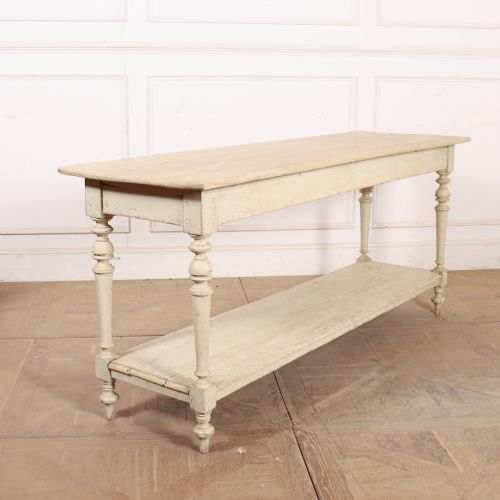
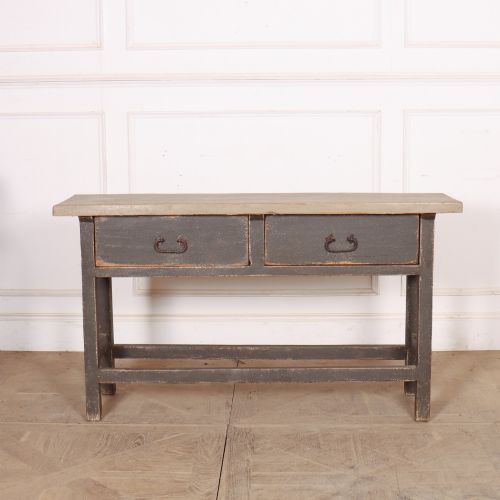
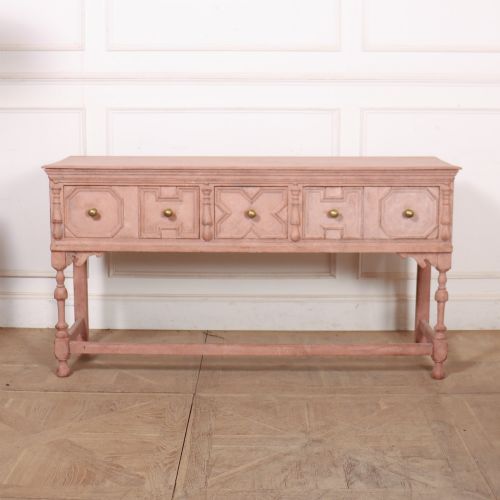
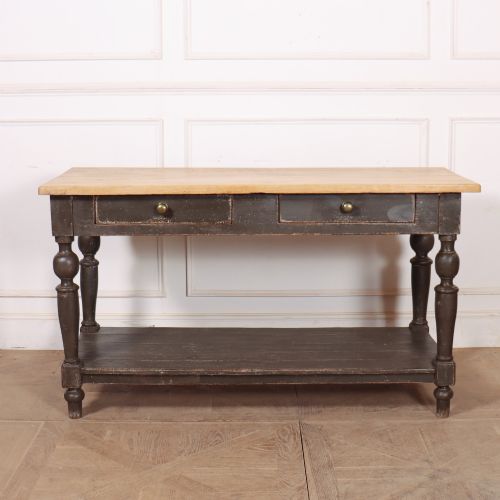


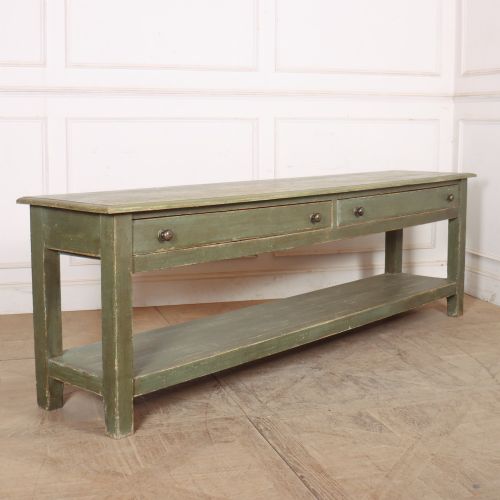
Rustic Painted Server Console
A rustic painted server console brings honest country utility and layered historic colour to a hallway, kitchen or dining room.
Rustic Painted Server Console
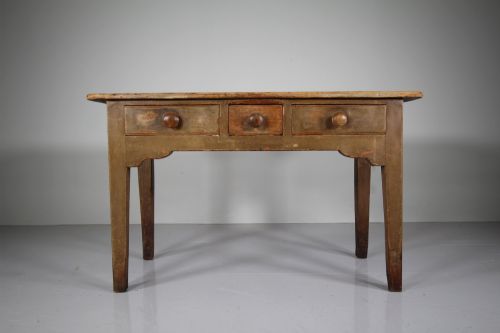
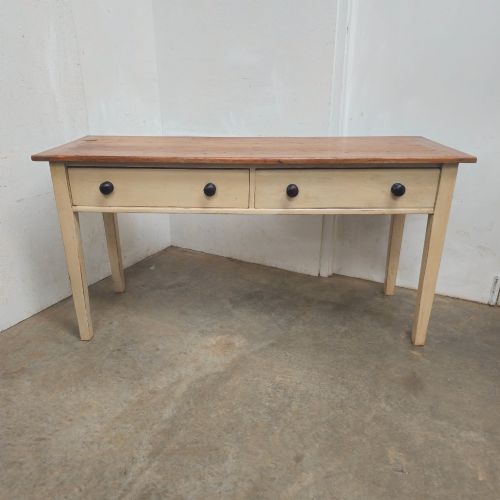
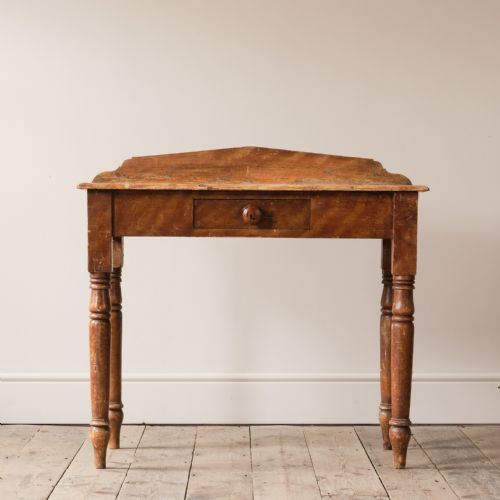
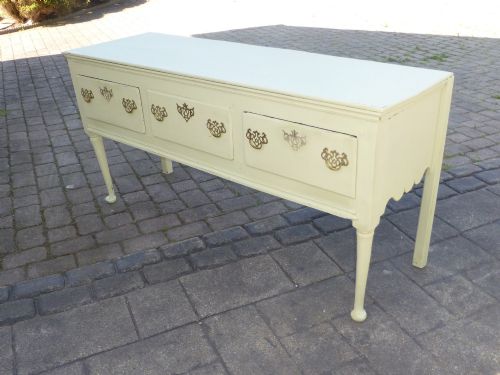
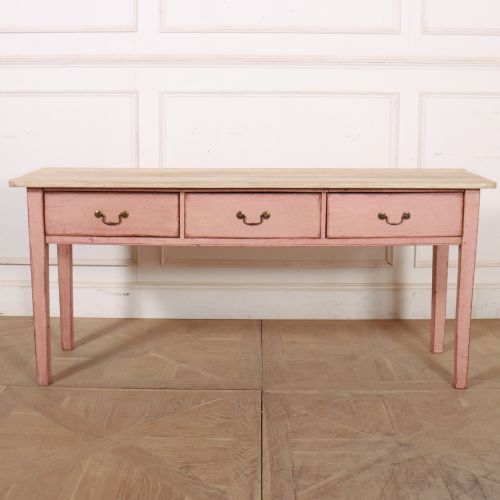
A rustic painted server console combines practical utility with the distinctive charm of country furniture. These pieces span utility forms like servers, dresser bases, and drapers tables created for working interiors.
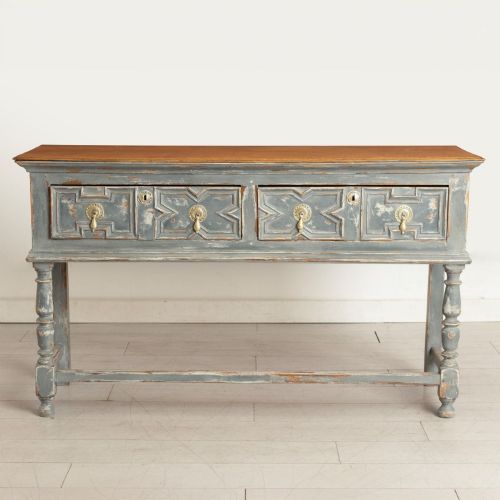
The selection on this page relies heavily on nineteenth-century examples alongside eighteenth-century origins and later Victorian pieces. Pine and oak dominate the construction, often found bearing layers of original or aged paint.
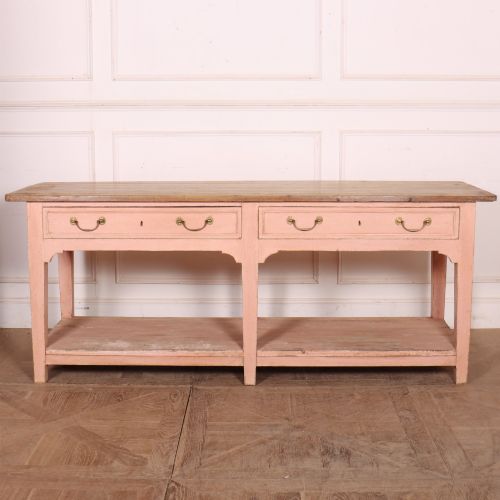
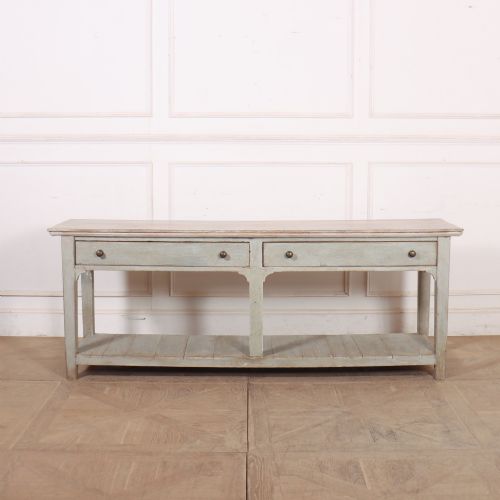
Regional variations appear across English, Scottish, Welsh, French, and Scandinavian examples. Common configurations include potboard lower shelves, deep drawers, and long, narrow proportions suited to corridors and dining spaces.
Materials and construction methods
Makers utilised accessible timbers like pine and oak, building sturdy frames designed for daily domestic or commercial preparation work. Joinery methods prioritise strength, utilising pegged joints, dovetailed drawer construction, and heavy plank tops.
Surface finishes rely on traditional paint applications, sometimes found in original layers or worn down through decades of use. Metal hardware typically consists of simple brass pulls or iron fittings that secure doors and drawers.
Several tables retain traces of flour and old paint drips from past lives spent prepping pastry in chilly farmhouse kitchens.
Assessing quality and authenticity
Quality rests in the integrity of the timber and the survival of an authentic surface finish. Pieces retaining their initial painted skin display a depth and texture that later decorative coats cannot replicate.
Structural proportion and utility define the best examples, such as those featuring integrated potboards, well-proportioned drawers, and sound joints. Alterations to height, replaced tops, or stripped surfaces diminish the historic character of country furniture.
The Rustic Painted Server Console Glossary
- Potboard
- An open lower shelf fitted to a dresser base or serving table. This platform traditionally stored heavy pots, pans, and utilitarian kitchen crocks off the flagstone floor.
- Draper's table
- A long, counter-height table originally built for measuring and cutting textiles in mercery shops. These pieces translate well into modern domestic settings as narrow servers or console tables.
- Dresser base
- A low wooden sideboard featuring drawers and sometimes a potboard shelf, built without the upper plate rack of a traditional kitchen dresser. They served as primary food preparation and storage stations in country houses.
- Original paint
- Pigment applied during the period of manufacture that remains largely undisturbed by modern stripping or overpainting. It provides a key indicator of authenticity and historical wear.
- Pine
- A soft timber widely utilised across European country furniture for its accessibility and workability. It frequently forms the carcass and drawers of painted servers and console tables.
Rustic Painted Server Console: Frequently Asked Questions
What is a rustic painted server console used for?
These pieces function as versatile surface furniture in hallways, kitchens, and dining rooms. They provide storage through drawers and lower shelves while offering a display surface for lamps and decorative objects.
Historically, similar tables served as food preparation counters or shop display fixtures. Today, their narrow proportions make them ideal for narrow passages and living spaces.
How do I date a painted wooden console?
Dating relies on examining construction techniques, timber choice, and nail types. Eighteenth and nineteenth-century pieces often feature hand-cut joints, wide plank construction, and wrought iron or early brass hardware.
Paint analysis also helps determine age, as original layered finishes differ significantly from modern decorative applications. Examining wear patterns around drawer pulls and feet confirms daily historic use.
Are these tables suitable for everyday kitchen use?
Many of these pieces originated as working preparation tables, drapers tables, or dairy tables built for heavy domestic tasks. Their solid pine and oak construction handles daily use effectively.
Care should be taken to protect historic painted surfaces from excessive moisture and heat. Using coasters and placemats helps preserve the original finish of antique timbers.
What distinguishes French country tables from English ones?
French provincial servers and drapers tables often feature longer proportions, softer fruitwood or pine timbers, and more refined leg turnings. English and Scottish country pieces tend to display heavier planking and straightforward, utilitarian framing.
Potboards and deep single-drawer configurations appear frequently across both traditions. Regional variations in paint colours and hardware choices also reflect local domestic customs.