
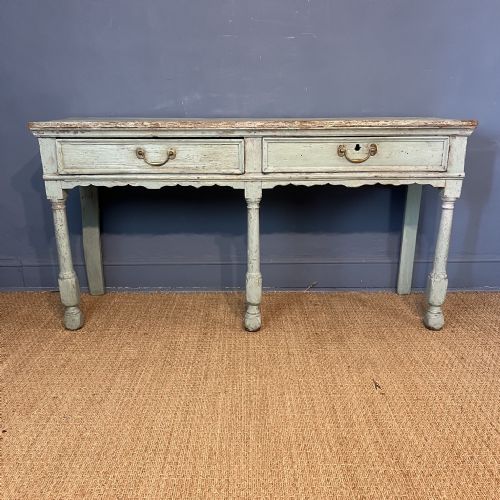
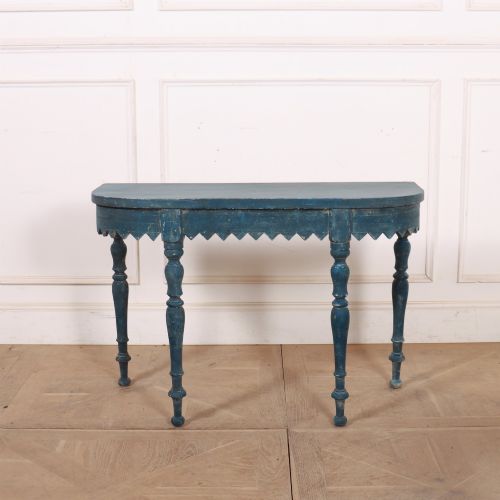


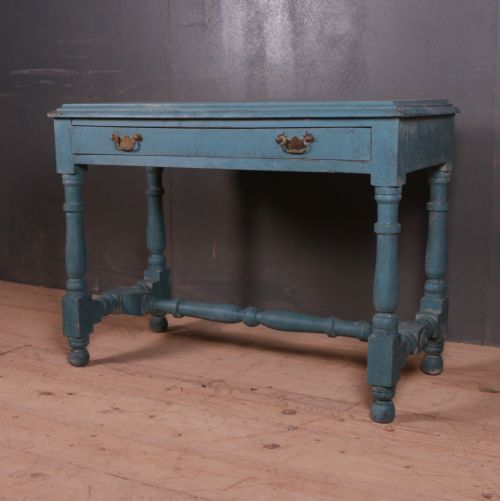
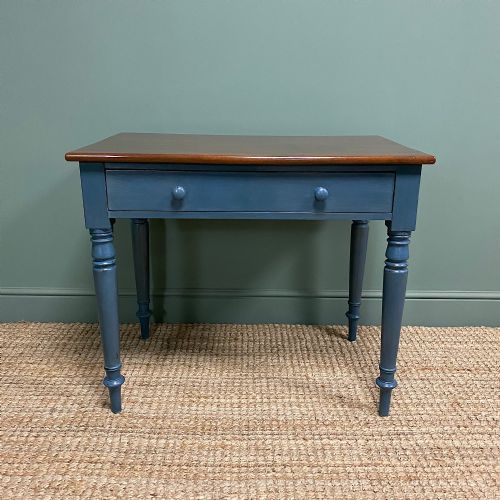
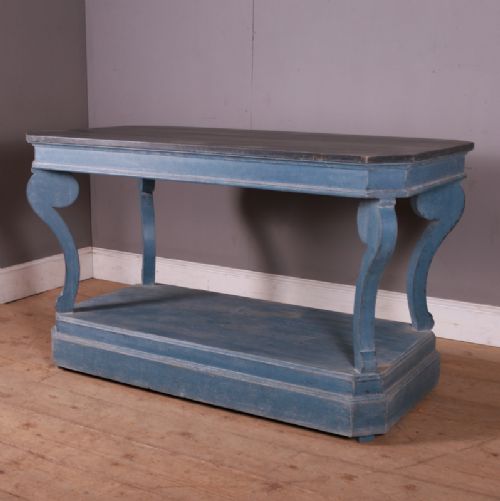
Blue Country Console Table
These blue country console table examples bring rustic utility and painted charm into a room, offering practical surface space with distinct historical character.
Blue Country Console Table
A blue country console table encompasses various side tables, dresser bases, lamp tables, and washstands shaped by English, French, and Scandinavian traditions. These items span from the eighteenth century through the Victorian era, reflecting utilitarian rural forms alongside more refined regional interpretations like Gustavian and Queen Anne aesthetics.
The pieces on this page lean heavily into painted pine and timber constructions, often carrying traces of aged blue pigment. Forms range from bow end console tables and potboard bases to trestle tables and small lamp tables designed for provincial interiors.
Construction and materials
Cabinetmakers and rural joiners relied predominantly on pine and assorted fruitwoods to build these utilitarian tables. Surfaces received layers of paint, often applied in blue hues that have worn and weathered over generations of use.
Joinery techniques varied from basic rustic construction to more formal Georgian and Regency framing, occasionally incorporating brass details or utilising raw timber elements like tree bark in simpler vernacular pieces.
One remarkably honest table incorporates raw tree bark into its rustic frame, bringing the outside straight into the parlour.
Assessing quality and character
Quality rests in the integrity of the timber framing and the authenticity of the painted surfaces. Original paint layers that show natural patination and genuine age separate honest vernacular items from later decorative repainting.
Proportion and structural balance also dictate the standing of a piece, distinguishing simple utilitarian workshop output from finer regional interpretations influenced by established cabinetmaking designs.
The Blue Country Console Table Glossary
- Console table
- A table designed to stand against a wall, frequently secured to it or supported by front legs. These items provide display and surface space in hallways and living rooms.
- Dresser base
- The lower section of a traditional kitchen or dining room storage unit featuring drawers and cupboards. They serve as sturdy sideboards and work tables.
- Washstand
- A small piece of furniture designed to hold a basin and pitcher for personal washing before modern plumbing. They often feature small tabletops and lower shelves.
- Pine
- A softwood commonly used in vernacular furniture making throughout Britain and Europe. It accepts paint readily and forms the core material for much rustic country furniture.
- Bow end
- A convex, curved front edge on a table or cabinet. This shaping softens the rectangular profile of the furniture.
Blue Country Console Table: Frequently Asked Questions
Where should I place a blue country console table?
These tables suit narrow hallways, living room perimeters, or dining spaces where surface area is needed without a large footprint. Their painted finishes complement neutral or rustic interiors.
Position them against plain walls to let the painted wood finish stand out as a focal point in the room.
How do I care for painted pine furniture?
Dust the surfaces regularly with a dry cloth and avoid harsh chemical cleaners that might strip the aged paint. Keep the wood away from direct heat sources and strong sunlight to prevent warping and fading.
Applying a gentle wax can protect exposed timber sections while maintaining the matte finish of the historic paint.
What is the difference between a console table and a side table?
Console tables are traditionally designed to sit flat against a wall, sometimes relying on the wall for stability in older forms. Side tables are free-standing items meant to be accessed from multiple sides.
In modern usage, the terms often overlap depending on the proportions and intended placement of the piece.
How can I tell an eighteenth-century table from a nineteenth-century one?
Earlier pieces from the eighteenth century often display hand-cut joinery and native timber construction typical of regional workshops. Nineteenth-century examples frequently incorporate standardised fixings and machine-sawn elements.
Examine the underside and drawer linings to understand the tools and methods used during construction.
What is Swedish folk art style furniture?
Swedish folk art furniture originates from Scandinavian rural traditions, emphasising bright or pale painted finishes and clean functional lines. These pieces often draw on neoclassical forms simplified for provincial homes.
They bring a light, restrained aesthetic that contrasts with heavier rustic styles from other regions.