


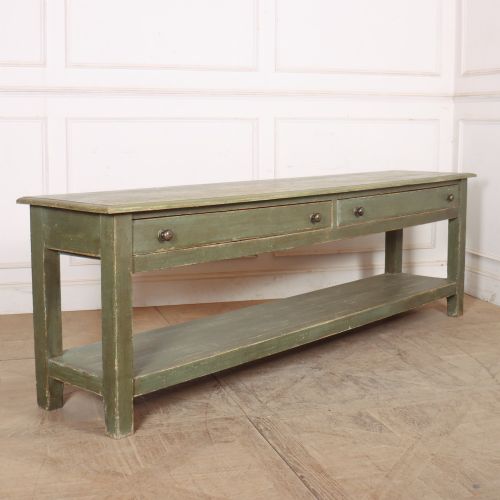


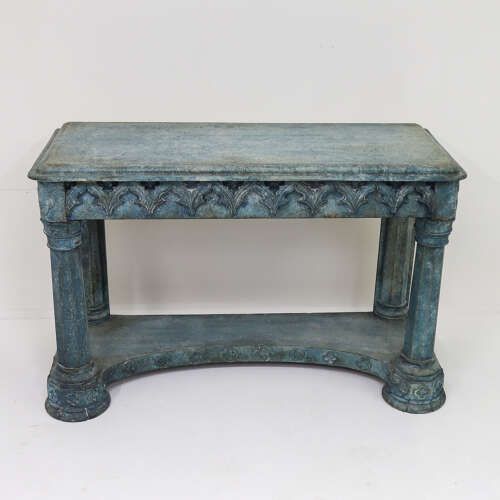


Painted Wood Server Table
A painted wood server table brings practical surface area and historic character into a room, offering functional utility paired with layered decorative charm.
Painted Wood Server Table
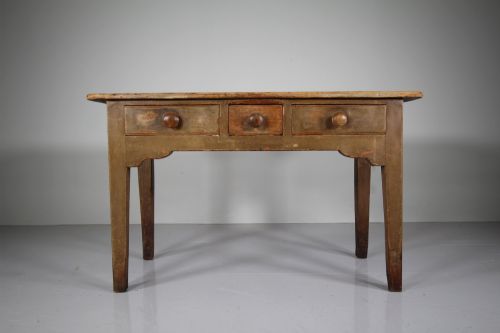
A painted wood server table encompasses robust forms such as serving tables, console tables, dresser bases, and preparation tables originating from various domestic and provincial settings. Buyers searching for a painted wood server table will find examples spanning the eighteenth and nineteenth centuries, reflecting English, French, Italian, Scottish, Welsh, Swedish, and Colonial traditions. These surfaces served practical functions in dining rooms, kitchens, and hallways, evolving from utilitarian workhorses into decorative interior furnishings.
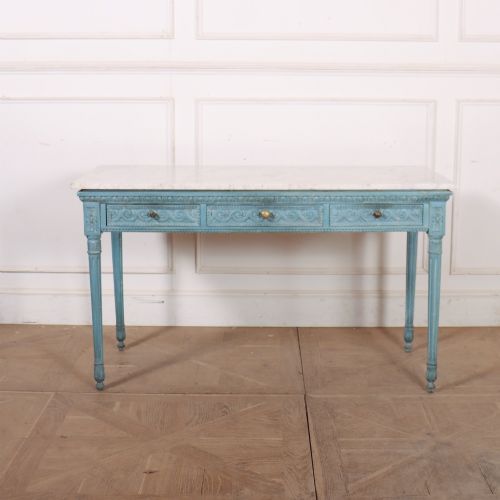
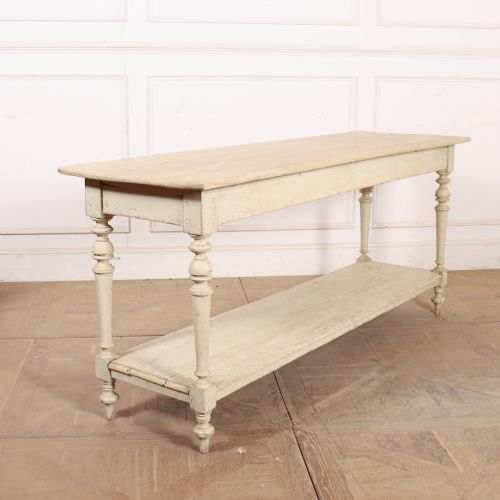
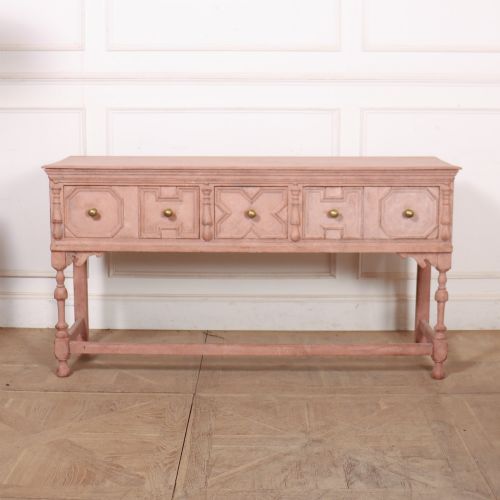
The pieces appearing on this page lean heavily towards nineteenth-century English country house and rustic farmhouse styles, alongside French provincial interpretations and Italian neoclassical examples. Common configurations include potboard dresser bases, console formats, and narrow servers fitted with drawers or lower shelves. Pine and softwood predominate as the primary structural woods, carrying layers of historical paint finishes that define their visual appeal.
How they were made
Construction relies primarily on sturdy timbers such as pine and softwood, shaped into robust frames capable of withstanding heavy daily use in kitchens and dining spaces. Artisans joined these carcases using traditional methods, often incorporating drawers and lower pot-shelves to maximise domestic utility.
Surfaces were finished with applied paint coats, ranging from simple protective layers to decorative schemes that have weathered over decades. Occasional details include carved wooden elements or contrasting marble tops, grounding the furniture in regional aesthetic traditions from English country houses to French provincial workshops.
Regional styles span English country, French provincial, Gothic revival, and Italian neoclassical traditions across console and serving table formats.
What varies in quality
Quality in these tables is defined by the integrity of the timber framing, the retention of authentic historical paint surfaces, and the balance of proportions. Pieces that retain their original structural elements and uncompromised surface patination demonstrate superior craftsmanship and historical honesty.
Regional vernacular details and formal stylistic aspirations also distinguish individual pieces, separating simple utilitarian furniture from more ambitious architectural interpretations like Gothic revival consoles or carved Italian desks.
The Painted Wood Server Table Glossary
- Potboard dresser base
- A heavy base cabinet featuring an open lower shelf traditionally used for storing pots and kitchen utensils. This lower tier provides structural stability and generous display space.
- Drapers table
- A long, utilitarian table originally utilised in cloth merchant shops for measuring and displaying textiles. Their generous proportions and sturdy construction make them popular as large serving surfaces.
- Console table
- A table designed to be fixed against a wall, often supported by ornate brackets or legs. These pieces frequently served decorative purposes in grand hallways or reception rooms.
- Preparation table
- A heavy-duty work table built for culinary tasks in large country houses or domestic kitchens. They prioritise robust wooden surfaces and stable frames over delicate ornamentation.
- Bowfront
- A curved furniture front that swells outward in the centre. This shaping softens the linear profile of side tables and dressers.
Painted Wood Server Table: Frequently Asked Questions
What is a painted wood server table used for?
These tables provide functional surface space in dining rooms, kitchens, and hallways for serving food, displaying decorative objects, or organising everyday items. Their sturdy construction makes them suitable for active domestic use.
Historically, similar forms acted as preparation areas or storage bases for kitchenware, bridging the gap between utilitarian workspace and decorative furniture.
How do I care for an antique painted wood surface?
Maintenance involves dusting with a dry, soft cloth and avoiding moisture or harsh chemical cleaners that can damage historic paint layers. Keeping the furniture away from direct heat sources prevents timber movement.
Gentle handling preserves the fragile patination and original decorative finishes accumulated over centuries of domestic life.
How can I tell the difference between regional styles?
Regional styles reveal themselves through timber choices, joinery techniques, and decorative painted finishes unique to local traditions. For instance, English country pieces often utilise simple pine, whereas Italian or French examples might feature carved details and neoclassical motifs.
Examining the structural proportions helps identify whether a table originates from a rustic farmhouse or a formal provincial interior.
Are these tables suitable for modern kitchens?
Their robust timber frames and practical surface areas make them well-suited as islands, sideboards, or serving stations in contemporary kitchen spaces. The historic character adds visual warmth to modern interiors.
Buyers should verify the height and depth of each piece to ensure comfortable clearance and proportions for daily tasks.