

Rustic Painted Console Table
A rustic painted console table brings practical surface space and enduring country character to hallways and living areas.
Rustic Painted Console Table
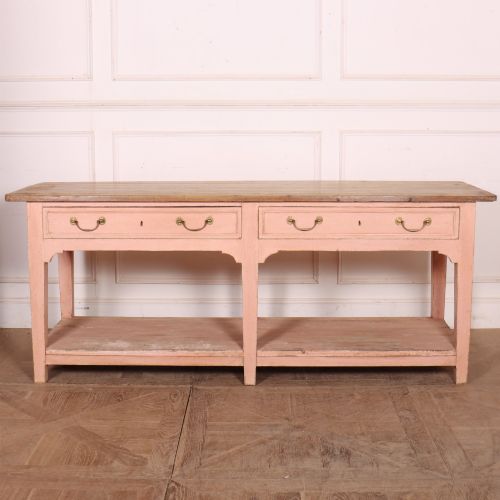
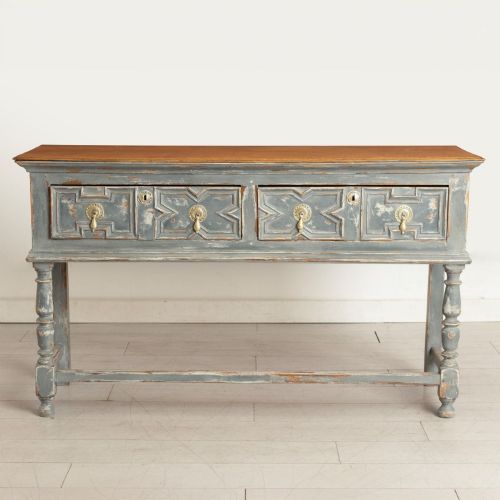
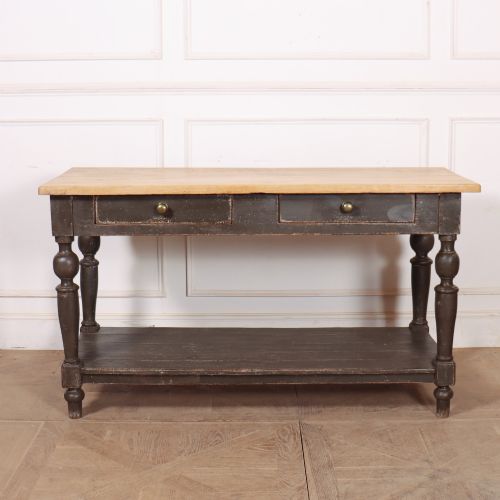
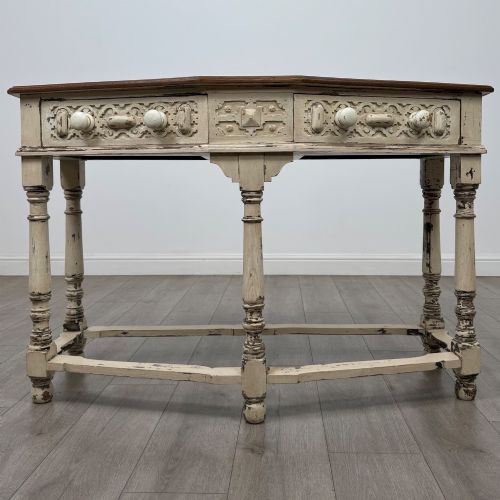
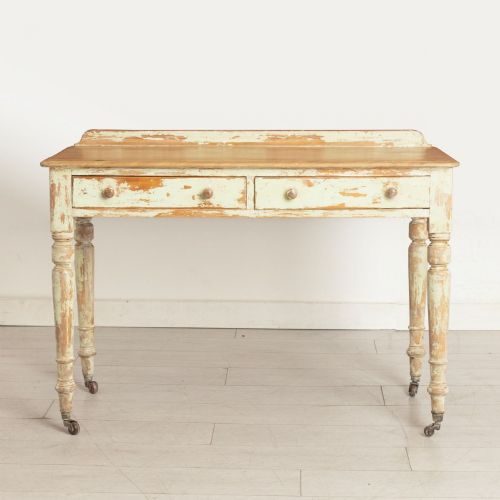
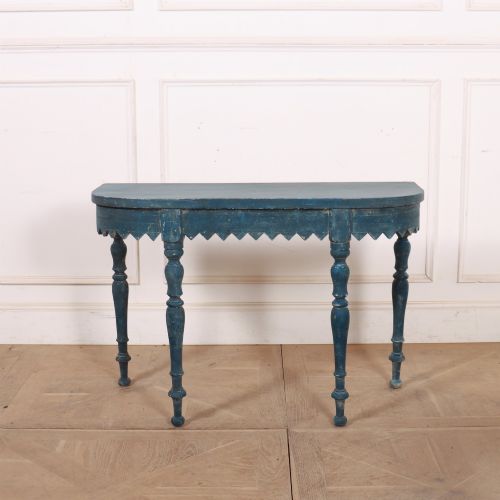
When buyers search for a rustic painted console table, they encounter utilitarian forms originally built for kitchens, dairies, and workrooms that now serve as narrow hallway surfaces or serving tables. These pieces span the eighteenth century through to the early twentieth century, drawing on English, French, Swedish, and Italian country traditions.
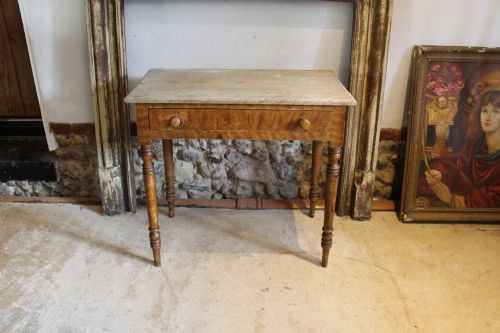
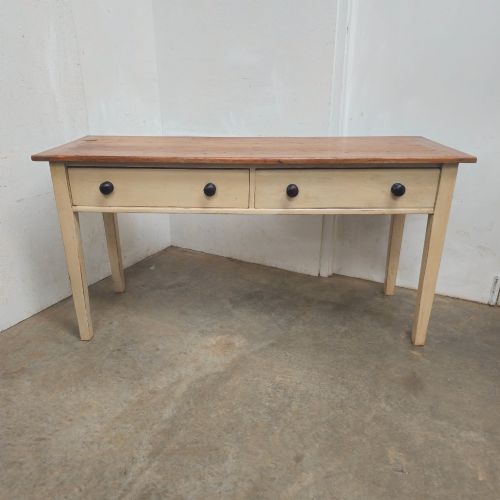
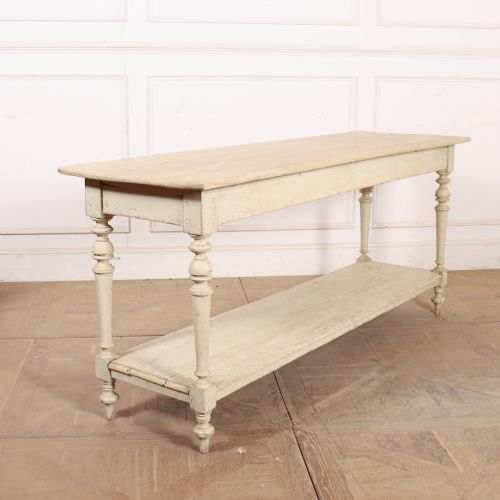
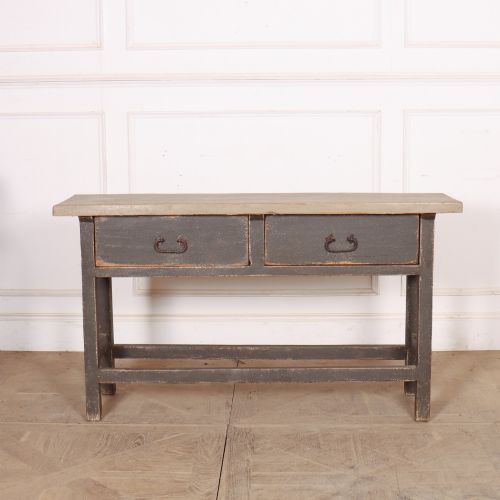
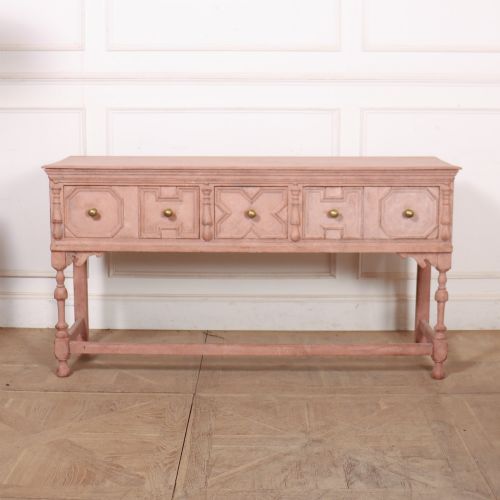
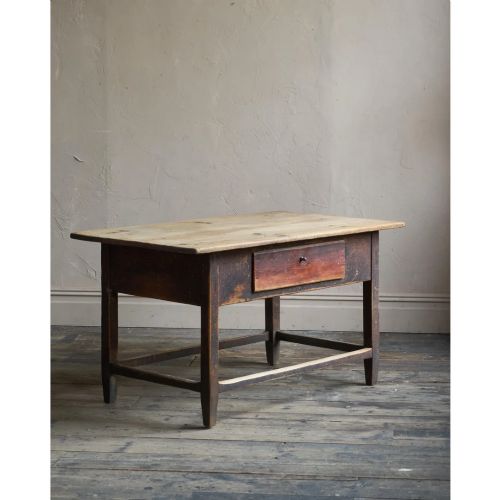
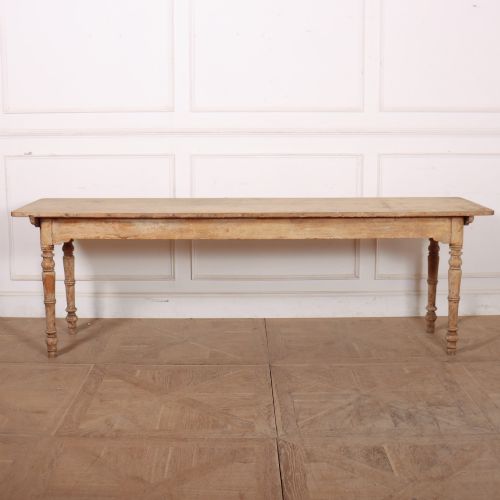
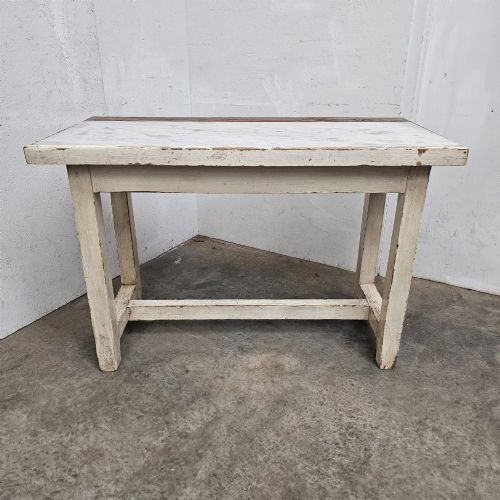
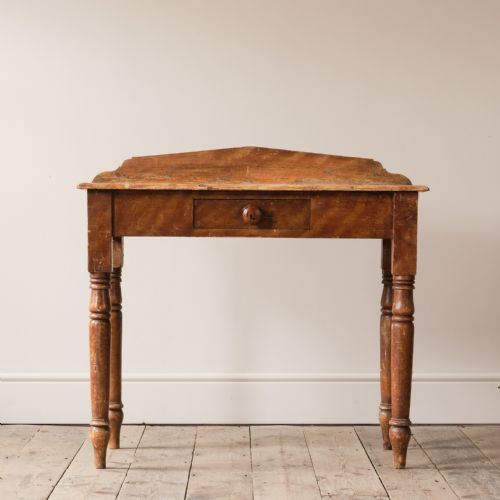
The most common versions on this page are pine or oak dresser bases, serving tables, and drapers tables finished in paint. Many retain original painted surfaces or scumble finishes over sturdy wooden frames.
Formats range from long single-drawer pine consoles to robust potboard bases and marble-topped prep tables. Their narrow proportions make them particularly suited to passages and living spaces where floor area is restricted.
Materials and construction
Construction relies heavily on solid pine and oak, often paired with brass hardware or metal details for structural strength. Timbers are joined using traditional methods suited to hardworking domestic and commercial environments.
Surfaces are finished with layers of paint or scumble, applied to protect the wood and provide a decorative colour. Over decades of use, these painted finishes acquire natural wear that defines their character.
The listings feature pine and oak timber across periods ranging from the eighteenth century to the Edwardian era.
Assessing quality and authenticity
Quality rests in the integrity of the timber and the preservation of the original painted surface rather than applied decoration. Pieces that retain their early or original paint layers command greater interest among collectors of country furniture.
Proportions and functional elements, such as working drawers, box stretchers, and potboards, dictate the utility and visual balance of the table. Formats that remain unaltered from their working origins demonstrate superior craftsmanship.
The Rustic Painted Console Table Glossary
- Console table
- A narrow table designed to stand against a wall, frequently utilised in hallways and living rooms. These forms often feature drawers or open lower shelves.
- Dresser base
- The lower section of a kitchen dresser, constructed as a sturdy freestanding sideboard with cupboards or drawers. They provide substantial surface and storage space.
- Scumble
- A decorative painting technique involving semi-opaque layers dragged or mottled over a base colour to imitate grain. It was widely applied during the Victorian period.
- Potboard
- A lower slatted shelf fitted between the legs of a serving table or dresser base. Originally used for storing pots and pans, it adds stability to the frame.
Rustic Painted Console Table: Frequently Asked Questions
Where should I place a console table?
These narrow tables suit hallways, entryways, and narrow living spaces where depth is limited. Their shallow profiles allow them to sit flat against walls without obstructing movement.
They also function effectively as serving surfaces in dining areas or as writing desks in bedrooms.
How do I care for painted wood?
Dust regularly with a dry or slightly damp cloth to prevent the accumulation of dirt on fragile painted surfaces. Avoid harsh chemical cleaners that can strip or discolour historic paint.
Keep pieces away from direct heat sources and strong sunlight to prevent the timber from splitting and the paint from fading.
What is a drapers table?
A drapers table is a long, utilitarian work table originally utilised in fabric shops for measuring and cutting cloth. They typically feature deep proportions and useful under-shelf storage.
Their elongated rectangular shapes make them distinctive alternatives to standard console tables.
Are these tables solid wood?
The pieces listed are constructed from solid timbers such as pine, oak, and birch. Traditional joinery methods were employed to ensure durability in busy kitchens and workrooms.
Secondary woods may be found in drawer linings and internal framing, which is standard for period cabinet making.