







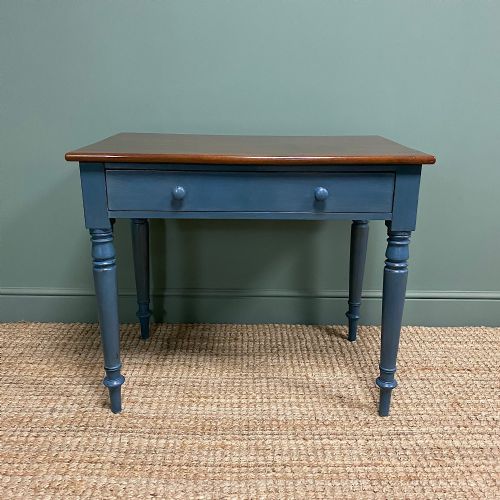


Antique Blue Writing Table
An antique blue writing table brings period character and practical workspace into a room, combining painted timber surfaces with historical utility.
Antique Blue Writing Table
An antique blue writing table encompasses various forms designed for surface work and storage, drawing from periods such as the Georgian era, the nineteenth century, and the early twentieth century. Buyers searching this phrase encounter diverse regional interpretations, notably English country furniture and Scandinavian painted pieces.
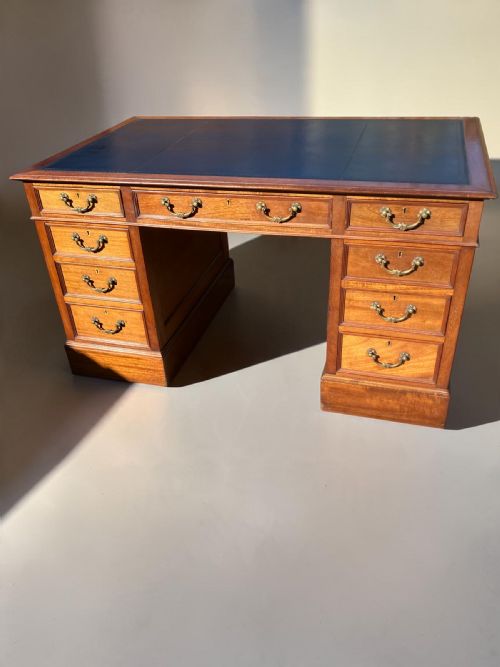
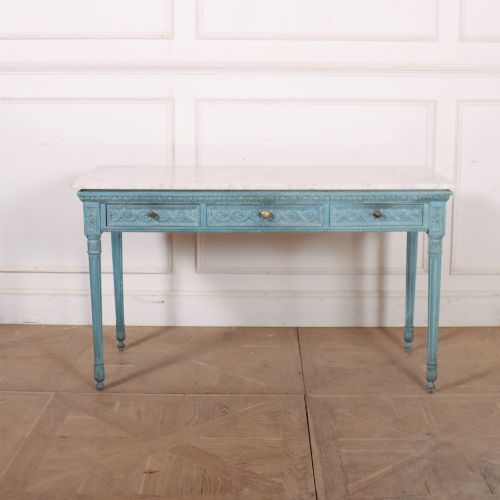
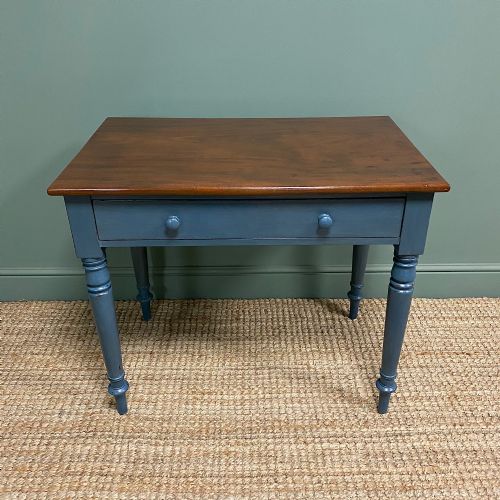
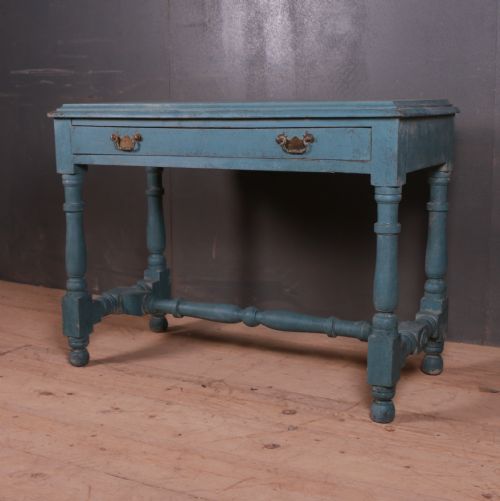
The selection frequently includes side tables, pedestal desks, and occasional tables that have received historic blue paint finishes. These pieces originate from distinct design traditions, ranging from rustic farmhouse styles to refined Regency and Italian neoclassical aesthetics.
Makers and workshops utilised sturdy timbers like mahogany, pine, and satinwood beneath layers of pigment. Surviving examples demonstrate how functional domestic furniture transitioned through successive decorative movements over the decades.
How they were made
Cabinetmakers constructed these tables using solid timbers such as mahogany, pine, and satinwood, often incorporating brass hardware for handles and fittings. Secondary woods provided structural support within drawers and internal framing.
Surfaces received layers of traditional paint, which weathered naturally over time to create patinated finishes unique to Scandinavian and English country pieces. Leather insets frequently lined the writing surfaces of desks to provide a smooth, durable medium for handwriting.
Antique Blue Writing Table Retail Price Guide 2026
Typical asking prices for blue writing table among the pieces listed under this phrase on Sellingantiques today, from the lower quarter to the upper quarter. They describe what is for sale here now, not the wider market.
Several tables wear their Scandinavian coats of blue paint like stubborn winter coats refusing to acknowledge the spring.
What varies in quality
The grade of timber and the integrity of the original construction distinguish finer examples from simpler vernacular pieces. Superior items display careful joinery, such as dovetailed drawer construction and well-balanced proportions.
The character and preservation of the painted surface significantly influence the overall appeal. Original or early pigment layers that show honest age without excessive modern intervention represent a higher standard of craftsmanship.
William Trotter·Gillows
The Antique Blue Writing Table Glossary
- Pedestal desk
- A large freestanding desk comprising two supporting pedestals of drawers with a central desktop. This form offers substantial storage and a formal presence.
- Satinwood
- A pale, dense timber prized for its smooth texture and golden sheen. Cabinetmakers utilised it extensively during the Georgian and Victorian periods for fine veneer and solid furniture.
- Regency
- An English design style spanning the early nineteenth century characterised by classical restraint and neoclassical motifs. Furniture from this period often exhibits clean lines and architectural influence.
- Partners desk
- A double-sided desk designed for two people to work opposite one another. These large pieces feature drawers and cupboards accessible from both sides.
Antique Blue Writing Table: Frequently Asked Questions
What periods do these blue writing tables come from?
The available pieces span multiple eras, including the Georgian period, the nineteenth century, and the early twentieth century. Various regional styles emerged during these times.
Craftsmen across England and Scandinavia produced these items using traditional methods characteristic of their respective decades.
How were these tables used originally?
These tables served as functional surfaces for correspondence, reading, and administrative tasks in domestic and library settings. Desks provided secure storage for documents within fitted drawers.
Smaller variants acted as lamp tables or occasional surfaces in sitting rooms and parlours.
What materials are common in these tables?
Timbers such as mahogany, pine, and satinwood form the primary structure of these pieces. Brass hardware and leather inserts frequently complement the woodwork.
Paint finishes appear extensively, particularly on Scandinavian country furniture and regional English tables.
How do I distinguish between different regional styles?
English country pieces often employ mahogany and pine with traditional vernacular forms, whereas Swedish pieces favour lighter painted pine structures. Italian examples tend to incorporate neoclassical carving.
Examining the underlying timber and decorative motifs helps identify the geographic origin of each item.