
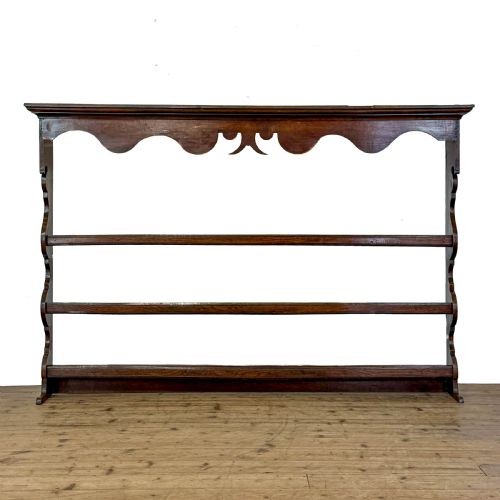
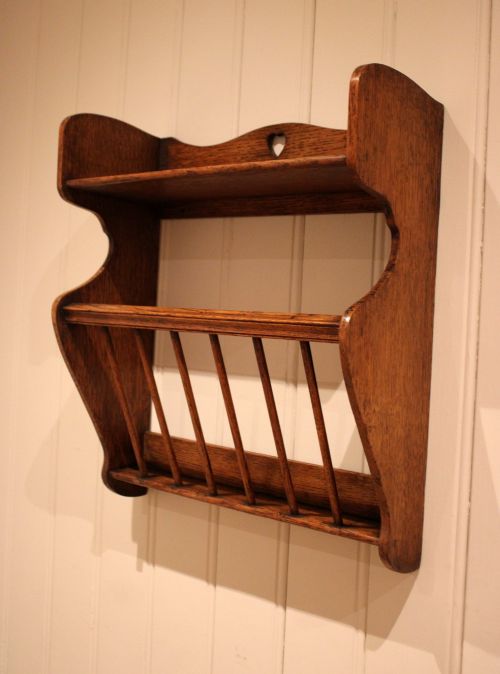


Rustic Oak Hanging Shelf
These rustic oak hanging shelf pieces bring sturdy timber storage to walls, offering practical display space for plates, books and daily items.
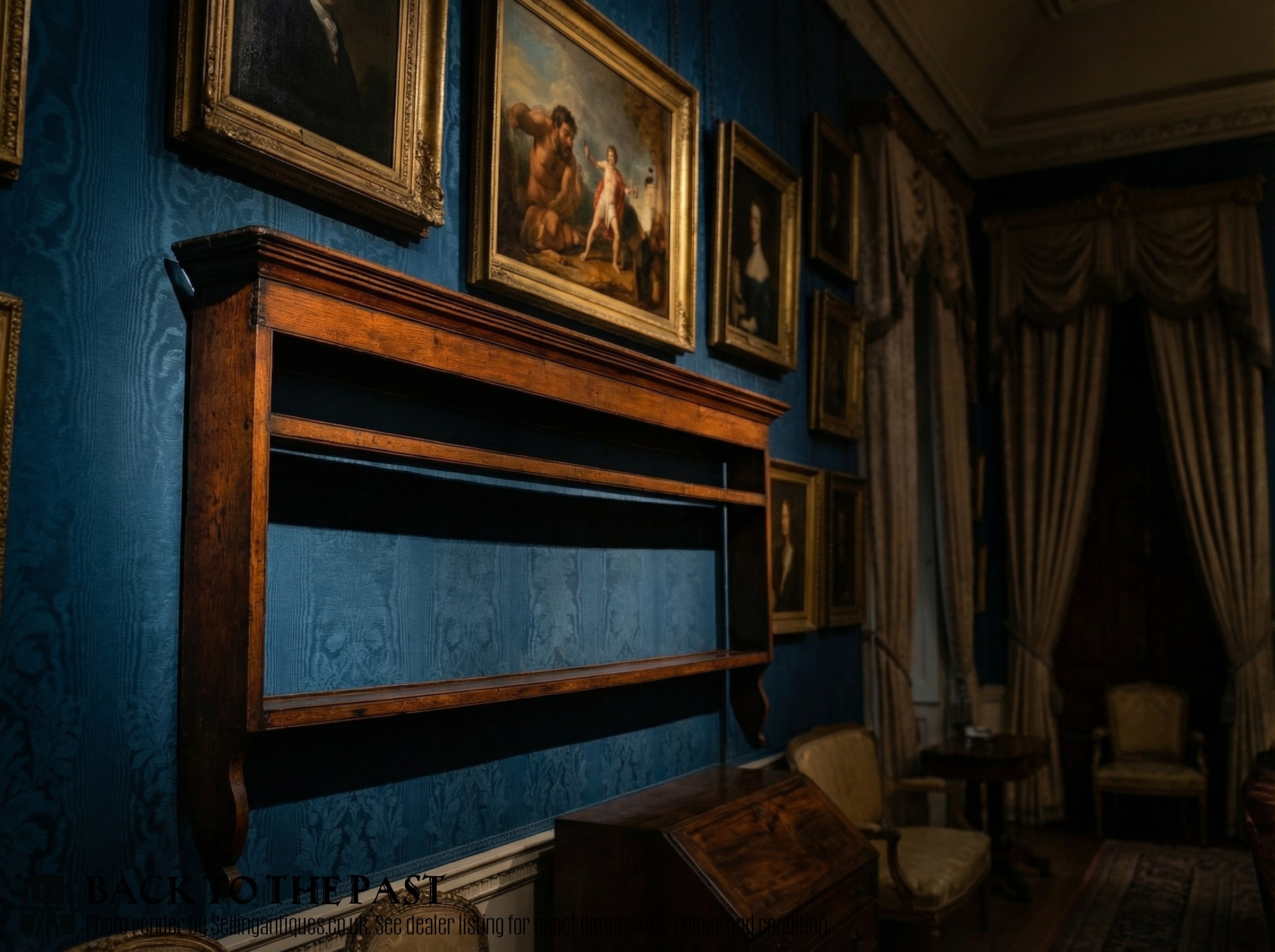
Rustic Oak Hanging Shelf
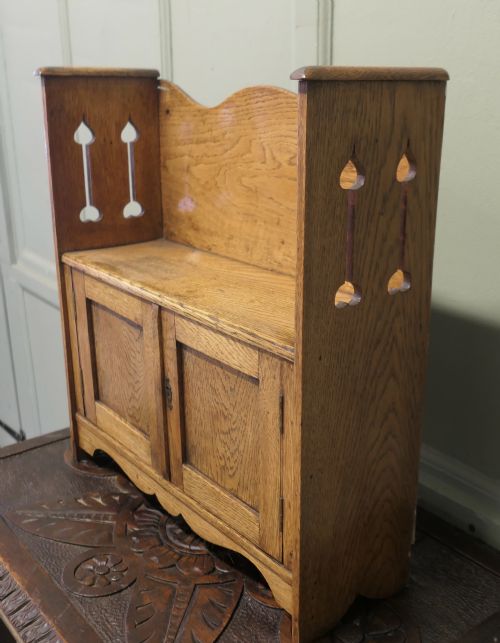
A rustic oak hanging shelf serves as a practical wall storage unit, appearing in forms such as open plate racks, enclosed wall cabinets and simple wall shelves. These pieces mount directly to walls to utilise vertical space in kitchens, hallways and living rooms.
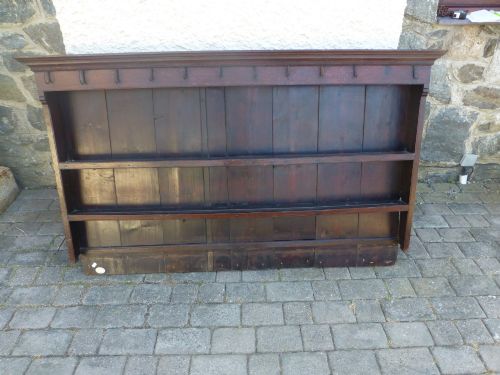
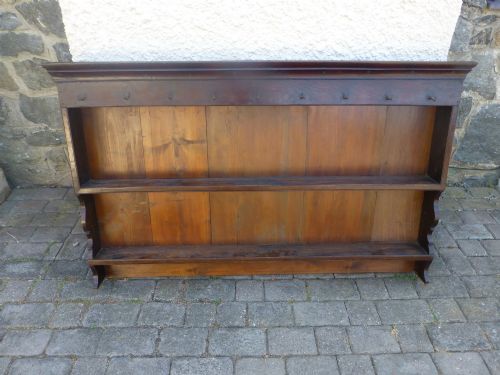
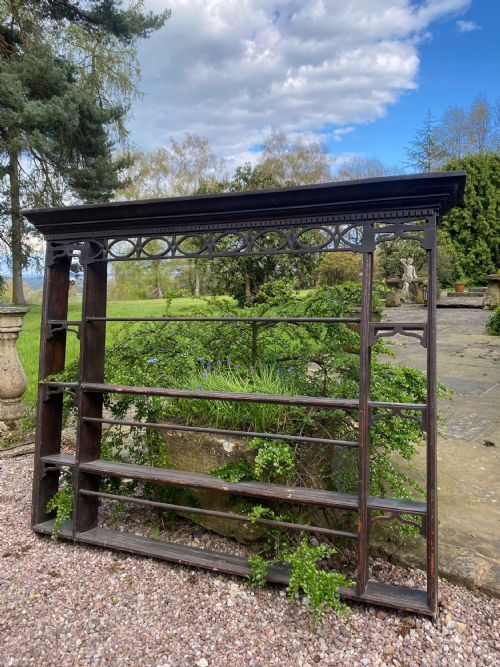
The versions most commonly met on this page date from the eighteenth and nineteenth centuries, spanning Georgian, English Country, Arts and Crafts, Gothic Revival, Edwardian and French Provincial styles. Many examples function specifically as delft racks designed to display ceramic plates and platters safely against timber rails.
Makers constructed these wall-mounted items using solid oak boards, often incorporating shaped shelves, hanging pegs or subsidiary magazine racks. Some variations include mirrored panels or glazed doors, adapting the basic hanging shelf format for use as cloakroom mirrors or corner cupboards.
Materials and construction methods
Carpenters built these shelves using solid oak, sometimes utilising stained oak or general wood elements alongside the primary timber. The natural grain and heavy weight of oak provided the structural strength necessary to support heavy ceramic plates and books over centuries of daily use.
Wrought iron and brass hardware frequently appear on these pieces, forming functional hinges, hanging brackets and decorative fixtures. Metal components were forged or cast by hand to secure the wooden panels and support the weight of the hanging racks against interior walls.
Listings for rustic oak hanging shelf items span from seventeen-fifty through the nineteenth century, including Georgian and Arts and Crafts examples.
Assessing quality in rustic oak hanging shelves
Quality in these wall units rests on the joinery methods and the thickness of the timber used for the shelves and backing boards. Heavier oak construction with well-fitted joints distinguishes sturdier examples from lighter, purely decorative alternatives.
The sophistication of the stylistic details, such as shaped shelf edges, moulded cornices and hand-forged ironwork, elevates the standard of the piece. Well-preserved surface patination and honest timber weathering demonstrate greater age and careful handling.
The Rustic Oak Hanging Shelf Glossary
- Delft rack
- A wooden wall-mounted rack featuring narrow shelves and protective retaining rails designed specifically to display ceramic plates upright. This form originates from the period when tin-glazed earthenware became popular in British and European homes.
- Plate rack
- A storage fixture fitted with horizontal slats or grooved bases to hold plates safely in a vertical position. They typically mount directly onto kitchen or dining room walls.
- Hanging rack
- An open wall-mounted frame utilised for storing domestic items, utensils or clothing accessories off the floor. These pieces rely on wall fixings rather than floor support.
- Corner cupboard
- A cabinet or shelving unit built with an angled footprint to fit snugly into the internal corner of a room. Many examples incorporate shaped internal shelves for display purposes.
Rustic Oak Hanging Shelf: Frequently Asked Questions
How were these shelves originally used?
These wall-mounted units served domestic functions such as holding ceramic plates, displaying household utensils, or storing books and magazines.
Kitchens and dining spaces utilised open plate racks for daily crockery access, while hallways and cloakrooms employed versions with mirrors and hanging pegs.
How do I hang a heavy oak shelf securely?
Mounting heavy oak furniture requires locating solid wall studs or masonry anchors capable of supporting substantial timber weight.
Professional installation using appropriate fixings ensures the wall brackets hold the load safely without pulling away from the plaster.
How can I tell eighteenth century oak from later periods?
Earlier eighteenth century examples often display hand-sawn timber marks, pegged joints, and distinctive surface patination accumulated through long use.
Nineteenth century and later pieces typically show more uniform machine milling and different hardware fixings upon close inspection.
Where should I place a hanging shelf in my home?
These versatile timber shelves fit well in kitchens for dish display, entryways for small items, or living areas for books.
Consider wall space proportions and ensure the chosen room has adequate structural support before mounting.