
Rustic Kitchen Work Table
A rustic kitchen work table is a sturdy timber surface built for practical toil, bringing honest grain and daily utility to modern rooms.
Rustic Kitchen Work Table
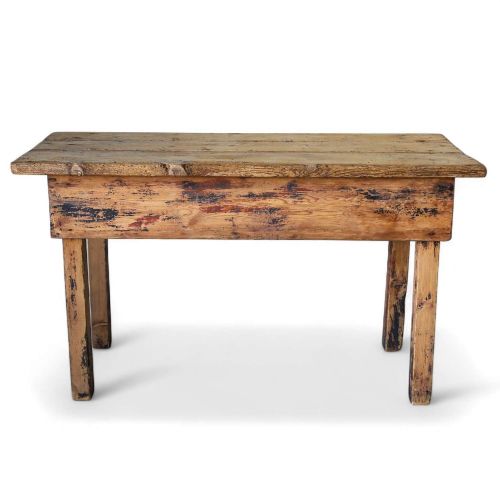
A rustic kitchen work table represents a utilitarian surface originally built for preparing food, processing dairy, or carrying out trades in domestic and commercial spaces. These pieces span the nineteenth century and the early twentieth century, drawing from English, French, Welsh, Scottish, and Swedish origins.
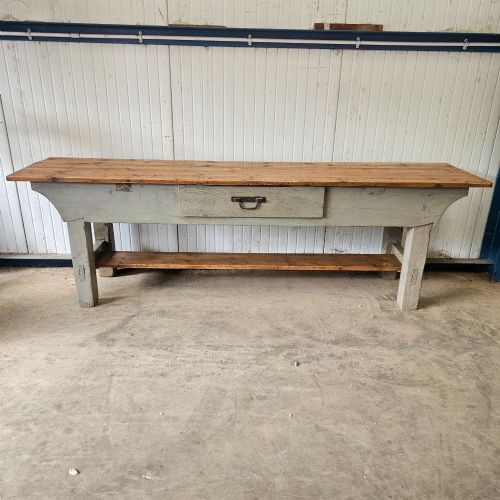
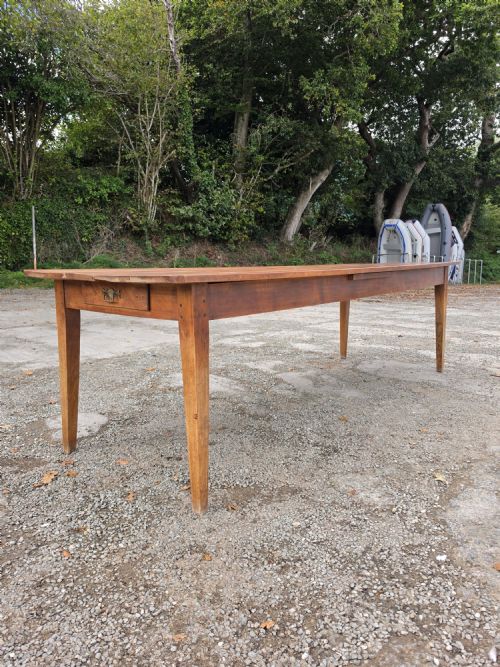
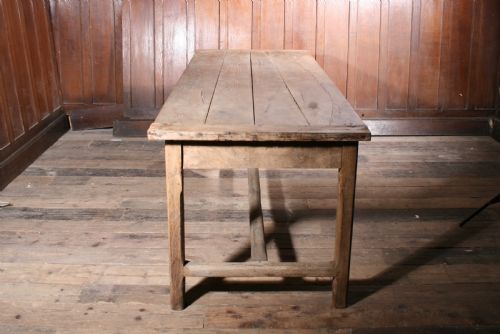
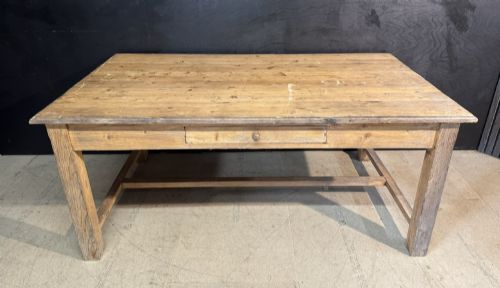
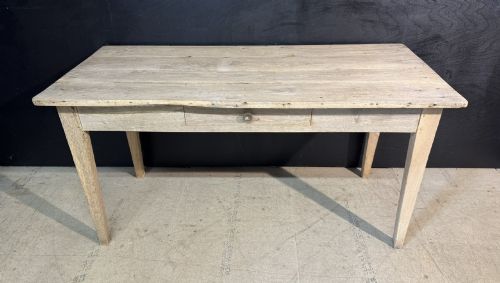
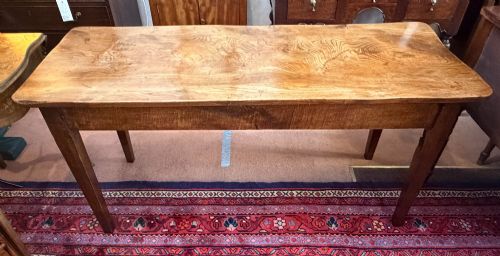
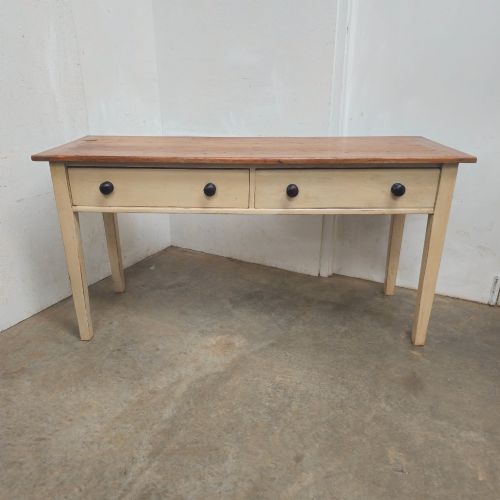
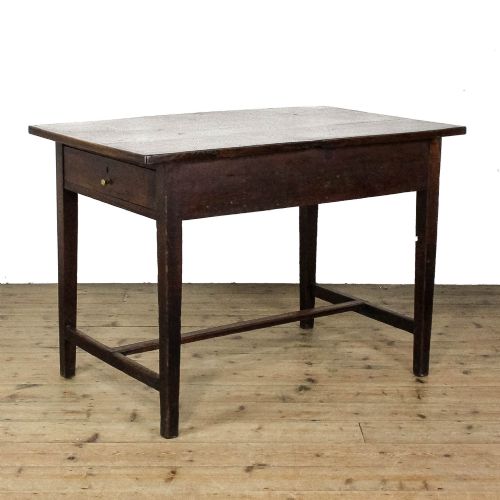
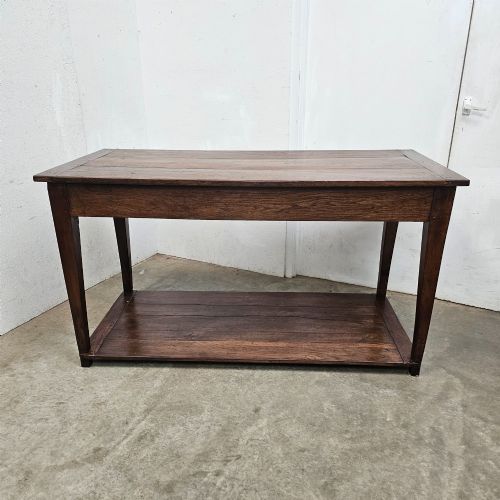
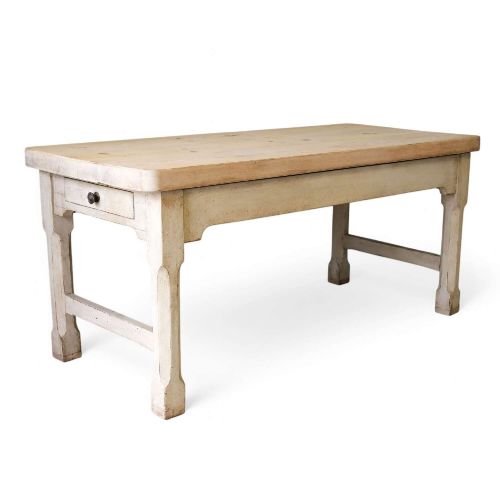
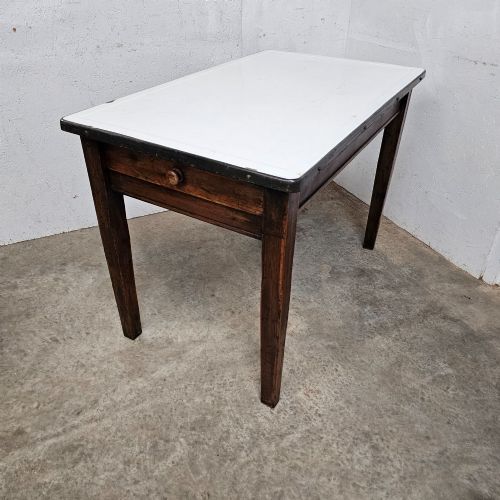
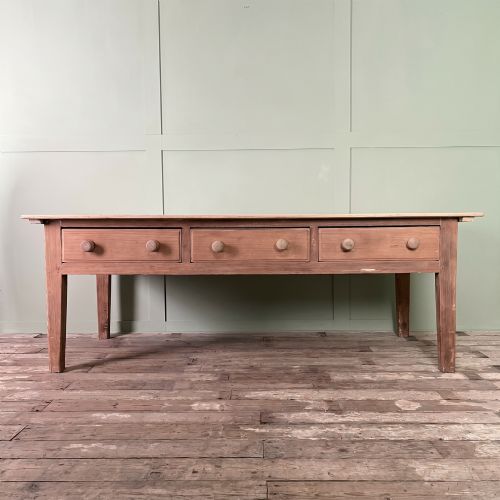
The most common forms on this page are pine farmhouse and prep tables, often fitted with a single drawer to the front frieze or built with two tiers. Buyers also encounter heavier oak refectory designs, scrubbed sycamore surfaces, and French artisans' workbenches complete with vices.
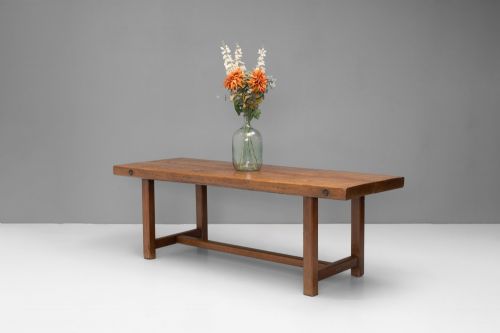
Makers shaped these objects for heavy use in sculleries, dairies, and kitchens, resulting in robust proportions and practical overhangs. The aesthetic relies upon honest construction rather than decorative veneer, making them adaptable as dining surfaces or kitchen islands.
Materials and construction
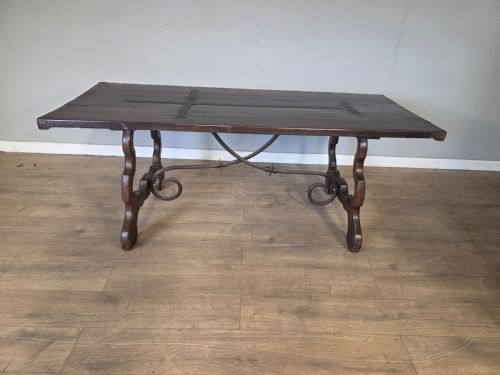
Makers relied primarily on pine, oak, sycamore, and fruitwood for the tops and frames, selecting timber for density and resilience against daily pounding. Iron and wrought iron appear in structural braces, brackets, and vises on heavier workbenches.
Surfaces frequently show the marks of past labour, constructed with thick planks joined by cleated ends to prevent warping during scrubbing and food preparation. Paint finishes range from original Swedish Falu red and early painted legs to later coatings applied during the nineteenth century.
Some French artisans' workbenches on this page retain their original wooden vises, ready to clamp down on a loaf of bread or a modern laptop.
Distinguishing quality in work tables
Quality rests in the integrity of the timber framing and the honesty of the surface wear accumulated through active use. Tables retaining original paint surfaces or untouched scrubbed tops carry greater visual clarity than those stripped down aggressively.
Proportion and scale dictate the hierarchy of these pieces, from modest domestic scullery tables to monumental drapers' tables spanning several metres. Structural honesty, such as pegged joints and untouched drawer runners, separates standard utilitarian pieces from exceptional examples.
Trussant And Cie
The Rustic Kitchen Work Table Glossary
- Dairy table
- A specialised work surface designed for cheese making and milk processing, usually featuring slatted lower tiers to allow air circulation around cooling pans.
- Drapers table
- An elongated, wide table historically utilised in textile shops for measuring and cutting cloth, characterised by generous proportions and clean lines.
- Frieze
- The horizontal band situated directly beneath the table top, frequently housing one or more drawers in kitchen and prep furniture.
- Cleated ends
- Wooden battens fixed across the ends of plank table tops to counteract natural timber movement and splitting.
- Falu red
- A traditional deep red paint derived from copper mining waste in Sweden, utilised extensively to preserve exterior and interior softwood furniture.
Rustic Kitchen Work Table: Frequently Asked Questions
What is a rustic kitchen work table used for?
These tables serve as robust preparation surfaces, kitchen islands, or everyday dining tables in modern homes. Their original purpose involved heavy domestic tasks such as kneading dough, preparing meat, and sorting dairy.
The deep timber tops and sturdy frames handle daily wear with ease, while built-in drawers provide convenient storage for utensils and linens.
How do I care for an antique wooden top?
Maintain scrubbed wooden surfaces by wiping them clean with a damp cloth and avoiding harsh chemical cleaners. Periodic application of natural oils or beeswax nourishes the grain without sealing away the history.
Keep these pieces away from direct heat sources and extreme humidity fluctuations to prevent the timber planks from splitting or warping.
Are these tables suitable for daily family dining?
Most examples provide ample legroom and stable surfaces that accommodate daily family meals comfortably. The generous proportions of farmhouse and drapers tables make them natural gathering spaces.
Existing marks and stains on the timber surface mean you can use the table without worrying about acquiring new signs of life.
How can I tell the age of a work table?
Age is determined through construction methods, tool marks left on the timber, and the natural patina accumulated over generations of use. Hand-cut joints, original paint layers, and iron hardware offer clear clues to nineteenth-century origins.
Secondary woods used in drawer linings and framing structures also help place the piece within a specific regional tradition.