
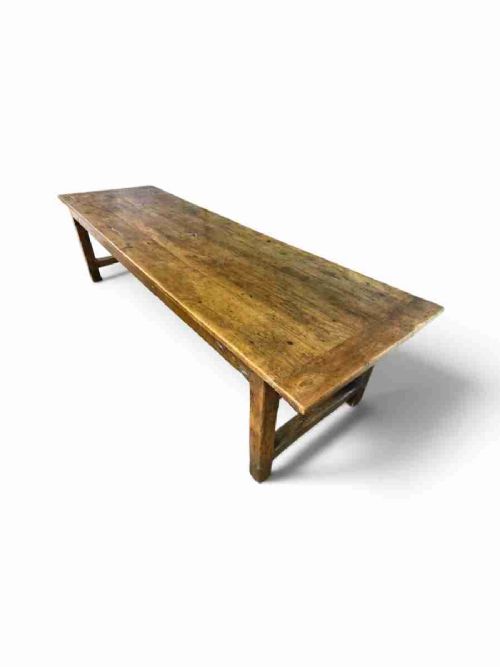
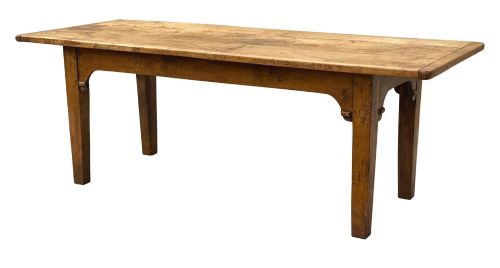
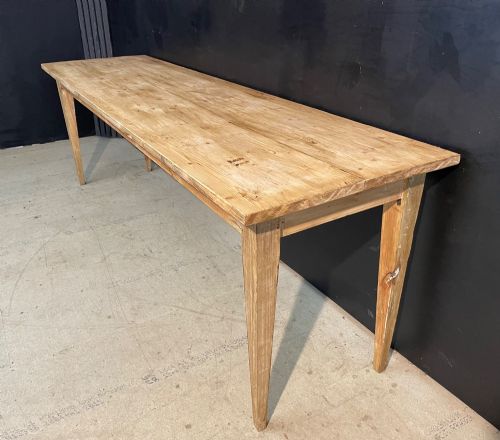
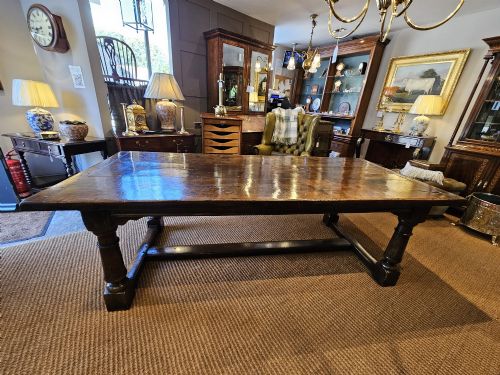
Large Refectory Dining Table
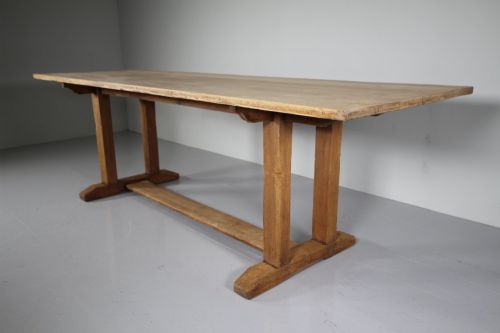
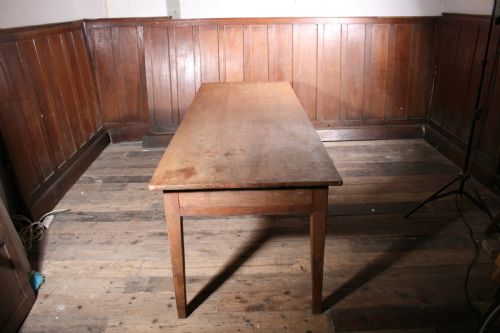
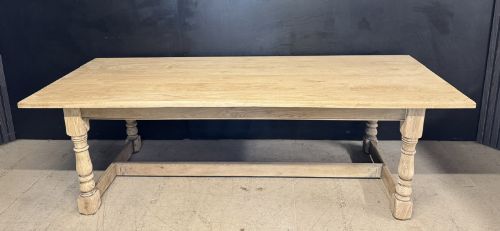
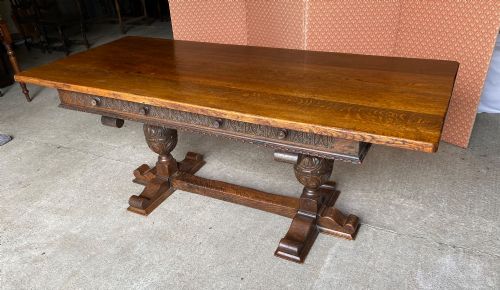
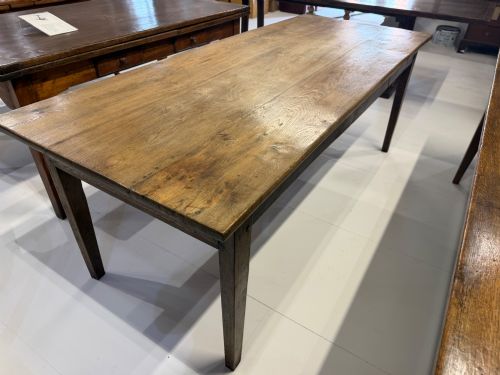
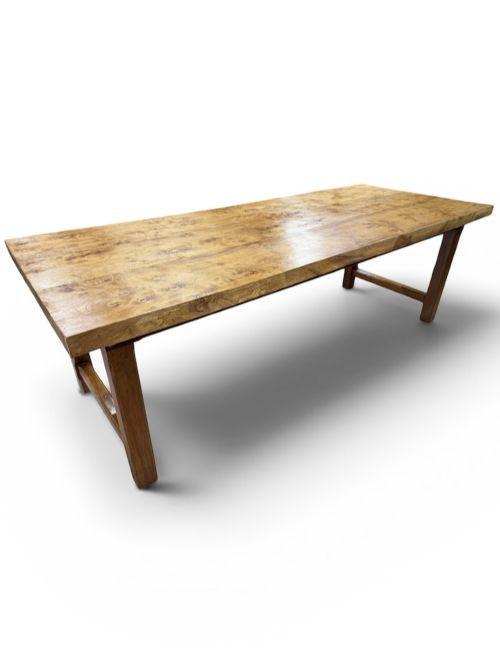
When you need a large refectory dining table, you are looking at substantial boards and trestle bases built to gather people for long meals.
Large Refectory Dining Table
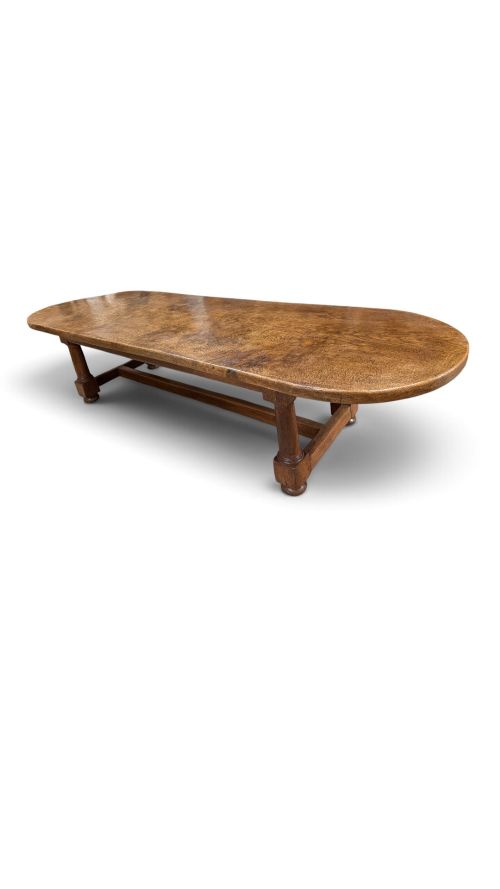
A large refectory dining table provides a generous surface rooted in monastic and domestic dining traditions, designed to seat many guests comfortably. When searching this phrase, buyers encounter substantial boards resting on trestle ends, slab ends, or sturdy legs.
The examples gathered here span from the eighteenth century through the Edwardian era and the early twentieth century. Many reflect rustic farmhouse or provincial origins alongside revival styles such as Jacobean and Tudor.
How they were made
Joiners built these large refectory dining table pieces using solid timber boards fixed to sturdy frames with traditional pegged or tenoned joints. Oak, elm, and pine dominate the construction, selected for their strength and ability to span long distances without sagging.
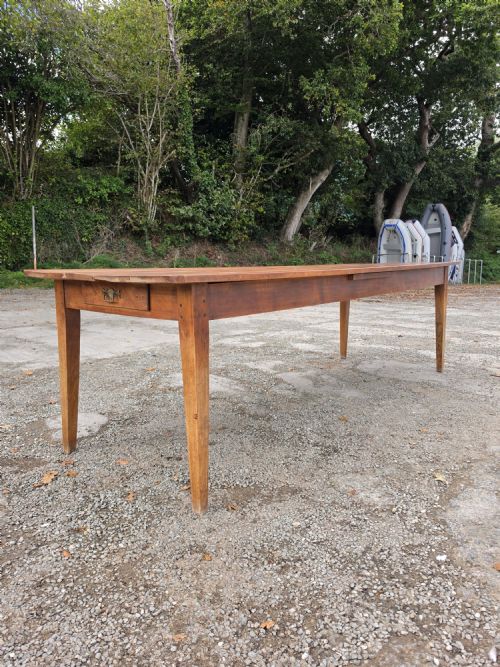
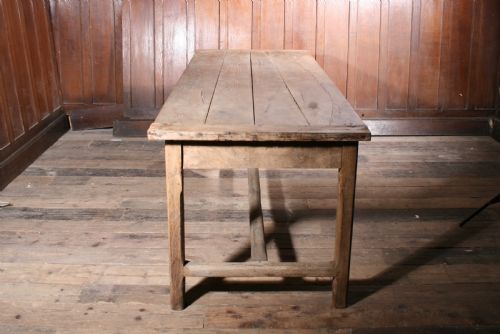
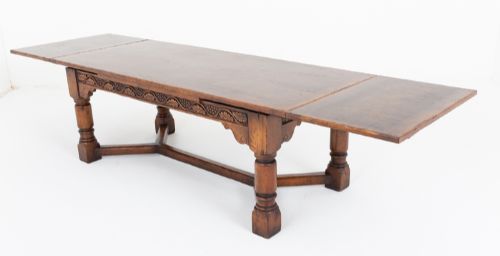
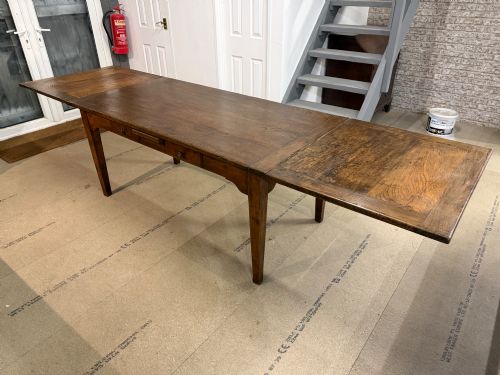
Surface preparation relied on hand planing, waxing, or simple oiling to protect the timber while leaving the natural grain visible. Many feature single or double plank tops joined edge-to-edge, sometimes supplemented by draw-leaf extension mechanisms.
Listings feature eighteenth-century and nineteenth-century examples alongside Edwardian and 1930s revival pieces in solid oak, pine, and elm.
What varies in quality
The distinction between ordinary and exceptional examples rests upon the thickness and selection of the timber boards. Single plank surfaces and dense, well-figured oak or fruitwood elevate a piece above standard multi-board constructions.
Proportion and structural integrity define the upper tier, where trestle ends and stretchers integrate harmoniously without excessive reinforcement. Finer pieces balance heavy mass with careful hand-finished details on the legs and edges.
Waring and Gillow·Heals·Mouseman
The Large Refectory Dining Table Glossary
- Refectory table
- A long dining table originally used in monastic dining halls. These pieces feature elongated boards supported by trestles or sturdy legs connected by foot stretchers.
- Draw-leaf
- An extension system where two leaves slide out from beneath the main top. This mechanism expands the seating capacity while keeping the surface stable.
- Trestle ends
- Upright supports placed near the ends of a table rather than corners. They offer extra legroom along the length of the boards.
- Plank top
- A surface constructed from several long boards joined together edge-to-edge. Single plank versions use one wide board per width, which is less common.
- Jacobean Revival
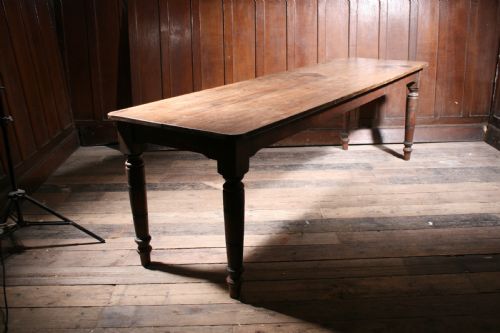
- A nineteenth or twentieth-century style imitating seventeenth-century English furniture. It employs dark oak, turned legs, and geometric panel carving.
Large Refectory Dining Table: Frequently Asked Questions
How many people can sit at a large refectory dining table?
Most large refectory dining table examples comfortably seat eight to twelve diners depending on length. The absence of corner legs allows chairs to tuck neatly along the full span.
Extended versions and four-metre lengths provide even greater capacity for large gatherings. Benches often accompany these pieces to seat additional guests along the sides.
Are these tables suitable for daily family use?
Solid timber construction makes these tables exceptionally durable for everyday meals and kitchen activities. Hardwoods like oak and elm withstand regular daily wear without losing structural integrity.
Existing marks and patination from past generations mean new everyday use adds to their history rather than harming them. Simple waxing helps maintain the protective surface against daily spills.
How do I identify an eighteenth-century table from a later revival?
Early eighteenth-century examples show hand- cut joinery, peg construction, and deep natural patination acquired through centuries of polishing. Tool marks left by pit saws and hand planes often remain visible on the underside and edges.
Revival pieces from the Victorian and Edwardian periods use similar styles but typically feature machine-sawn timber and more uniform surfaces. Hardware and secondary woods inside the frame also help indicate the actual period of manufacture.
What is the difference between a refectory table and a harvest table?
Refectory tables traditionally feature heavy rectangular proportions with stretcher-joined trestle or pillar bases designed for monastic halls. They emphasise architectural mass and structural rigidity.
Harvest tables generally derive from farmhouse traditions with lighter underframes, often utilising pine or fruitwood. They were built for seasonal agricultural dining and tend to have simpler leg configurations.