
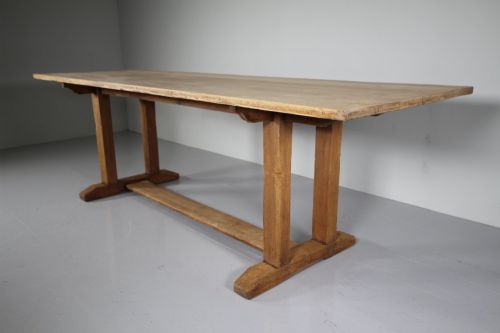
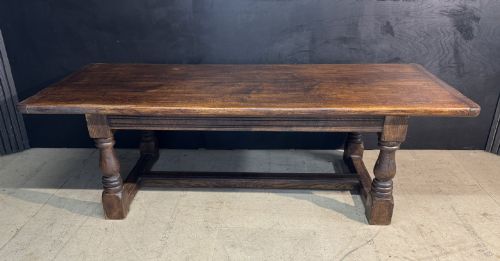
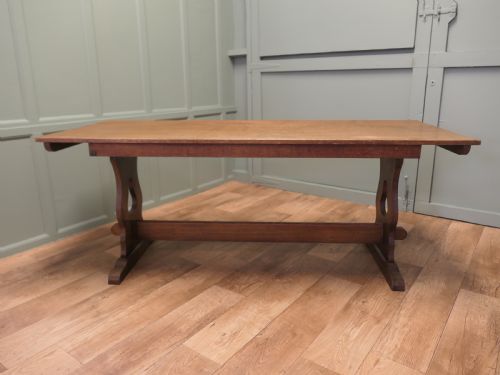
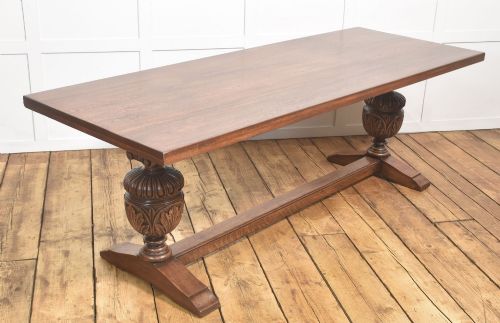
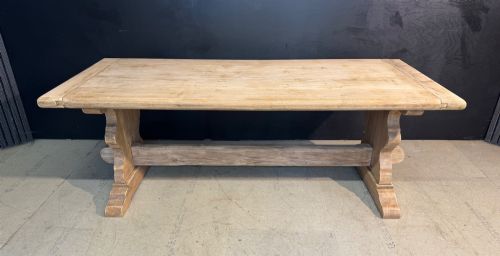
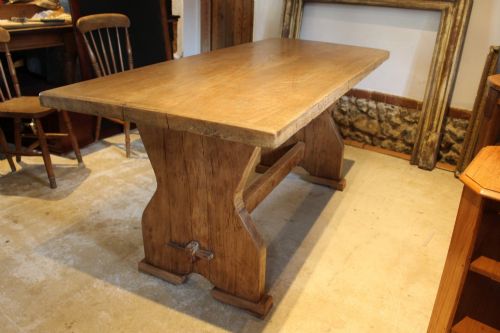
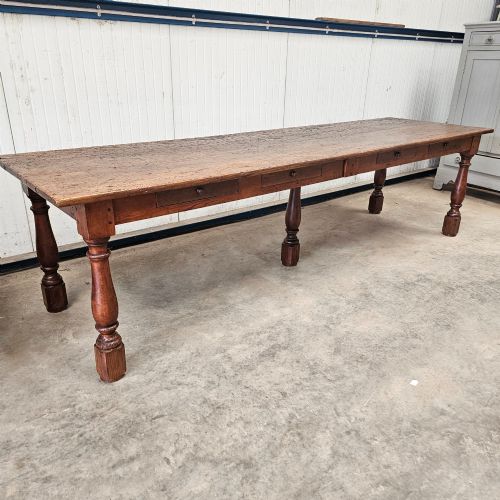
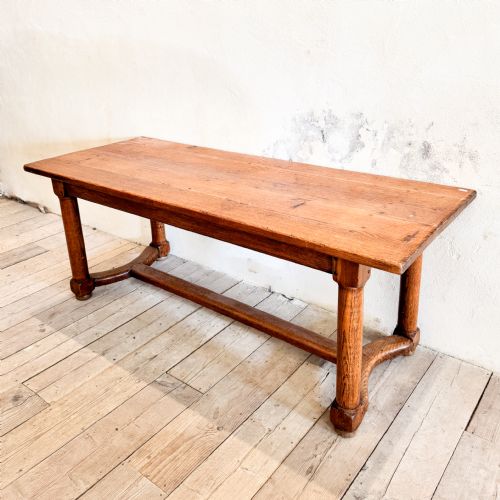


Six Seater Refectory Table
A six seater refectory table anchors a room with linear proportion and solid presence, providing daily utility for dining.
Six Seater Refectory Table
When you search for a six seater refectory table, you encounter long, narrow dining formats built for communal meals. The evidence shows these pieces span the Victorian and Edwardian eras through to the 1930s, drawing upon earlier vernacular designs.
These tables serve primarily as kitchen or dining centerpieces, designed to accommodate six diners comfortably along their elongated sides. Their origins stretch across British and French provincial traditions, bringing substantial character to domestic interiors.
How They Were Made
Joiners constructed these tables predominantly from solid oak, pine, and chestnut, utilising thick timber planks for the tops to withstand heavy daily use. Supporting structures frequently incorporate H-stretchers or bulbous carved supports for rigidity.
Surface finishes rely on natural wax or polishing to protect the timber while revealing the grain structure of the wood. Iron elements appear in structural brackets or functional additions such as drawers.
One exceptional nineteenth-century chestnut table includes eight integrated drawers for storing cutlery.
What Varies in Quality
The distinction between tiers rests upon timber selection and structural integrity, where solid oak boards and quarter-sawn surfaces denote superior manufacture. Finer pieces demonstrate thoughtful joinery, such as pegged joints and balanced proportions.
Decorative detailing also separates standard utility tables from more ambitious workshops, seen in carved bulbous supports or specialised woods like golden oak and satin birch. Tables retaining genuine period patination and substantial timber thickness represent the higher end of the range.
The Six Seater Refectory Table Glossary
- Refectory table
- A long, narrow dining table traditionally used for communal meals in large halls. This form prioritizes length and stability.
- H-stretcher
- A horizontal timber connecting the legs of a table in the shape of the letter H. This component prevents lateral movement.
- Arts and Crafts
- A design movement emphasising handcraftsmanship and simple vernacular forms. Pieces in this style often highlight the natural grain of golden oak.
- Bulbous support
- A heavily turned, swelling leg form found on seventeenth-century tables and later revival pieces. This shape adds substantial visual weight.
Six Seater Refectory Table: Frequently Asked Questions
How do I seat six people comfortably?
A six seater refectory table typically provides adequate length along the sides to place chairs without crowding the legs.
Consider the placement of any structural stretchers underneath when positioning seating.
Are these tables suitable for modern kitchens?
Their narrow rectangular format fits well into contemporary kitchen spaces that require long surfaces without excessive width.
Solid wood construction ensures they handle daily family meals and gathering demands.
How do I date an oak refectory table?
Examine the tooling marks on the underside of the top planks and the construction methods used in the frame.
Revival pieces from the Victorian and Edwardian periods often replicate earlier styles using machine-sawn timber.
What is the difference between oak and pine versions?
Oak offers a dense, heavy surface with a pronounced grain pattern associated with formal country house dining.
Pine provides a lighter, softer alternative typical of more rustic kitchen environments.