


Rustic Iron Hearth Accessories
These rustic iron hearth accessories span the eighteenth to the twentieth centuries, offering practical metalwork for open fires and hearths.

Rustic Iron Hearth Accessories
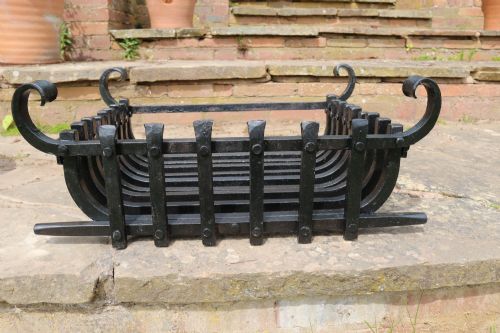
When you search for rustic iron hearth accessories, you encounter functional items built for managing wood fires in domestic settings. These pieces include andirons, fire baskets, grates, log bins, and companion sets designed to support fuel and contain ash.
The selections on this page draw from nineteenth-century work alongside pieces from the eighteenth and early twentieth centuries. English and French examples appear frequently, reflecting domestic warming traditions across those regions.
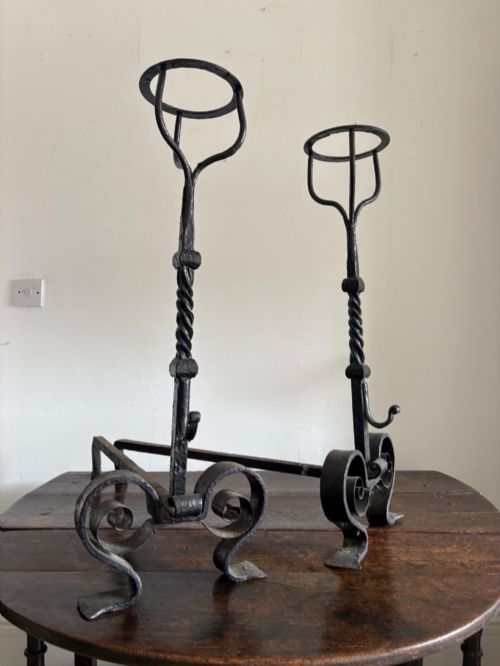
Forms range from sturdy monumental fire dogs to smaller hand-forged companion sets and fuel keepers. Each object reflects the heavy utilitarian demands placed on domestic metalwork before central heating became common.
Materials and construction methods
Blacksmiths and founders shaped these objects primarily from wrought iron and cast iron, utilising heat and anvil to hammer metal into durable shapes. Wrought iron pieces often display hand-forged twists and joins, while cast iron versions utilise moulds to achieve firmer structural geometry.
Companion sets and bins occasionally incorporate brass or copper components alongside the primary iron structure. These mixed metal additions provide functional contrast and decorative detail without compromising the strength required near open flames.
Listings feature wrought iron, cast iron, copper, and brass across nineteenth, eighteenth, and early twentieth-century dates.
Distinctions in standard and finish
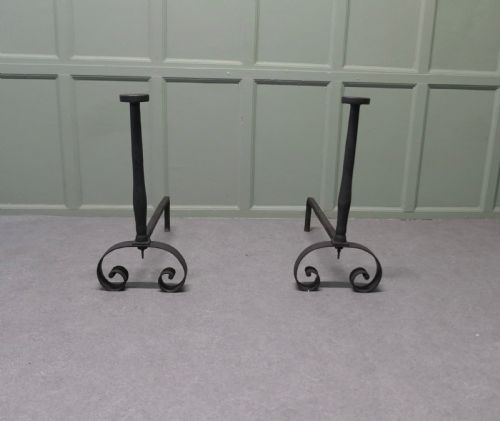
The distinction between standard utility items and finer examples lies in the precision of the blacksmith's hand-forged details and the overall heft of the metal. Monumental dimensions and balanced proportions elevate certain pairs of andirons above basic utilitarian ironmongery.
Surface preservation and the integrity of joints also define the calibre of each piece. Surviving examples that retain their original tooling marks and structural firmness demonstrate superior traditional craftsmanship.
The Rustic Iron Hearth Accessories Glossary
- Andirons
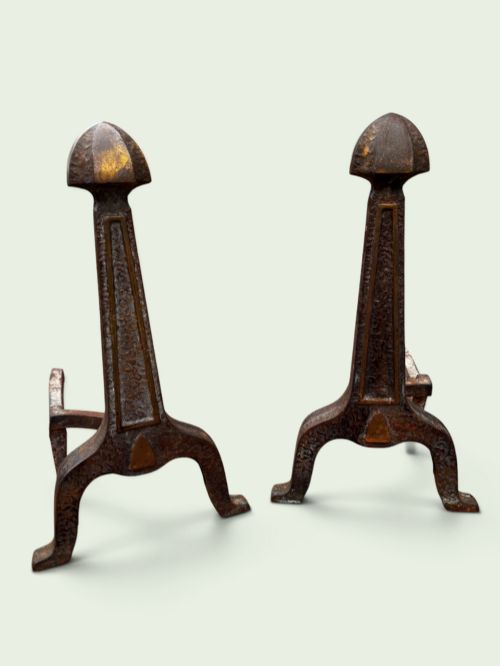
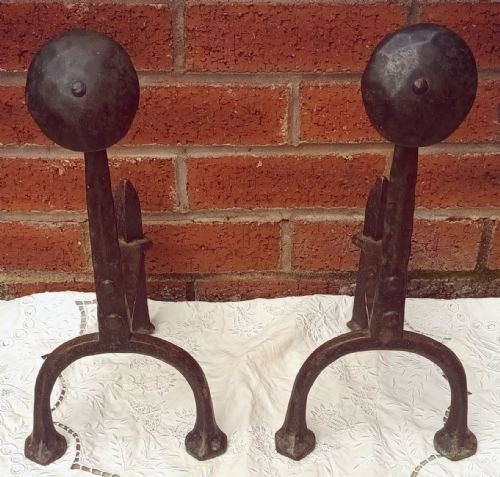
- Supports placed on hearths to raise logs so that air can circulate beneath them. They usually feature decorative fronts paired with horizontal bars.
- Fire Basket
- A metal grate holding burning fuel within a fireplace. These baskets allow ash to drop through to the hearth floor.
- Chimney Crane
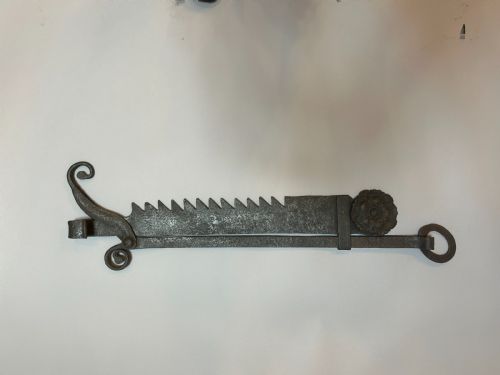
- A pivoting iron arm mounted inside a large fireplace to hold cooking pots over the flames. They swing out into the room for safe access.
- Log Bin
- A container designed to hold firewood near the hearth. They appear in copper as well as iron.
- Mulling Andiron
- A specialised fire dog incorporating fittings to heat liquids. They combine domestic heating with beverage preparation.
Rustic Iron Hearth Accessories: Frequently Asked Questions
What is the difference between andirons and fire dogs?
Andirons and fire dogs serve the same primary function of supporting logs within an open hearth. The terms are largely interchangeable in historical listings.
Historical makers and merchants used both names depending on regional preference or specific decorative treatments on the upright front standards.
How do I date an iron hearth accessory?
Dating relies on observing manufacturing marks, the style of the metalwork, and known design periods such as the Arts and Crafts movement or Georgian era. Hand-forged details often point to earlier artisanal production.
Comparative analysis of form and material helps place pieces within broad centuries, though exact years remain difficult to determine without documentation.
Can these iron pieces still be used in an active fireplace?
Many wrought iron and cast iron items remain structurally sound for regular use in open fires. Their heavy metal construction withstands high temperatures.
Careful inspection of structural joints ensures safety before burning fuel on antique grates or supporting logs with older andirons.
How should I clean antique iron hearth pieces?
Maintenance involves removing soot and ash with a soft brush and applying light protective coatings of oil or wax to prevent oxidation. Heavy scrubbing should be avoided to preserve original surfaces.
Keeping iron away from damp environments prevents active rusting and maintains the dark finish developed over centuries of use.
Where were most of these hearth accessories made?
The listings feature significant numbers of pieces originating from English and French workshops. Regional blacksmiths produced items tailored to local hearth designs and fuel types.
Stylistic cues such as Gothic Revival motifs or French Country lines often point directly to the geographic origin of the metalwork.