


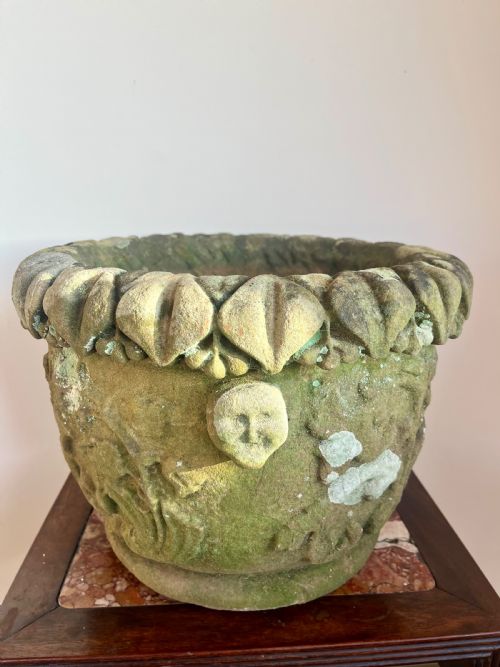


Rustic Garden Urns
These rustic garden urns bring character to outdoor spaces, offering heavy metals and weathered terracotta designed to weather the seasons.
Rustic Garden Urns
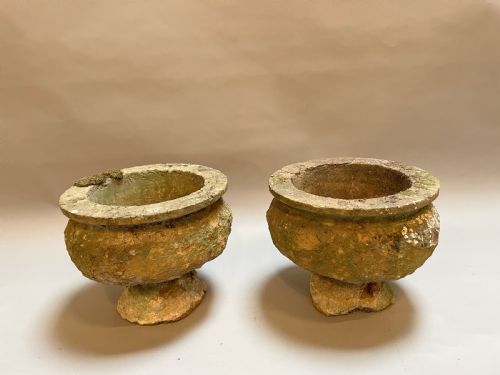
Rustic garden urns encompass utilitarian vessels and ornamental garden planters shaped from durable earthenware, soft stone, and heavy metal. These pieces date primarily across the nineteenth century, reflecting Victorian tastes alongside Mediterranean and French provincial styles.
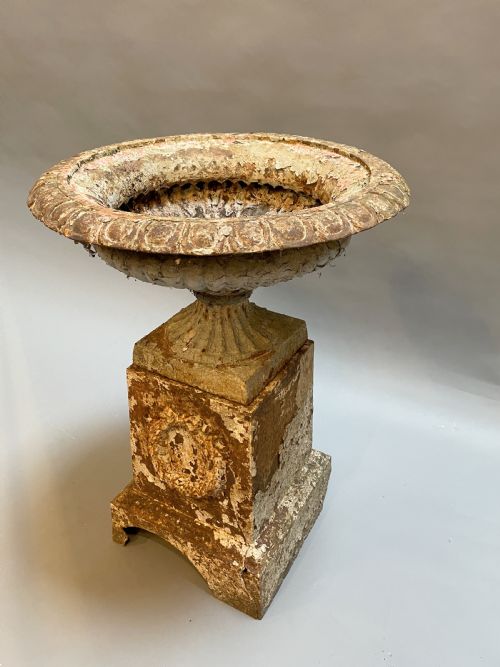
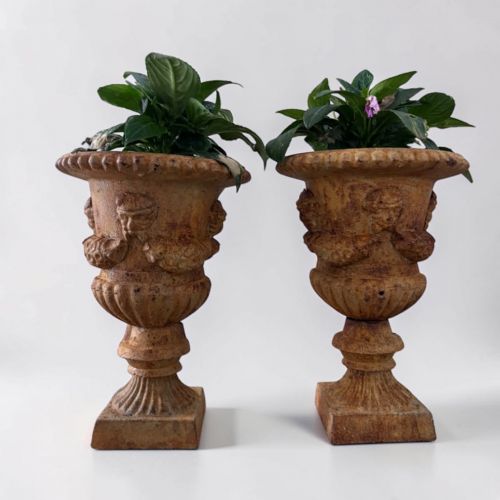
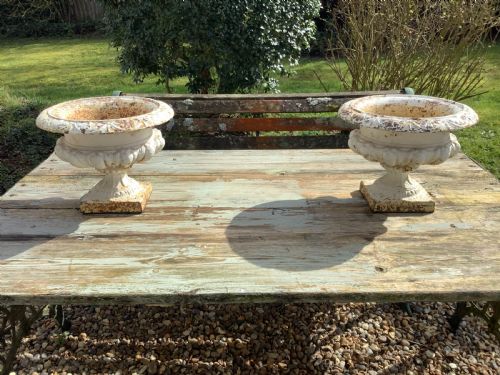
Buyers will most frequently encounter nineteenth-century cast iron urns and terracotta olive jars among these listings. Forms range from classical pedestal vessels to large storage jars and faux bois planters designed for practical garden display.
Origins span British, French, and Mediterranean workshops, uniting utilitarian agriculture vessels and decorative lawn ornaments under a shared rustic aesthetic. Many pieces retain original painted surfaces or aged patinas developed through decades outdoors.
Materials and Construction
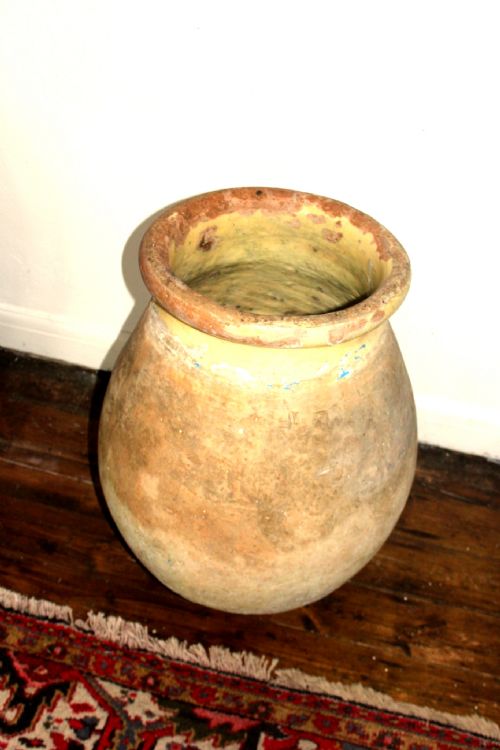
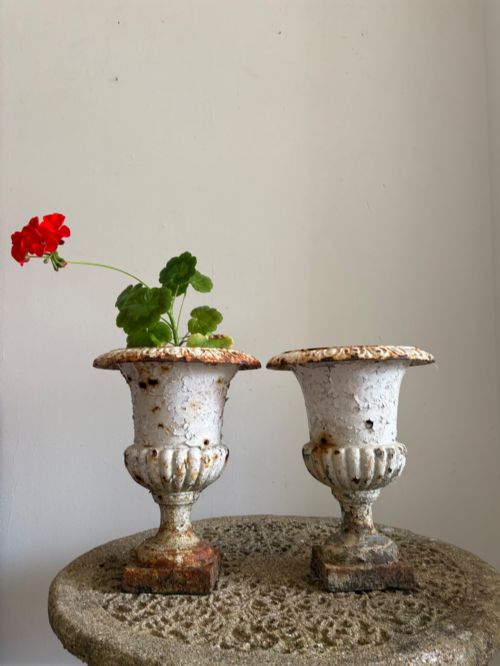
Makers formed the terracotta and earthenware vessels from local clays, shaping oil jars and amphorae by hand or on large wheels before firing. Cast iron urns utilised industrial foundry techniques, pouring molten metal into sand moulds to produce classical ornamentation and robust walls.
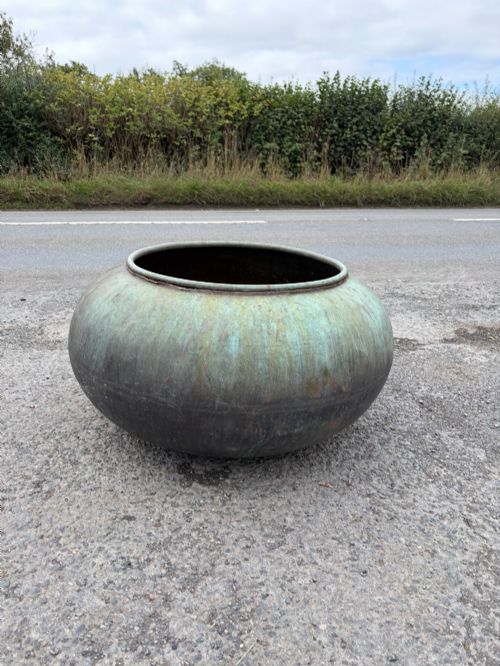
Surface treatments included salt glazing, natural weathering, and applied layers of paint that now show distress. Secondary materials such as wrought iron and copper appear on specific planters, log bins, and pots.
The listings span from pre-sixteenth century reclaimed stone up through nineteenth-century Victorian cast iron and twentieth-century earthenware.
Judging Quality
Quality rests in the integrity of the casting or the throwing, where crisp relief on iron urns or balanced proportions on terracotta jars signal superior craft. The depth of the natural patina and the survival of original paint surfaces heavily influence the visual weight of each piece.
The authenticity of the age shows in the integration of surface wear with the underlying material. Pieces that retain their matched pairs or original stands command stronger presence in a garden setting.
The Rustic Garden Urns Glossary
- Terracotta
- Fired clay ranging in colour from buff to deep orange-red, widely utilised for Mediterranean oil jars and garden planters. This porous material absorbs moisture over time, developing distinct mineral patinas outdoors.
- Faux bois
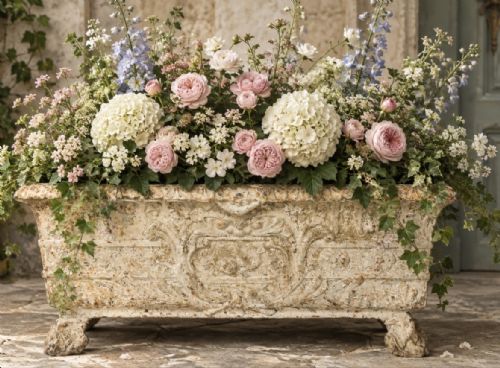
- A decorative technique mimicking wood grain on pottery or concrete surfaces, seen on nineteenth-century strawberry planters. Craftsmen sculpted the clay to resemble natural timber knots and bark.
- Verdigris
- A green copper patina formed by atmospheric oxidation on metal vessels. This chemical layer protects the underlying copper while providing an aged visual texture.
- Salt glaze
- A glassy coating formed by throwing salt into the kiln during high-temperature firing, creating an orange-peel texture on stoneware. This finish renders the pottery dense and resistant to weathering.
- Amphora
- A tall storage vessel with two handles and a pointed or rounded base, historically used for oil or wine. These sturdy pots now serve as focal points in garden landscapes.
Rustic Garden Urns: Frequently Asked Questions
Can I leave cast iron urns outside all winter?
Cast iron handles frost well, though standing water inside freezing solid can crack even heavy metal vessels. Tilting them or ensuring proper drainage protects the iron.
Positioning them on solid footings prevents direct contact with wet soil and reduces moisture retention during freezing months.
How do I clean antique terracotta safely?
Gentle brushing with water removes surface dirt without stripping the historic patina built up over decades. Harsh pressure washers strip the fragile outer clay layers.
Allowing terracotta to dry naturally preserves the porous structure and prevents flaking caused by trapped moisture.
Are oil jars waterproof?
Traditional earthenware oil jars were often lined with pitch or left porous to breathe, meaning many will seep water. Using an internal plastic liner is recommended if placing them on delicate indoor surfaces.
For outdoor garden use, this porosity is harmless and allows plant roots to interact with the surrounding humidity.
How do I date a cast iron urn?
Nineteenth-century casting often leaves rough seam lines, sand-texture imperfections, and layered oil-based paints beneath modern flaking. Victorian examples frequently feature classical motifs inspired by archaeological discoveries.
Lighter twentieth-century reproductions generally display smoother interior walls and uniform machine finishing without historical wear.