





Rustic Garden Jars
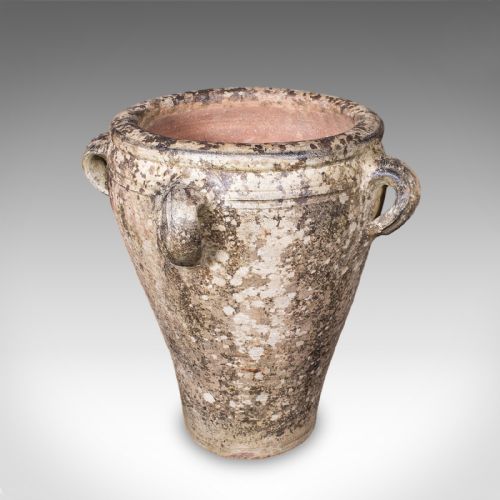
These rustic garden jars are heavy earthenware vessels designed to anchor a terrace or courtyard with weathered Mediterranean character.
Rustic Garden Jars
Rustic garden jars comprise robust vessels shaped for holding oil, water, or olives, appearing frequently in French, Portuguese, and Turkish forms from the nineteenth century onwards. Buyers encounter substantial terracotta pots and amphorae bearing the marks of outdoor use, often set upon wrought iron stands or grouped in pairs and sets.
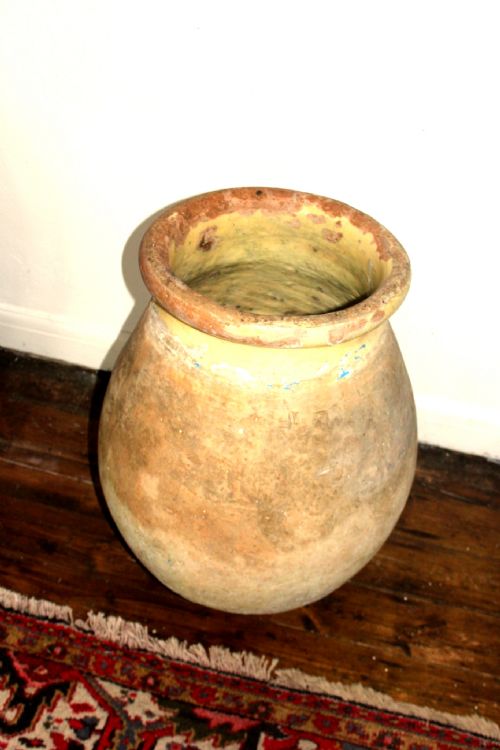
The dominant forms span large oil jars and garden planters dating from the late nineteenth and early twentieth centuries, including specific Provençal Biot jars and Mediterranean amphorae. These objects serve primarily as structural garden ornaments rather than delicate indoor display pieces, bringing substantial scale and earthy texture to exterior spaces.
Making the Jars
Potters built these heavy vessels using coarse clay and terracotta, shaping large bodies designed to withstand agricultural use and storage. The raw earthenware received simple structural forms before firing, relying on the natural density of the clay for strength.
Surface finishes developed through time and utility, leaving surviving examples with weathered lime wash, historical paint remnants, or characteristic aged patinas. Some vessels incorporate applied glazes, whilst others rely on the raw, porous nature of the baked earth.
Rustic Garden Jars Retail Price Guide 2026
Typical asking prices for rustic garden jars among the pieces listed under this phrase on Sellingantiques today, from the lower quarter to the upper quarter. They describe what is for sale here now, not the wider market.
Some olive jars retain centuries-old internal lime scale from the oil they once preserved.
Judging Quality
Quality rests in the harmony of the vessel's proportions and the organic depth of its surface weathering. Finer examples display balanced potting and an honest, undisturbed patina that reveals decades of exposure to sun and soil.
The presence of maker adaptations, such as original wrought iron stands or well-matched sets, elevates the standing of a piece. Structural integrity remains paramount, distinguishing honest agricultural vessels from overly restored or compromised examples.
The Rustic Garden Jars Glossary
- Terracotta
- A porous, unglazed baked earthenware made from iron-rich clay. It forms the primary material for the vast majority of traditional Mediterranean storage vessels and garden pots.
- Amphora
- A tall ancient storage jar featuring two handles and a narrow neck designed for carrying oil or wine. In later periods, these large vessels transitioned into decorative garden ornaments.
- Biot Jar
- A traditional heavy terracotta storage jar originating from the Provençal town of Biot in France. These distinctive pots were historically utilised for olive oil storage.
- Patina
- The surface texture, colour variation, and weathering acquired by earthenware over decades of exposure to the elements. A genuine aged patina is valued for its visual depth.
Rustic Garden Jars: Frequently Asked Questions
How do I care for rustic garden jars in winter?
Keep earthenware jars dry during freezing weather by elevating them off the ground on pot feet and draining any trapped soil. Terracotta absorbs moisture, and freezing water can crack the clay.
Moving smaller vessels into a sheltered porch or greenhouse during the coldest months prevents frost damage and preserves the integrity of the antique clay.
How do I distinguish nineteenth century jars from later reproductions?
Examine the interior and exterior walls for irregularities, hand-thrown tool marks, and inconsistencies in the thickness of the terracotta. Nineteenth century vessels show authentic signs of manual construction and natural wear.
Look closely at the surface patina, which should display genuine weathering, lime wash remnants, and mineral deposits rather than artificial acid ageing.
Where should I place large garden jars in a courtyard?
Position large oil jars as focal points at the end of gravel paths, near doorways, or framed against plain stone walls to showcase their scale. Their architectural silhouettes suit traditional garden designs.
Anchor them securely on flat, stable surfaces or dedicated iron stands, as their considerable weight requires steady ground to prevent tipping.