





Large French Terracotta Jars
These large french terracotta jars are substantial earthenware vessels designed for agricultural storage and garden display.
Large French Terracotta Jars
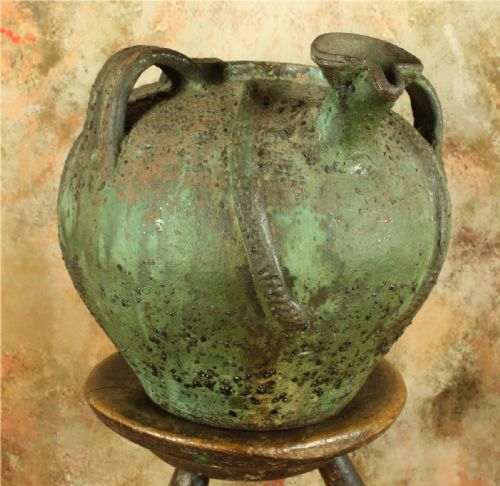
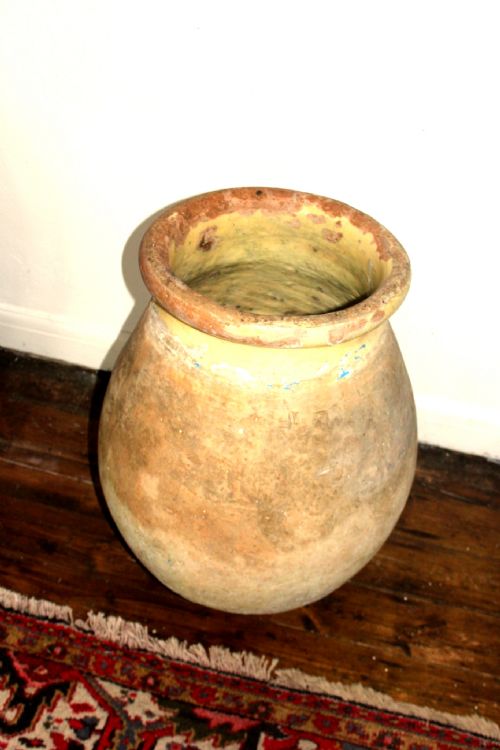
When you search for large french terracotta jars, you encounter robust storage vessels historically utilised across rural regions for oil, olives and walnuts. The pieces available span from the eighteenth century through to the early twentieth century, taking forms such as olive jugs, walnut oil pots and garden planters.
You are most likely to meet rustic provincial examples that display the heavy thrown clay bodies and functional handles characteristic of Mediterranean traditional and French country styles. These utilitarian containers transition easily into decorative garden urns and floor vases for contemporary interiors.
How they were made
Makers shaped these vessels from local clay and earthenware, throwing large bodies on heavy wheels or building them up in sections before firing them in traditional kilns. The resulting porous terracotta structure was occasionally finished with partial glazes to help seal the interior for liquid storage.
Many surfaces carry historical layers of paint or lime wash applied to protect the clay or identify estate contents, which now contribute to the weathered appearance. Wrought iron reinforcement bands or stands appear on select specimens to secure heavy or multi-handled forms.
Large French Terracotta Jars Retail Price Guide 2026
Typical asking prices for large french terracotta jars among the pieces listed under this phrase on Sellingantiques today, from the lower quarter to the upper quarter. They describe what is for sale here now, not the wider market.
Certain oil jars retain up to three distinct handles so farm workers could heave the heavy earthenware vessels around with maximum leverage.
What varies in quality
The distinction between standard examples and superior pieces rests upon the balance of the thrown form and the integrity of the surviving surface patina. Well-proportioned jugs with intact handles and undisturbed historical paint or lime wash represent the finest instances of the type.
The presence of maker marks, early repair details, and structural additions such as original wrought iron mounts elevate certain specimens. Conversely, heavy modern interference or structural compromise diminishes the integrity of these antique earthenware containers.
The Large French Terracotta Jars Glossary
- Terracotta
- A porous, unglazed or slip-coated fired clay body ranging in colour from pale buff to deep orange-red. It forms the primary material basis for nearly all traditional Mediterranean garden vessels and storage jars.
- Earthenware
- Pottery fired at relatively low temperatures that remains porous unless glazed. This foundational ceramic category includes all the utilitarian oil jars and agricultural pots in the collection.
- Patina
- The surface appearance altered by age, weathering, and handling, including worn paint, lime wash, and mineral deposits. A genuine aged patina confirms the long history and exposure of exterior garden planters.
- Lime wash
- A traditional coating made from slaked lime and water, historically applied to exterior walls and agricultural vessels for protection and hygiene. Traces of this white or tinted coating frequently survive on older jars.
- Olive jar
- A large, bulbous storage vessel designed specifically for the preservation and transport of olives and olive oil. These utilitarian forms typically feature robust rims and multiple carrying handles.
Large French Terracotta Jars: Frequently Asked Questions
How were large french terracotta jars used?
These vessels served primarily as agrarian storage containers for valuable commodities like olive oil, walnuts and grain in rural households and farmsteads. Their heavy earthenware walls kept contents cool, while multiple handles facilitated lifting and tilting.
Over time, many of these utilitarian containers migrated from working agricultural contexts into country gardens and courtyards as decorative planters and architectural ornaments.
Can these antique jars stay outside?
Most of these earthenware and terracotta vessels tolerate outdoor placement, but porous historical clay remains vulnerable to severe frost expansion during freezing weather. Gardeners should elevate containers off damp ground and protect them during winter months.
When placed indoors, they function well as decorative floor vases or architectural focal points that showcase aged surface patinas.
How do I date an antique jar?
Dating relies on observing manufacturing marks, the composition of the clay body, and the characteristics of the thrown form. Eighteenth-century examples often display irregular hand-thrown profiles and early three-handle configurations. Nineteeth and early twentieth-century pieces tend toward more standardised industrial wheel-throwing methods, sometimes accompanied by remnants of historical paint or lime wash.
What causes the varied surface finishes?
The exterior surfaces reflect decades or centuries of agricultural use, exposure to Mediterranean weather, and successive applications of protective coatings. Layers of historical paint, lime wash, and mineral accumulation build up an aged patina that cannot be artificially duplicated. Partial glazes found on select vessels served a practical purpose in sealing porous clay against liquid seepage.