





Vintage Clay Planters
These vintage clay planters bring authentic garden character to terraces and interiors alike, shaped by decades of weathering.
Vintage Clay Planters
Vintage clay planters encompass robust garden vessels and utilitarian vessels repurposed for planting, ranging from nineteenth century rhubarb forcers to oil jars and chimney pots. Buyers seeking vintage clay planters will find heavy terracotta pots and jars originating from nineteenth century England, France, and Portugal, alongside twentieth century garden ornaments.
The selection on this page relies heavily on substantial terracotta and earthenware forms, including pedestal bases and large olive jars designed for Mediterranean gardens or Victorian country houses. These pieces span rustic farmhouse aesthetics, Arts and Crafts designs, and neoclassical urns, showing the broad architectural reach of clay gardenware.
How they were made
Makers shaped these vessels from local earthenware clay and terracotta, often throwing large oil jars and garden pots by hand or forming them in sections before firing. The porous nature of the earthenware allowed moisture to breathe through the walls, suiting the roots of plants over decades of exposure.
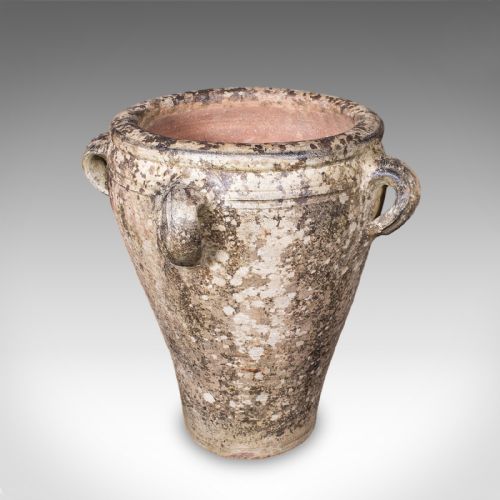
Some garden ornaments and oil jars received surface coats of paint or weathered naturally in the elements, developing patinas of moss and lichen across the nineteenth and twentieth centuries.
Vintage Clay Planters Retail Price Guide 2026
Typical asking prices for vintage clay planters among the pieces listed under this phrase on Sellingantiques today, from the lower quarter to the upper quarter. They describe what is for sale here now, not the wider market.
Design styles span rustic Mediterranean, Victorian country house, and Arts and Crafts traditions across diverse European origins.
What varies in quality
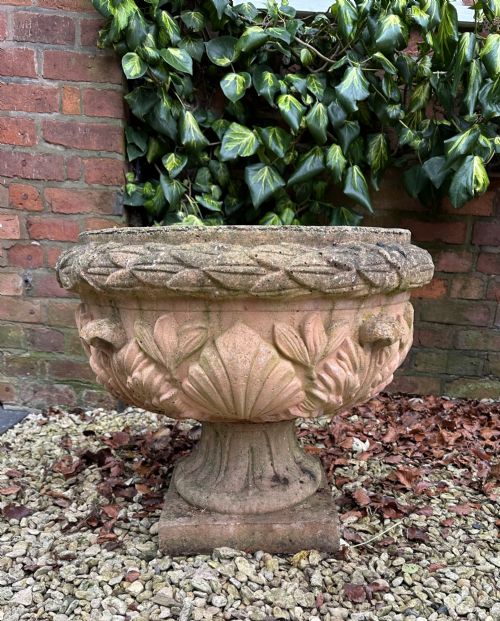
Quality rests in the proportional balance of the vessel, the weight and density of the terracotta, and the consistency of the hand-thrown form. Pieces displaying crisp architectural mouldings or well-balanced scroll details stand apart from utilitarian ware.
The depth of the natural weathering and surface patination dictates visual success, where honest age and exposure elevate a simple garden pot into a decorative focal point.
Dunfermline Clay Company·Compton Pottery
The Vintage Clay Planters Glossary
- Terracotta
- Fired clay containing high iron content, giving the material its characteristic reddish-brown colour. This porous ceramic is traditionally used for garden pots and oil jars because it permits air and moisture to reach plant roots.
- Earthenware
- Porous pottery fired at lower temperatures than stoneware or porcelain. It forms the base material for the majority of nineteenth century garden planters and chimney pots found here.
- Rhubarb forcer
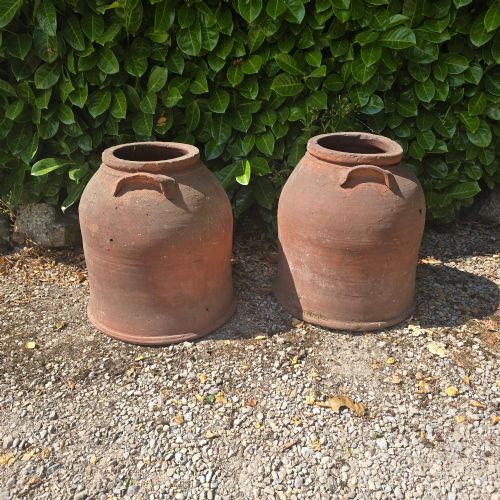
- A tall, domed clay vessel with a removable lid, designed by Victorian gardeners to exclude light and force tender early rhubarb stems. These utility pieces now serve as striking garden planters.
- Oil jar
- A large, bulbous storage vessel historically used in Mediterranean regions to hold olive oil. Their grand scale and thick terracotta walls make them desirable as statement garden planters.
- Chimney pot
- A terracotta or earthenware architectural element designed to top a chimney stack. When salvaged, these vertical cylinders make excellent deep planters for patios.
Vintage Clay Planters: Frequently Asked Questions
Are these planters frost proof?
Most nineteenth and early twentieth century terracotta vessels contain porous earthenware bodies that absorb moisture from wet soil. Freezing temperatures can cause trapped water to expand and crack the clay.
Protect heavy oil jars and garden pots during severe winter frosts by moving them indoors, raising them on pot feet, or wrapping them securely.
How do I plant directly in them?
Ensure the drainage hole at the base remains clear, or add a generous layer of broken crocks and gravel to the bottom before filling with a well-draining compost mix. This prevents waterlogging and protects the historic clay from internal pressure.
Line very large oil jars with heavy-duty plastic sheeting if you wish to protect the interior walls, though traditional planting lets the clay breathe naturally.
How do I clean old terracotta?
Gently brush away loose dirt and moss using a soft bristle brush and plain water, preserving the desirable aged patina and lichen growth built up over decades. Avoid harsh chemical cleaners or pressure washers that strip the surface texture.
Allow the clay to dry naturally in the open air after cleaning to prevent dampness from encouraging unwanted mould growth indoors.